Why Is My Chimney Stack Leaning, and Is It Dangerous?
5.0 from 44 Google reviews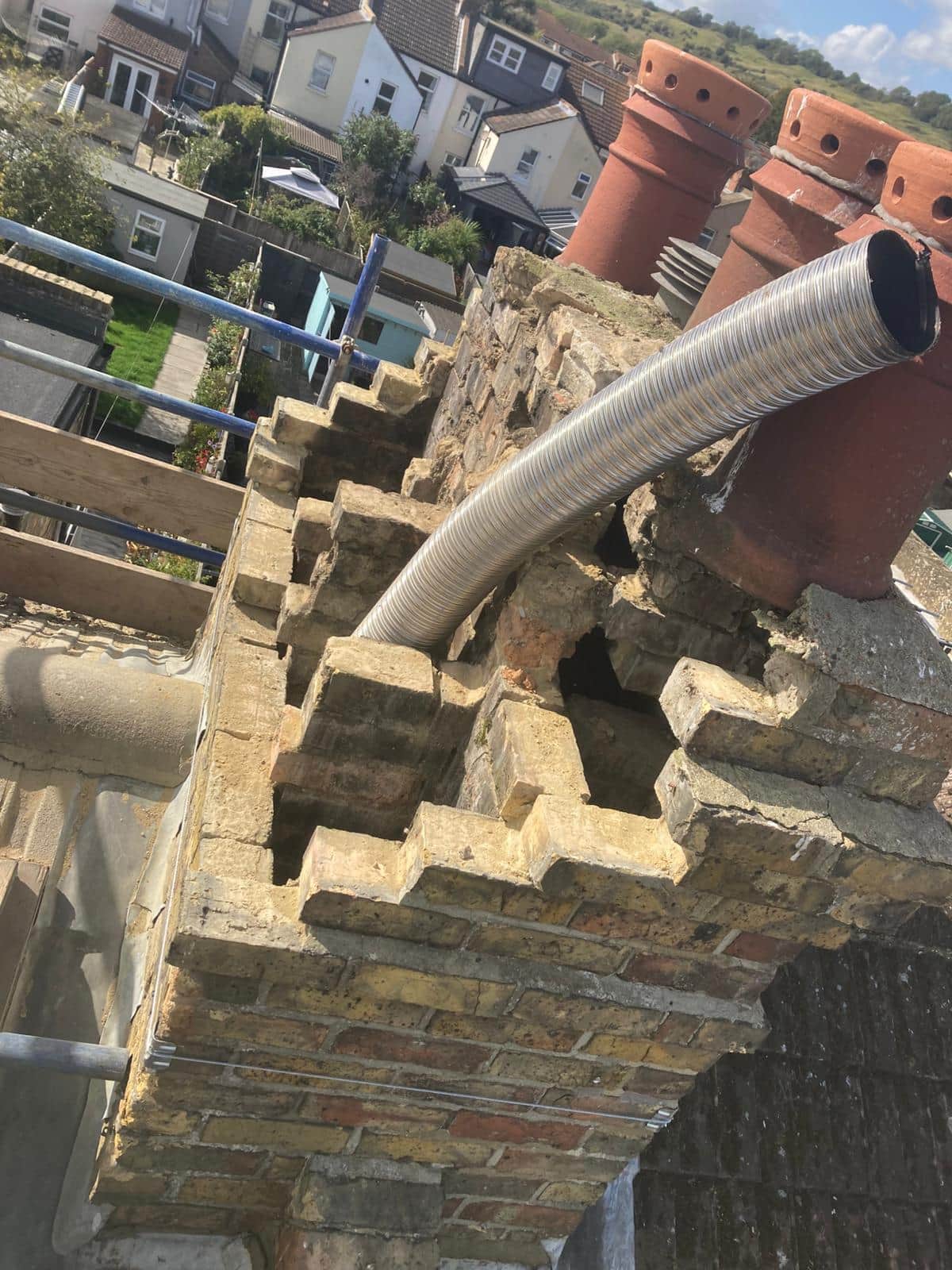
19 November 2026By Richard Wood
Chimney stacks lean because the mortar on one side has swollen or worn away faster than on the other, usually after decades of rain, frost and sulphates from coal fires, and a slight lean that has not changed in years is rarely dangerous on its own. A lean is dangerous when it is getting worse, when bricks near the top are loose or missing, or when the chimney breast below was taken out without the stack being supported, and any of those means having it inspected before the next gale. If a stack is moving in the wind or dropping bricks, keep people clear of it and report it to the council straight away.
How much lean is too much is a judgement for someone who has seen the stack up close, and where the structure is in doubt, for a structural engineer. There is no safe angle anyone can give you from a photograph, and we would be wary of anyone who did. Below we explain why stacks lean, the signs that change the answer, who to call if a stack looks unsafe now, and what the repair usually involves.
Why Old Chimney Stacks Lean
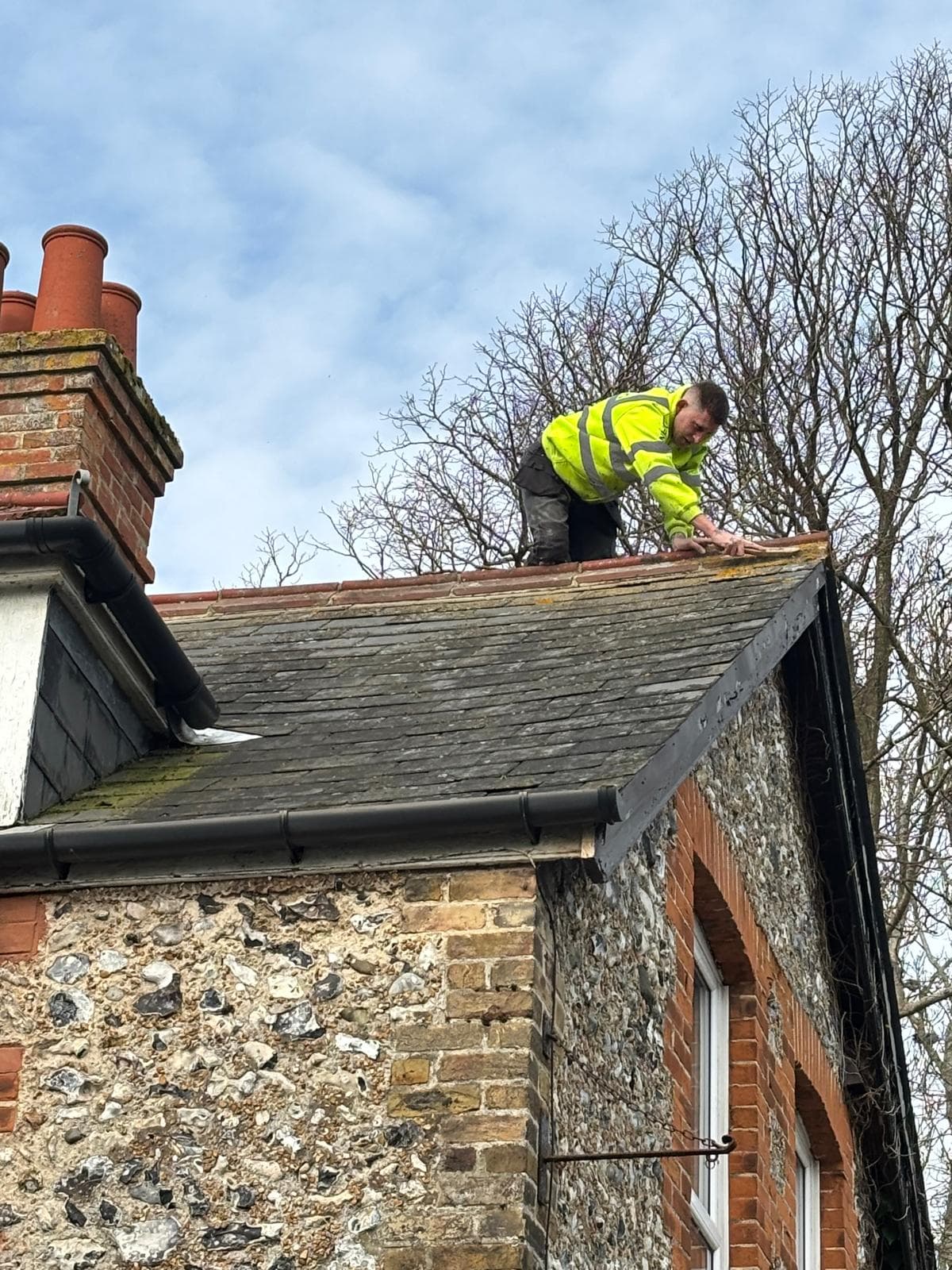
A chimney stack has a harder life than any other part of the house. It stands above the roof in the full weather, every face takes rain and frost, and for most of its life it carried hot, wet flue gases up its middle. The Building Conservation Directory's guide to chimneys and flues puts it simply, saying that a combination of erosion, acid attack and salt crystallisation is liable to cause a chimney to lean.
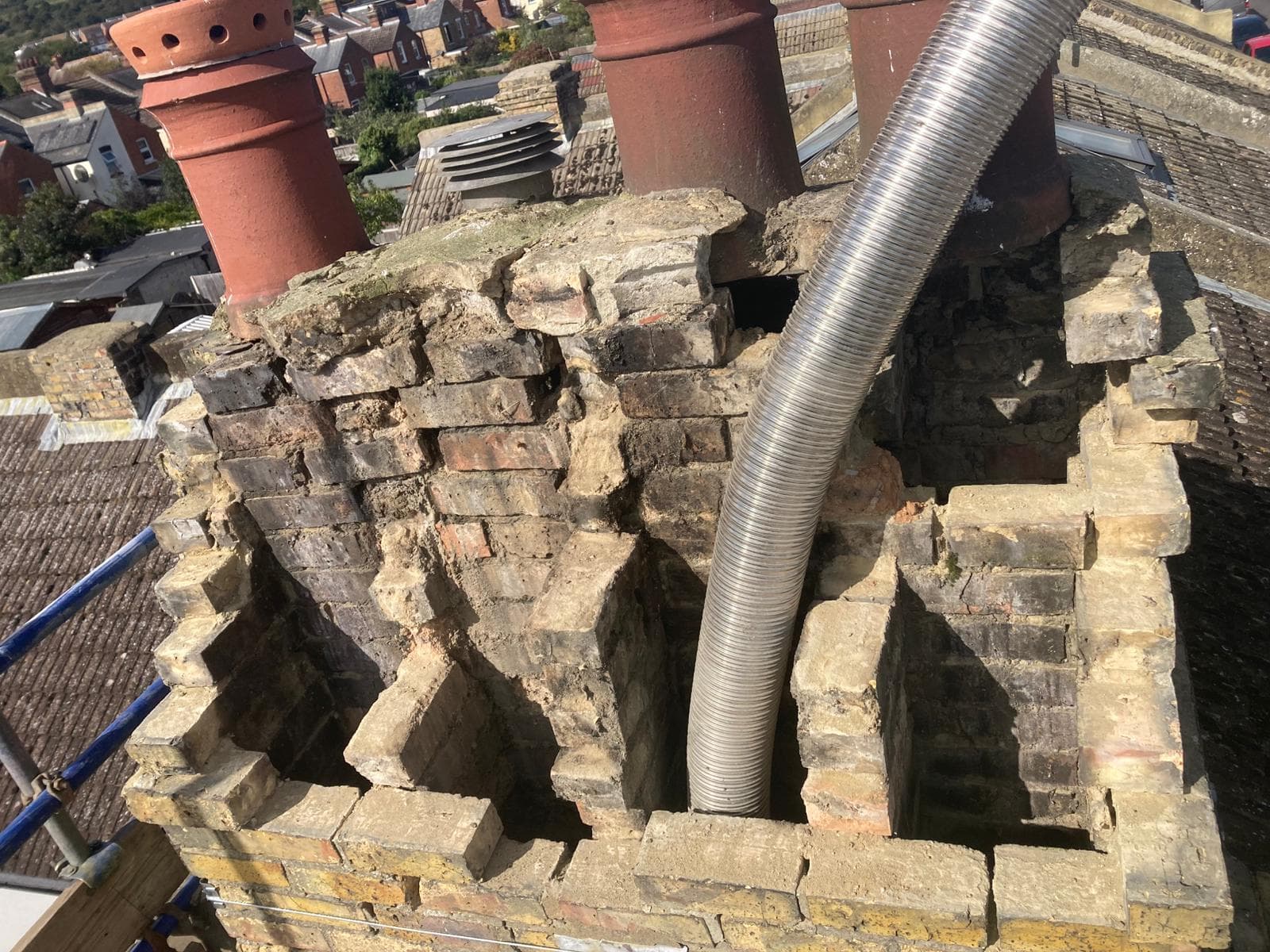
Each of those works on the mortar between the bricks rather than on the bricks themselves. Stacks that served coal fires for generations took sulphates from the smoke into their mortar, and when that mortar is wet the sulphates react and make the joints swell. Salts carried in by moisture crystallise in the joints and push them apart in the same way. When the stacks of one old manor house were surveyed for repair, the Building Conservation Directory's account lists sulphate decay from flue gases, wetting and drying, wind loading and frost among the causes, with frost alone shifting the top of one stack by almost 150mm. Meanwhile the joints on the weather side are slowly washed and frozen out. Cadw, the Welsh Government's historic environment service, notes in its advice on chimneys that leaning usually happens when mortar on the weather side erodes and the brickwork settles, while salt crystallisation tends to swell the joints on the slower-drying sheltered side.
Either process, or both together, leaves one side of the stack taller or shorter than the other, and the stack tilts. Depending on which wins, a stack can lean towards the weather or away from it, which is why the direction of a lean tells you less than whether it is moving.
Wind, Salt and the Coast
On this coast the weather side matters more than most. The prevailing wind is south-westerly, so the south-west faces of stacks take the driven rain, the salt and the frost first, and their joints wear out first. A stack also catches the full force of every gale, and once it leans, its own weight sits off-centre, so each storm loads the lower side harder. The same winds that lift tiles off a roof are pushing on a tall, slender column of brick with nothing to brace it but its own mortar.
A worn stack also lets water in long before it moves. Open joints and cracked flaunching, the sloping mortar cap around the pots, are among the usual reasons a chimney leaks when it rains, and water inside the brickwork feeds the very processes that make it lean.
Signs a Lean Has Become a Problem
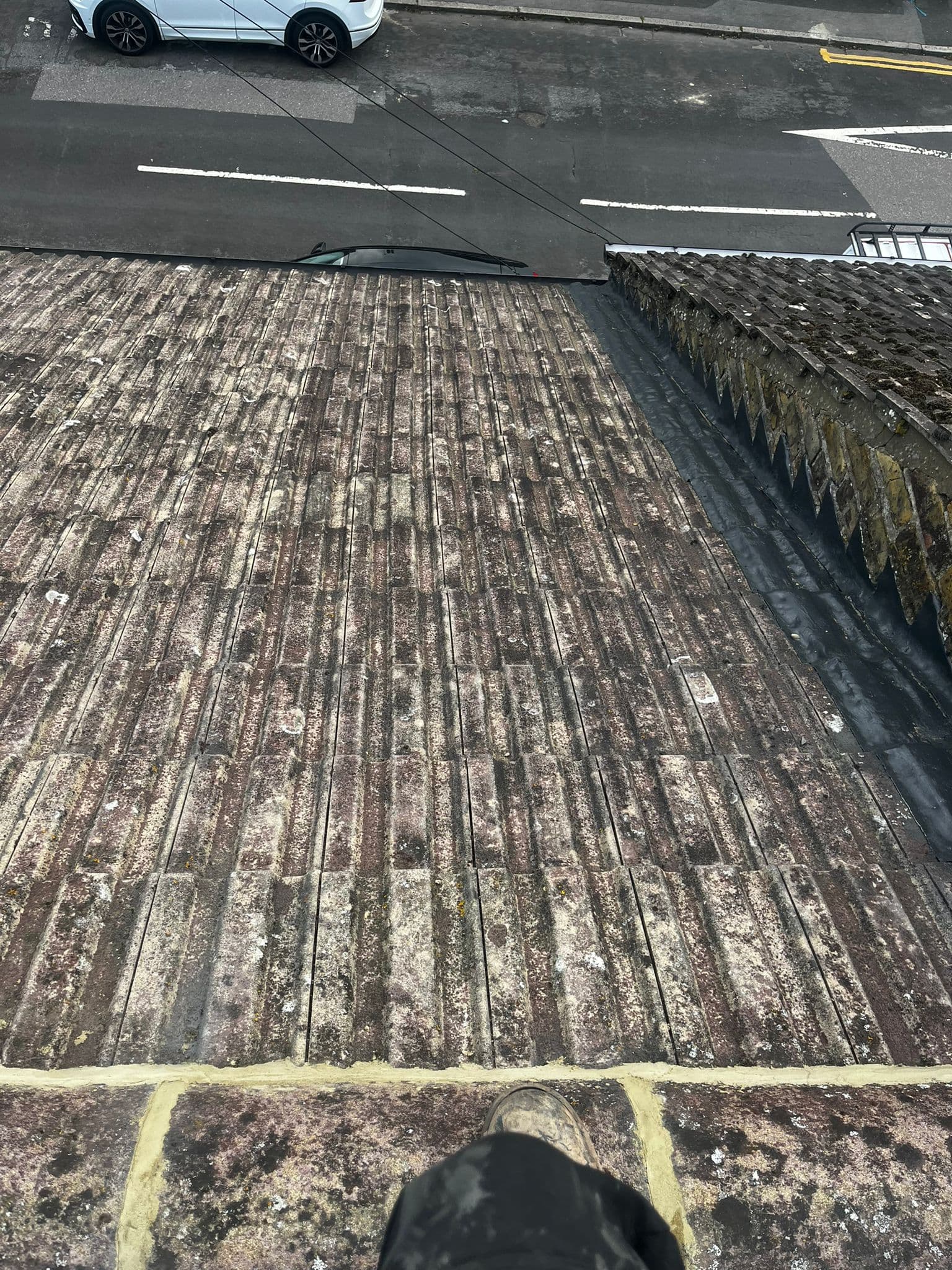
You can learn a lot from the ground and from inside, without going near the roof. Compare the stack with old photographs of the house, because a lean that was not there five years ago is moving. Look for bricks missing or loose near the top, joints that look open or crumbly, horizontal cracks running across the stack, or pots that sit at a different angle from the stack beneath them. Pieces of mortar or brick in the gutter, on the roof slope below or in the garden are a warning in themselves.
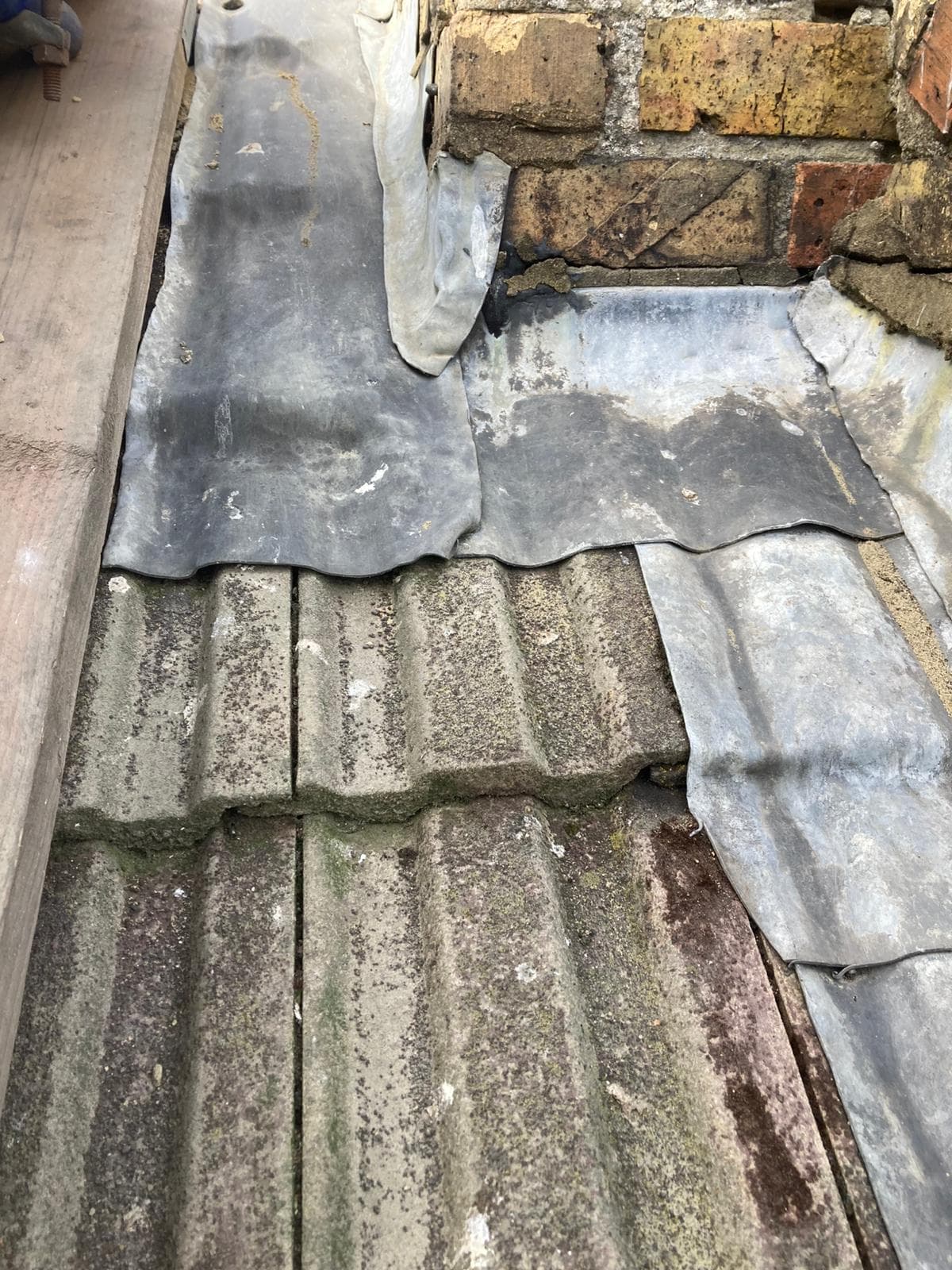
Where the stack meets the roof, look at the flashing. Lead that has torn or pulled away from the brickwork can mean the stack has shifted against the roof around it. Inside, damp patches on the chimney breast, or new cracks in the walls and ceiling around it, are worth noting, especially upstairs.
None of these on its own proves a stack is unsafe. Two or three together, or any sign that things are getting worse, mean it should be inspected before the next storm.
A Lean After a Chimney Breast Was Removed
One cause needs singling out, because it is the most serious. Many houses have had a chimney breast taken out indoors to make more room. The chimney breast is part of the structure, and the stack above the roof still has to stand on something. If the breast was removed without proper support for the brickwork above it, the stack's weight is left bearing on whatever remains.
The Planning Portal says that building regulations approval will always apply when removing chimney breasts, and recommends a structural engineer to provide drawings and calculations. If a breast in your house was removed before you bought it and there is no paperwork, and the stack above is leaning or the rooms around it are cracking, have a structural engineer look at it. On a terrace the breast often sits on the party wall, and the government's explanatory booklet on the Party Wall Act gives removing a chimney breast as an example of work on a party wall that needs notice to the neighbours, generally at least two months before work starts. None of this is a job to attempt yourself.
Is a Leaning Chimney Dangerous?
It can be. A stack that is moving, losing bricks or standing on a removed breast can drop masonry through the roof or into the street, and a gale is exactly when that happens. Cadw's advice is that if you are in any doubt about the stability of a chimney, you should consult a structural engineer, and we agree.
If a stack is visibly moving in the wind, or bricks are already falling, keep people away from the area below it and report it. Folkestone and Hythe District Council's building control team deals with dangerous structures around the clock. The council's page explains that its surveyors usually require the owner to carry out the work that removes the danger, and that where owners cannot be traced or cannot act quickly, the council arranges its own contractors and recovers the cost from the owner. Calling them is the right move when someone could be hurt.
Most leaning stacks are nowhere near that point. They have tilted slowly over a century and need repair rather than an emergency response, but only an inspection tells you which you have.
What the Repair Usually Involves
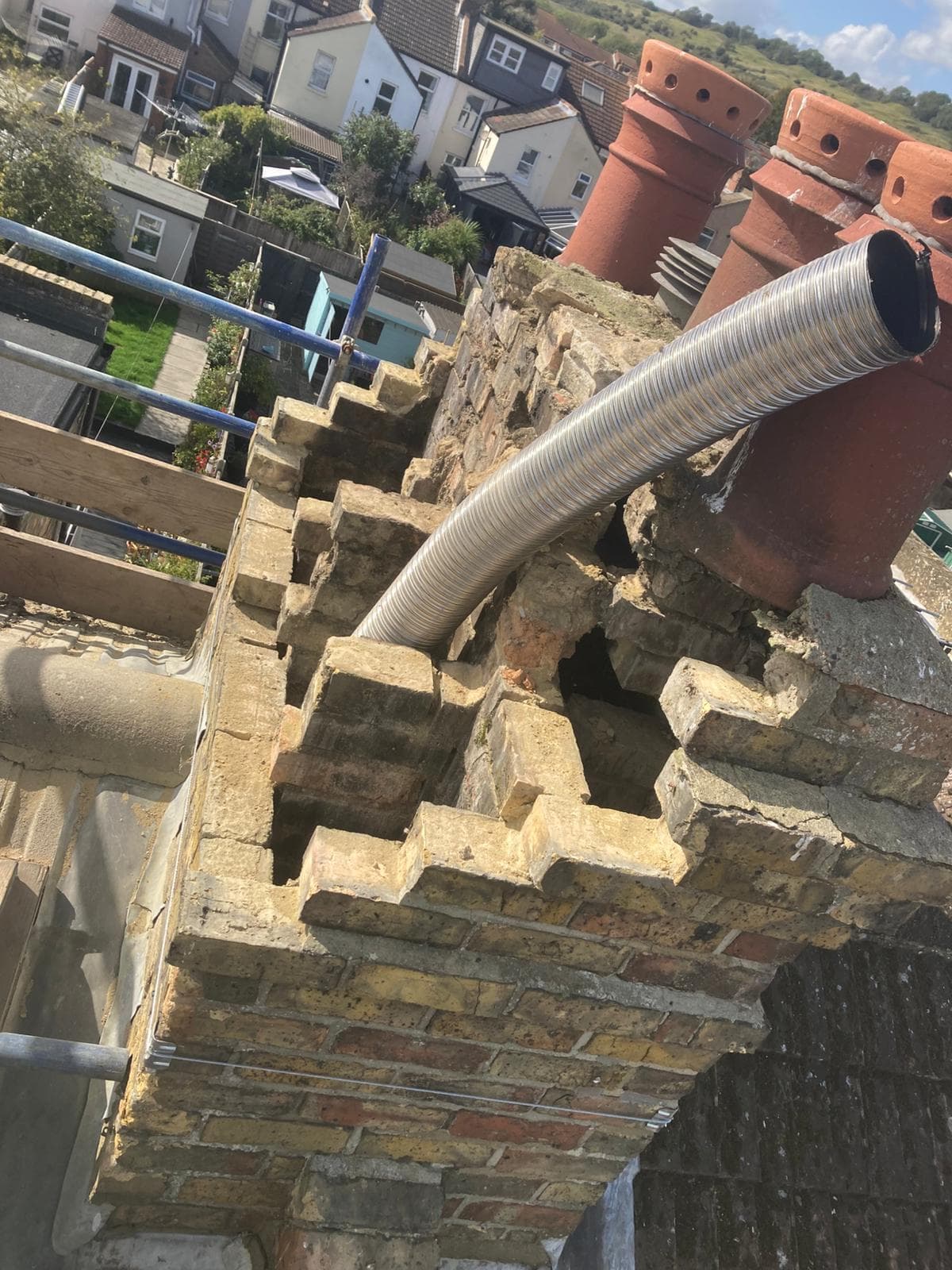
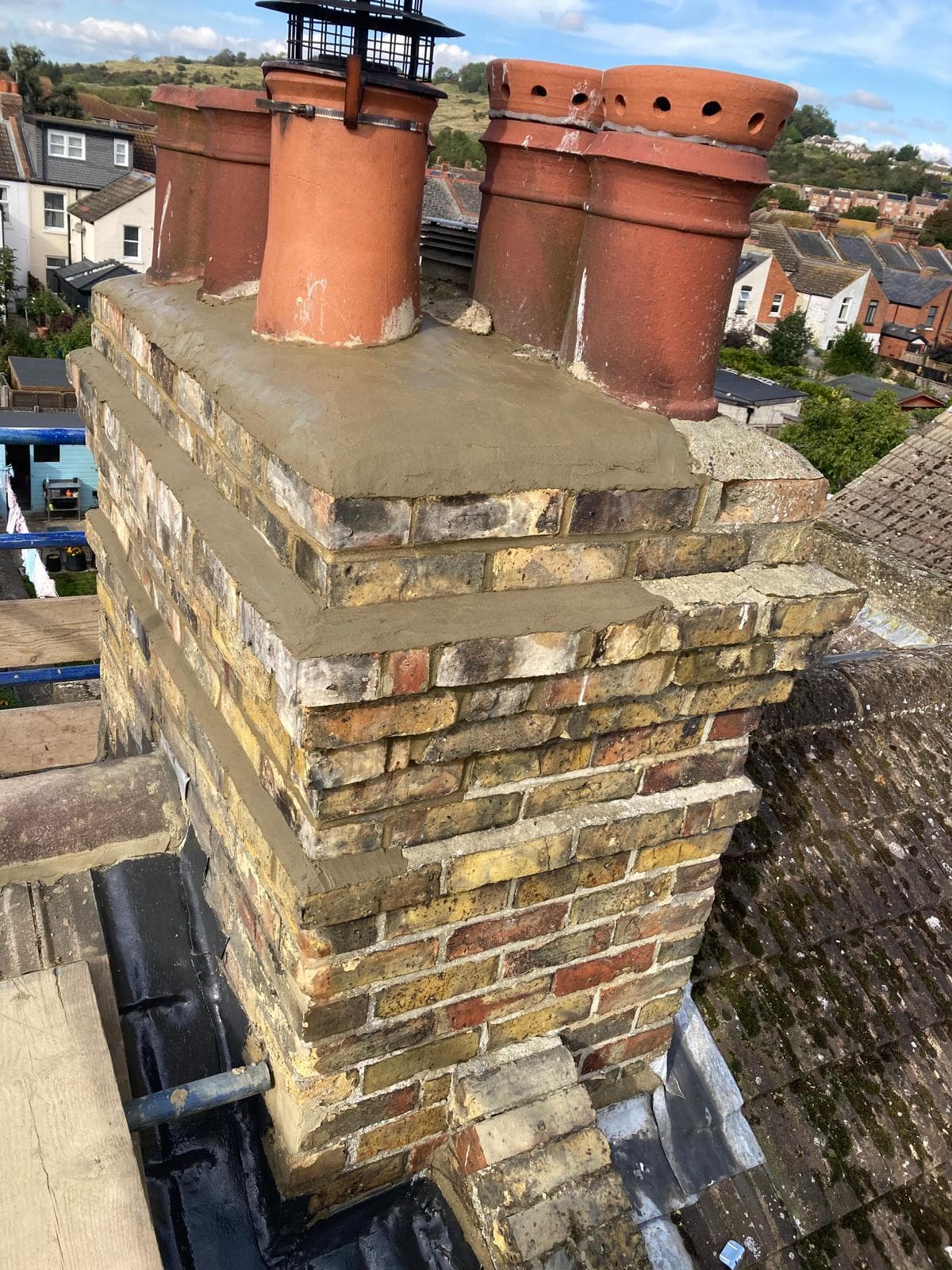
Where the lean is slight, stable and the brickwork is sound, the answer is usually to deal with the causes. That means cutting out and replacing decayed bricks, repointing the open joints, renewing cracked flaunching, and capping any flue that is no longer used with a ventilated cap, so rain stops going down it. The Building Conservation Directory's guide adds relining the flue where it is still in use.
The mortar matters. Cadw recommends lime mortar for repointing traditional chimneys and warns that cement pointing can make things worse by trapping moisture in the structure. The Building Conservation Directory suggests sulphate-resisting cement where cement has to be added to a mix. Which is right depends on how the stack was built in the first place.
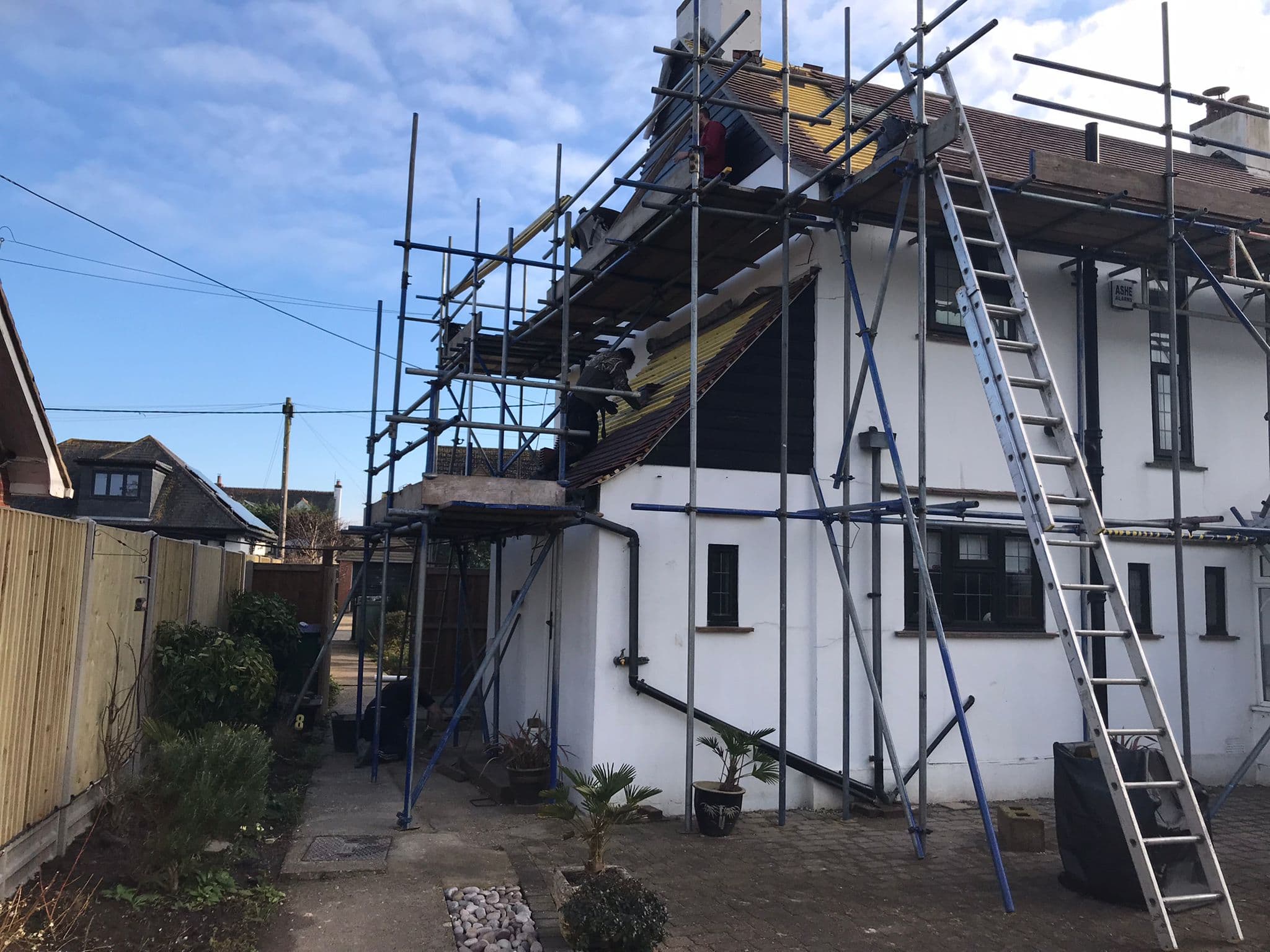
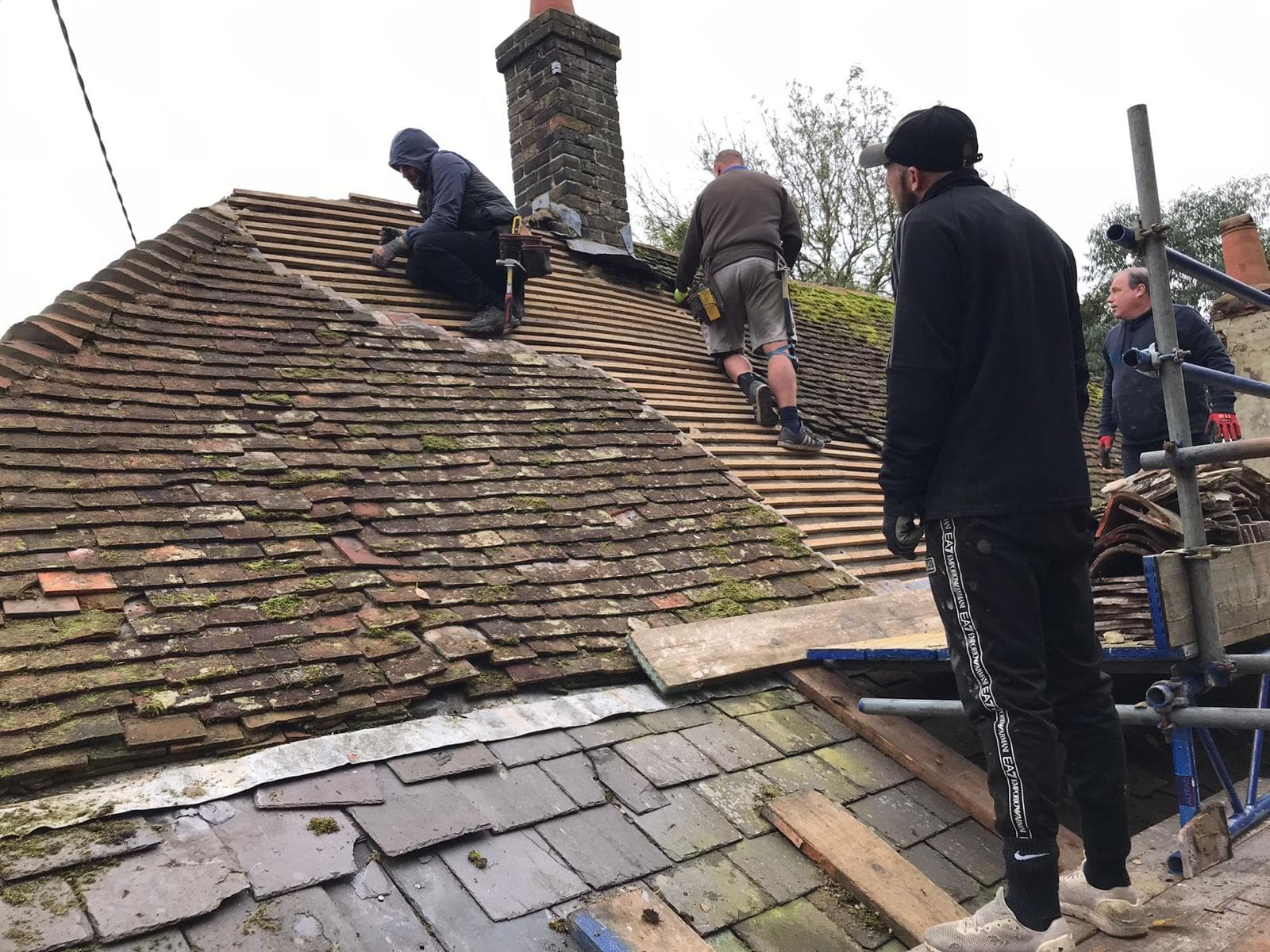
Where the top courses are loose or the lean is growing, the stack is taken down to sound brickwork and rebuilt, reusing the old bricks where they are good enough, with new flaunching and properly fitted lead where it meets the roof. Our chimney repairs cover the brickwork and the leadwork together, because a rebuilt stack with old flashing around it is only half a job. If the flue is still used for a fire or stove, a liner goes in as part of the rebuild.
Some owners ask about taking a stack down altogether. The Planning Portal says removing a chimney stack may fall under permitted development, that the rules in a conservation area may differ, so you should contact the local planning authority, and that a listed building needs listed building consent. Hythe has a conservation area of its own, and changing how a roof looks there raises the same questions as re-roofing in the Hythe conservation area, so check with the council first.
Shared Stacks on Terraces
On the older terraces of Folkestone and Hythe, a single stack often serves two houses, with flues from both running up inside it. A lean affects both, and so does any repair. It is far easier to agree with your neighbour whose stack it is, who pays for what and when the scaffold goes up before any work starts than to sort it out halfway through, and where the work touches the party wall itself, the notice rules above apply.
Please Leave the Looking to Us
Do not climb up to look at a leaning stack, and never lean a ladder against one. The Health and Safety Executive says almost one in five deaths in construction work involve roof work, and a stack that may already be unstable is the last thing to put weight against.
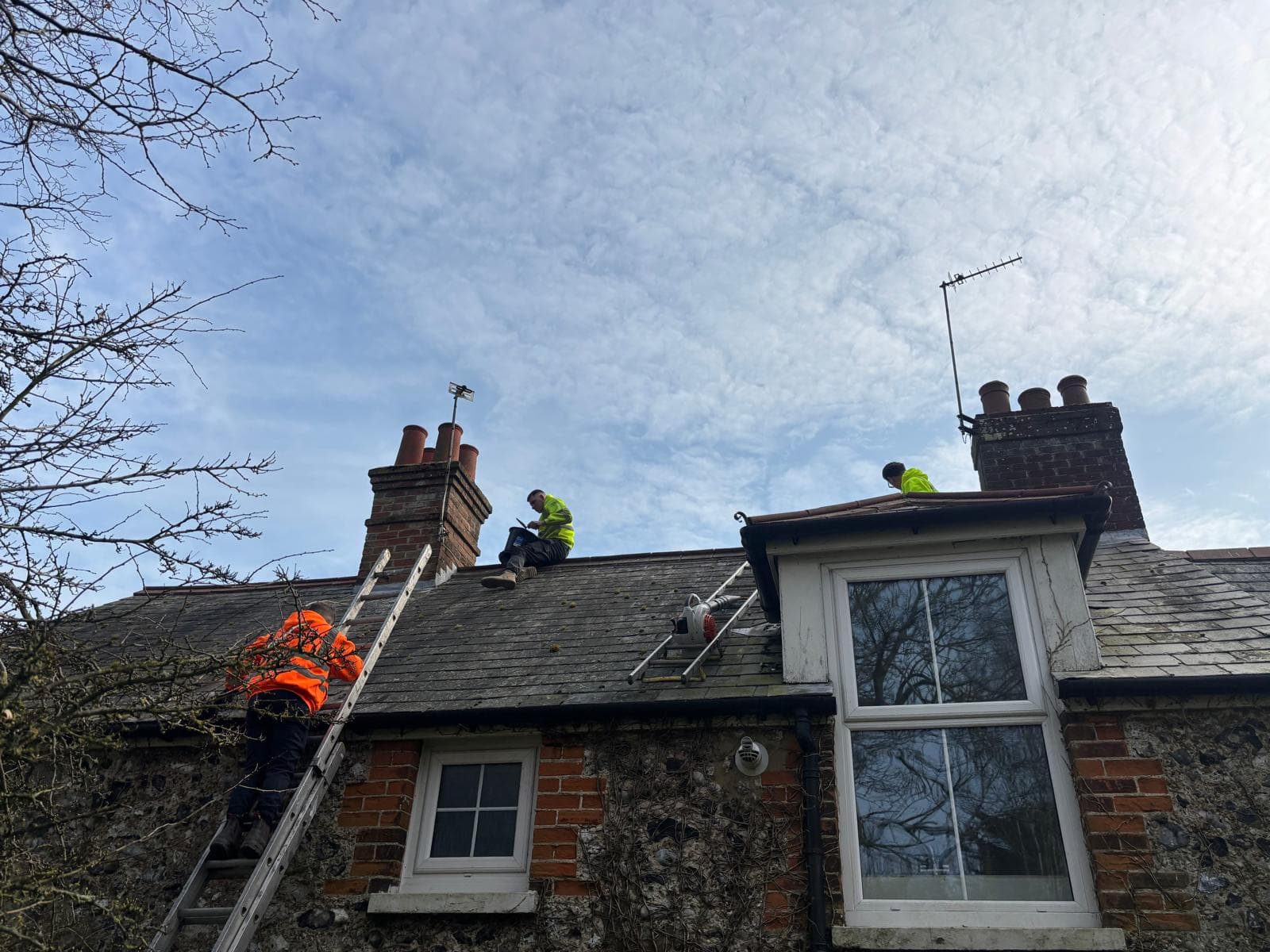
We inspect a stack from both sides. A drone survey shows the top of the stack, the flaunching, the pots, the state of every face and the flashing around its base, without anyone going near it. A look in the loft shows the brickwork of the stack as it passes through the roof space, any damp, and whether the breast below has been altered. Together they tell us whether the stack needs repointing, a partial rebuild or an engineer's view first, and we will say plainly which.
If your chimney has started to lean, or you are not sure whether it always looked like that, get in touch before the winter storms do the deciding. Hythe and Folkestone Roofers will look at the stack properly, tell you honestly whether it is a repair or a rebuild, and do the brickwork and leadwork together so it stays straight.
Tell us what the roof is doing
Tell us the address and what you are seeing, and we will come and look. Hythe, Folkestone and across east Kent.
126-128 High Street, Hythe, Kent, CT21 5LE
Emergency work is covered 24 hours a day, right across Kent.