
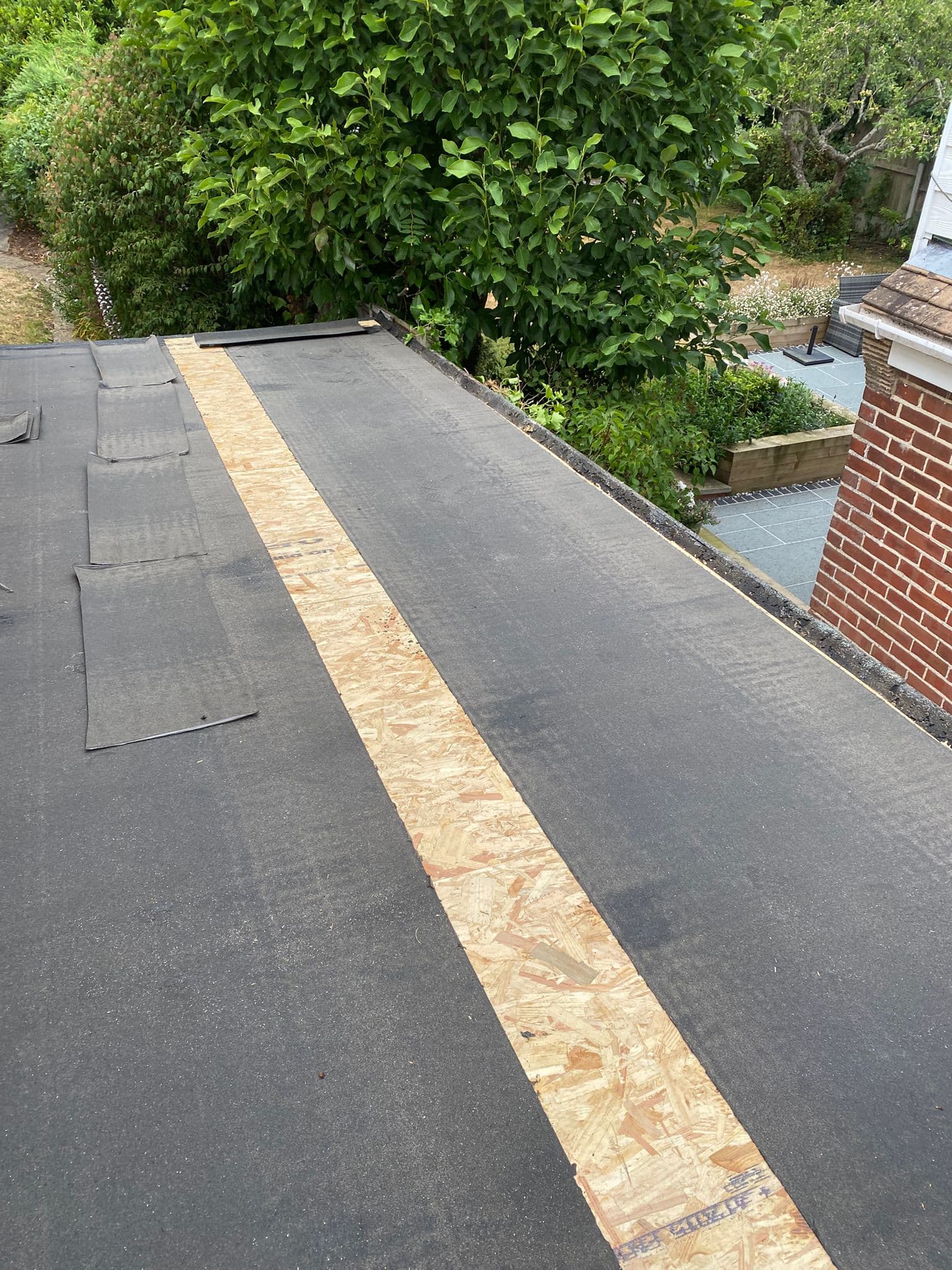
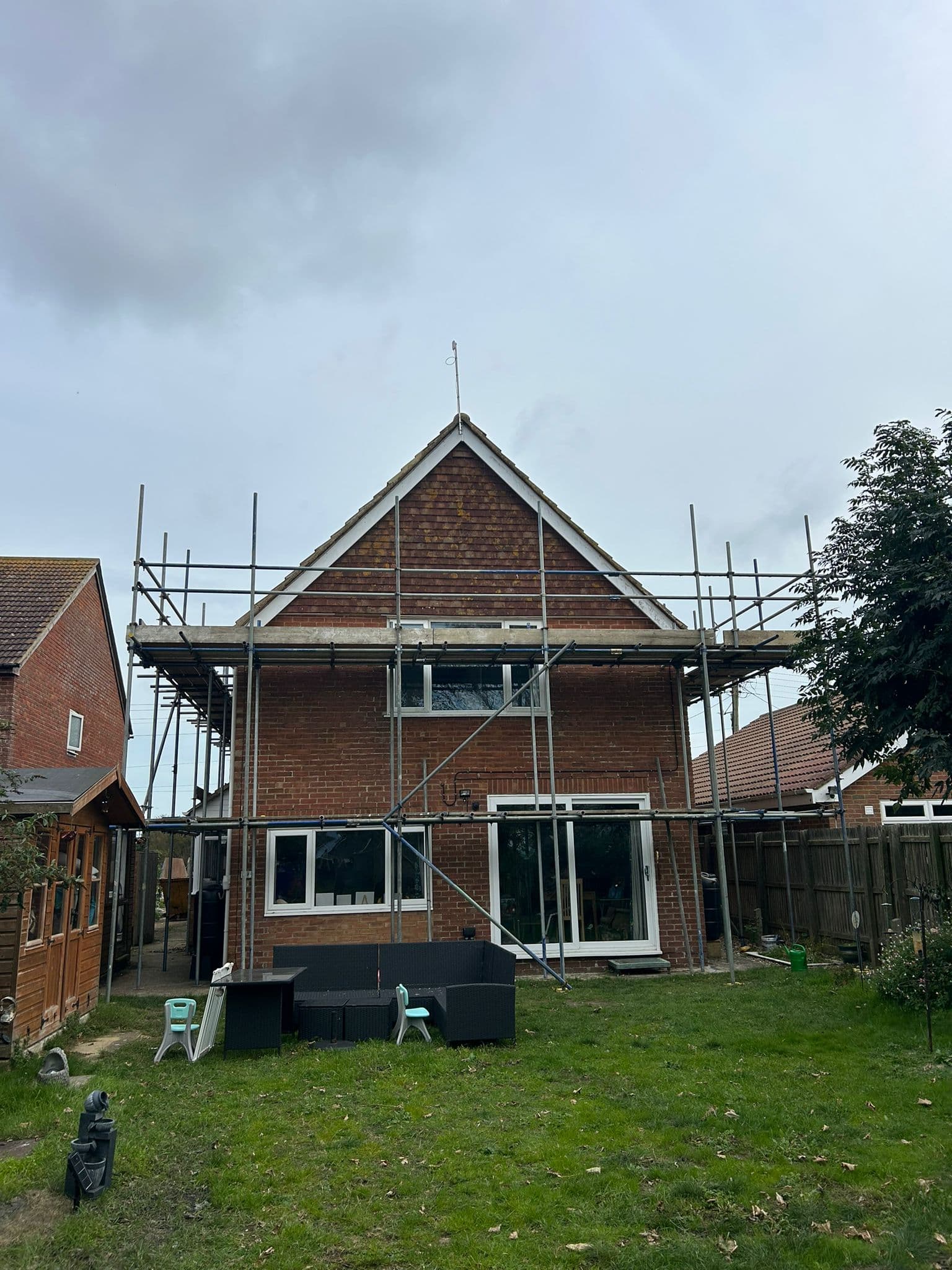
Brickwork and repointing in Hythe, Folkestone and Kent
Repointing in the right mortar, damaged bricks cut out and replaced, and walls and stacks rebuilt.
Brickwork looks permanent, but the mortar between the bricks is meant to be the part that wears. On a well built wall the joints weather slowly and are renewed every few generations, while the bricks go on almost indefinitely. When that order is reversed, usually because a wall has been repointed in the wrong mortar, it is the bricks that start to fail, and they are much harder to put back.
We repoint, repair and rebuild brickwork across Hythe, Folkestone and east Kent: house walls, chimney stacks, and garden and boundary walls. On older houses that means lime mortar more often than not, and on every house it means matching what is there, in colour, texture and the shape of the joint.
- Repointing in lime or cement mortar, matched to the wall
- Spalled and cracked bricks cut out and replaced
- Chimney stacks repointed or rebuilt
- Garden and boundary walls repaired or rebuilt
- Blockwork and stonework
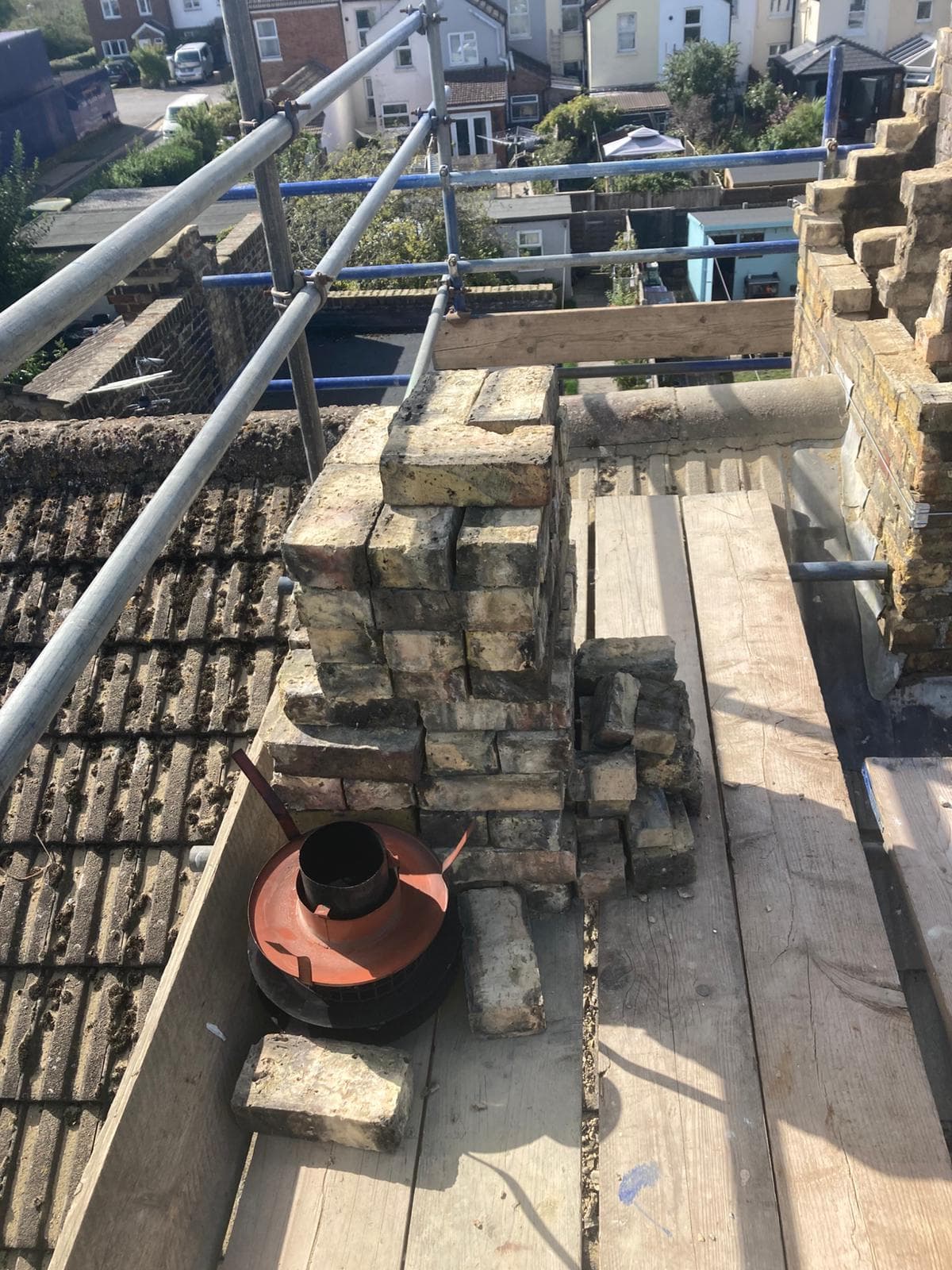
Yellow stock bricks stacked on a scaffold beside a chimney pot, ready for relaying
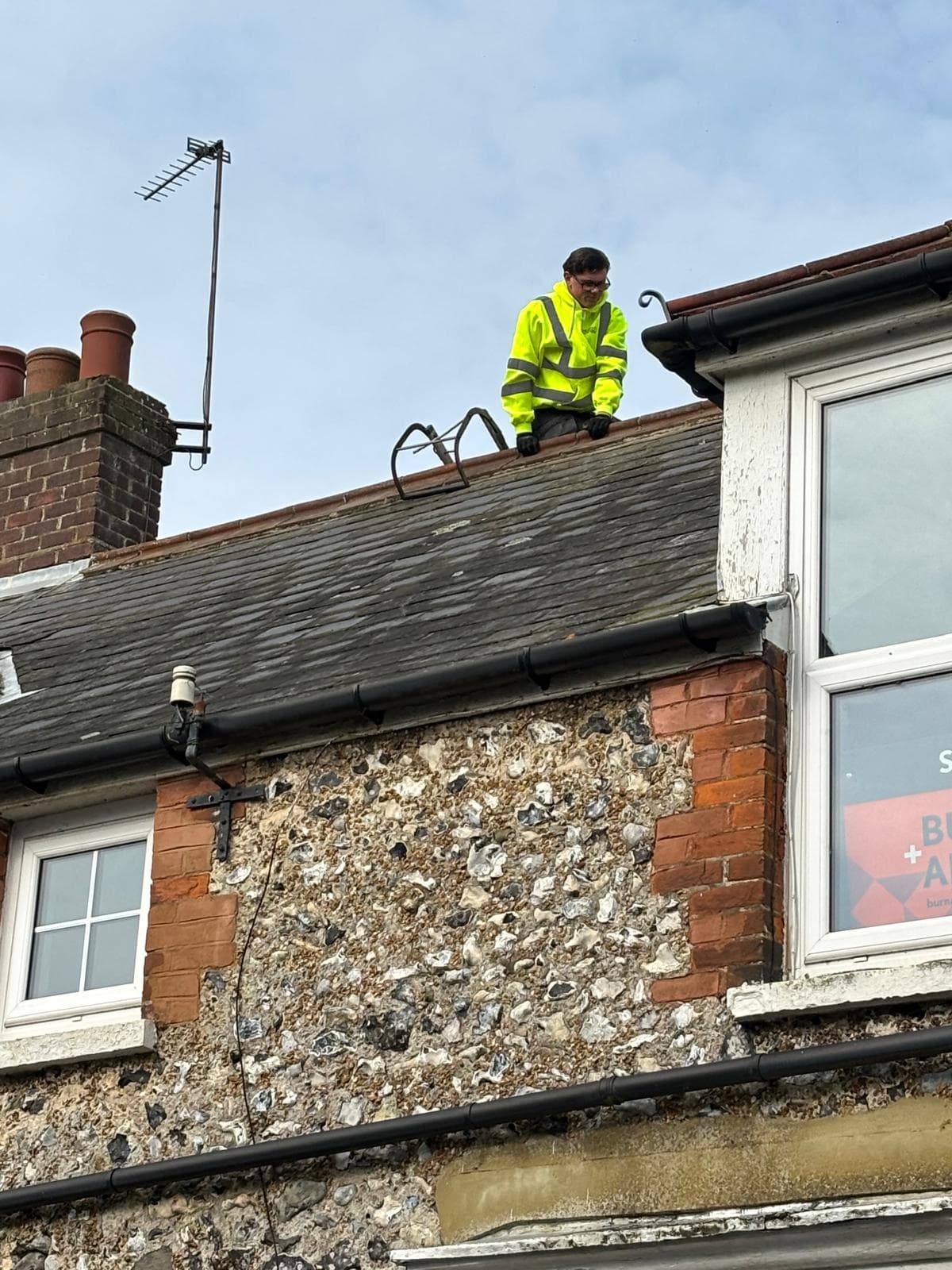
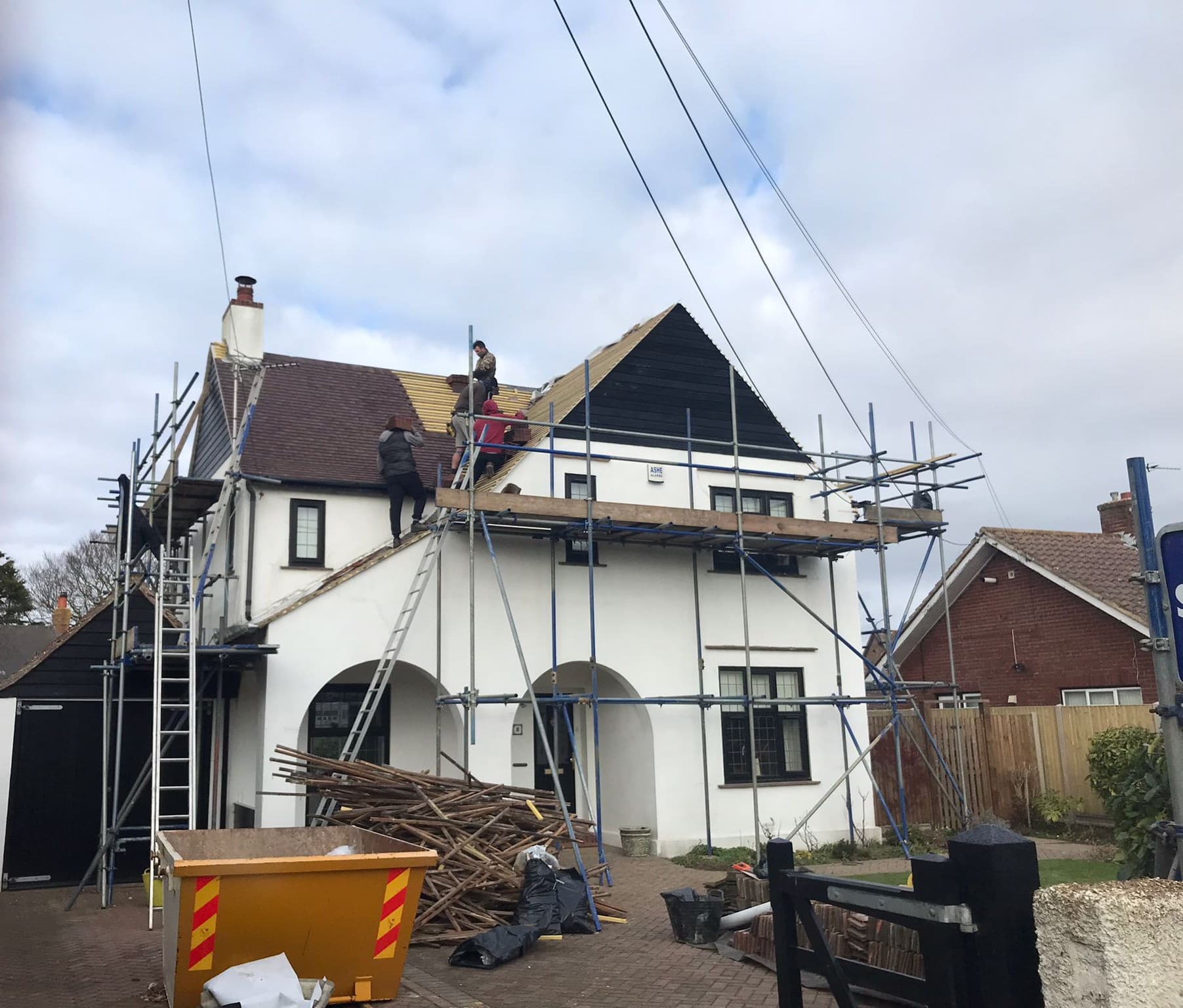
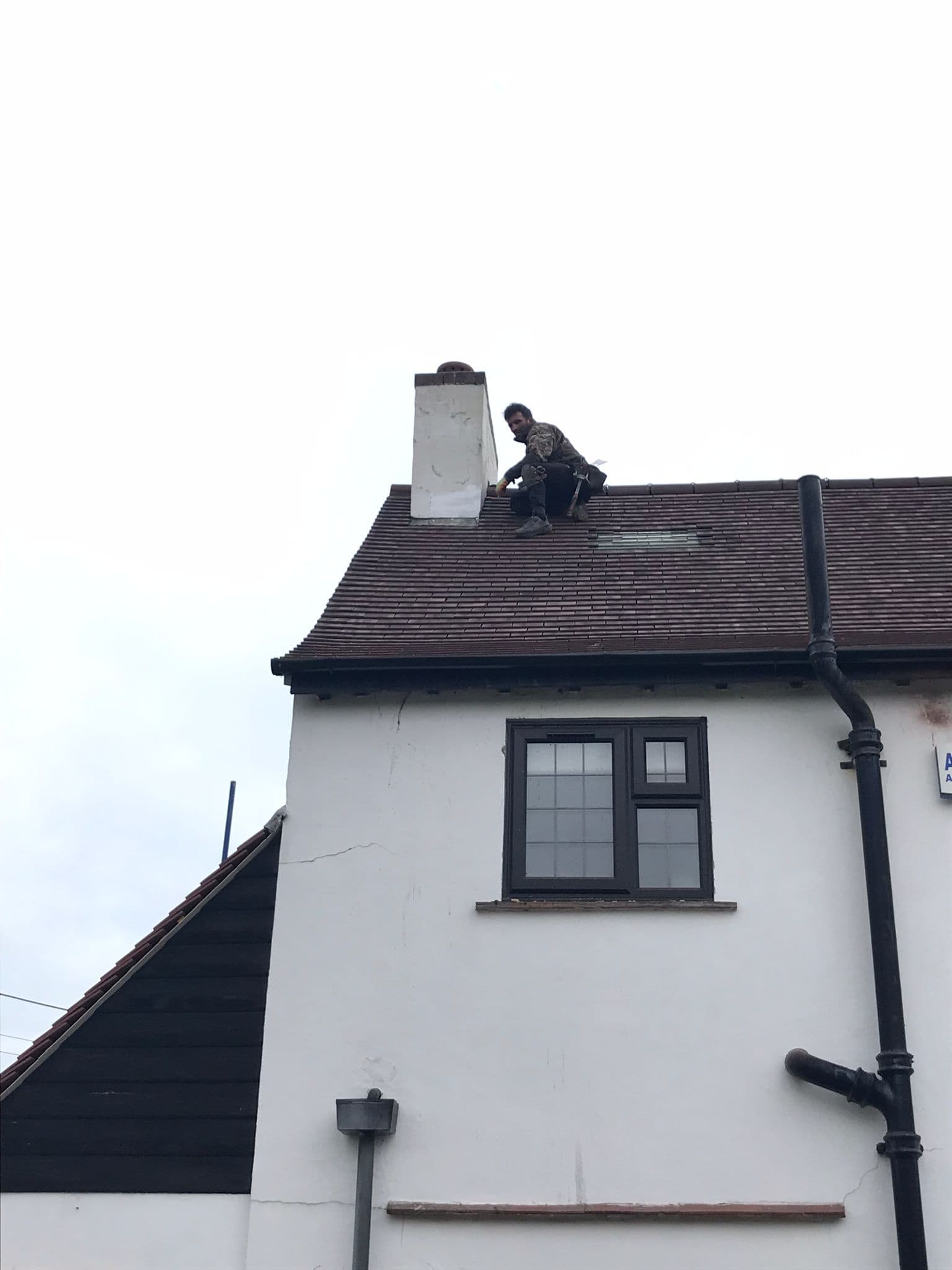
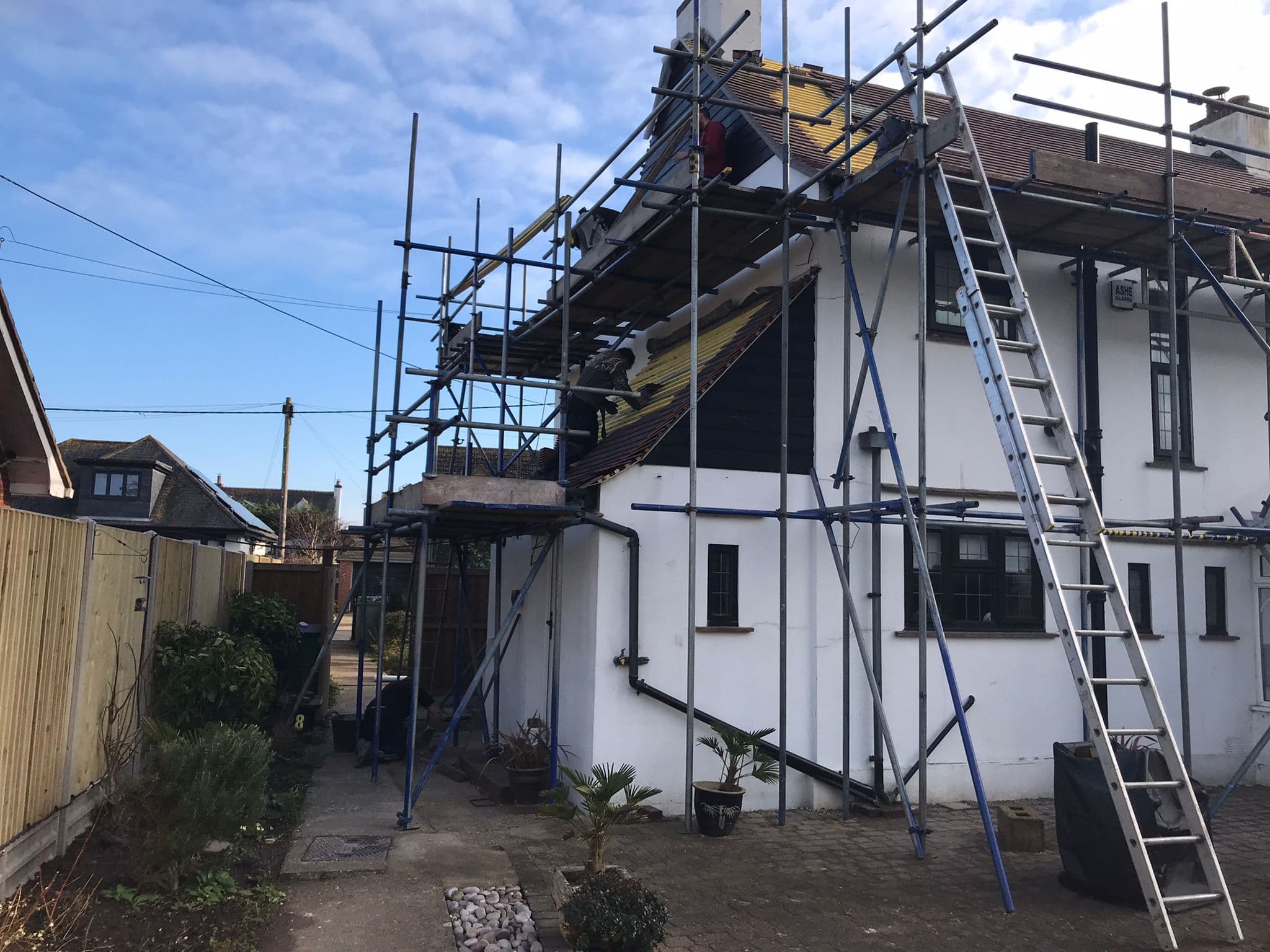
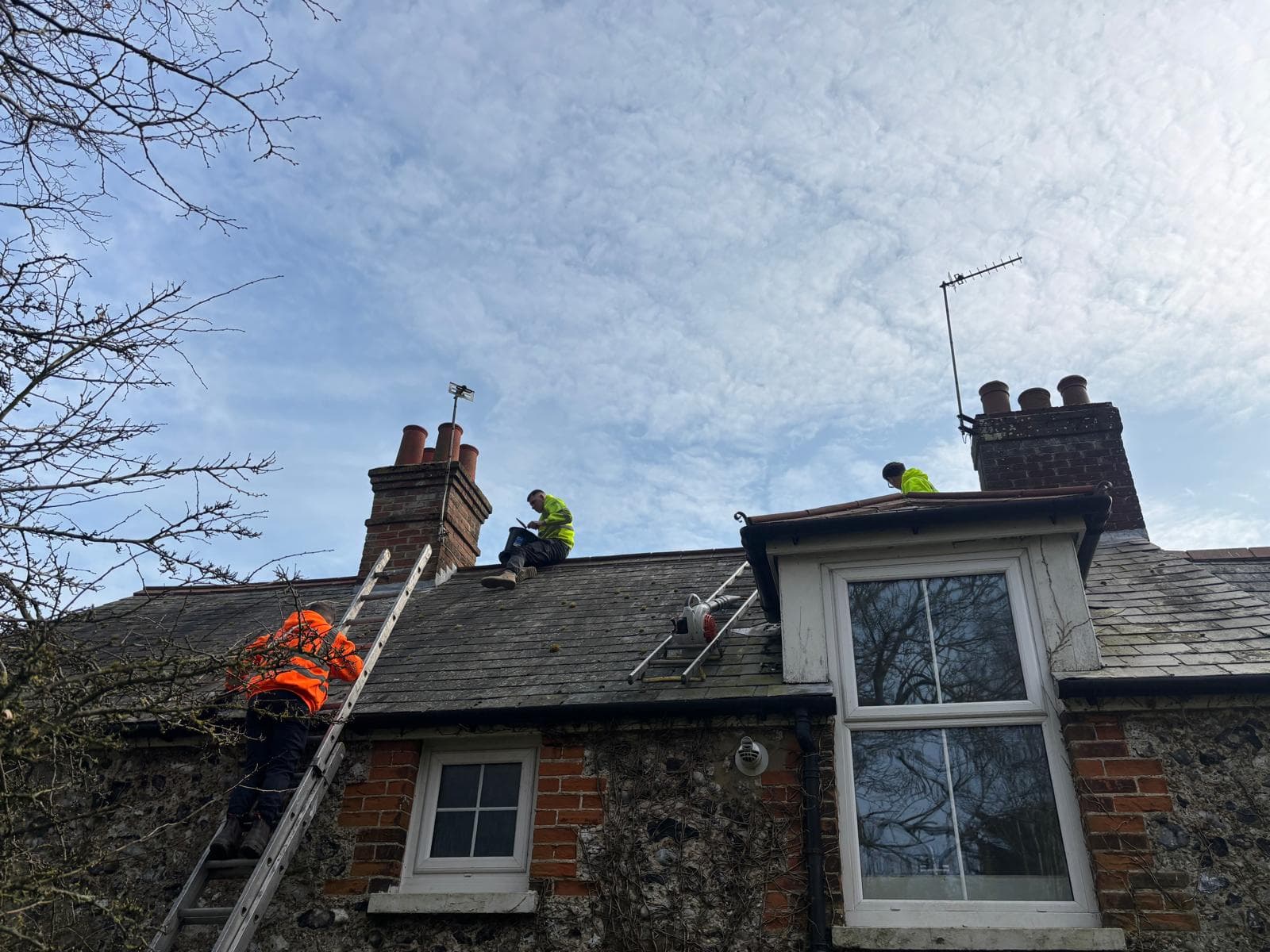
A flint and brick cottage with a roofer at work on the roof
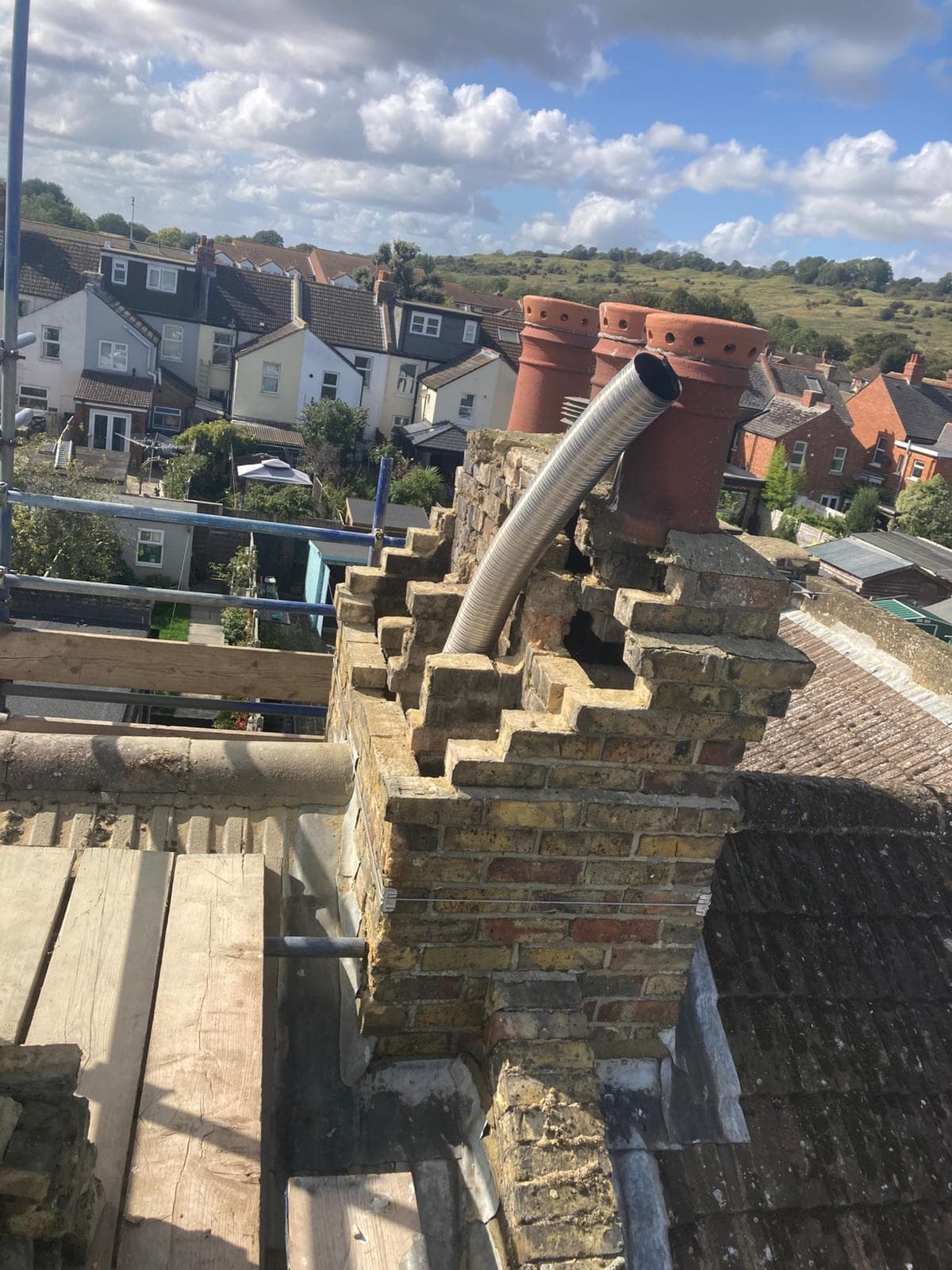
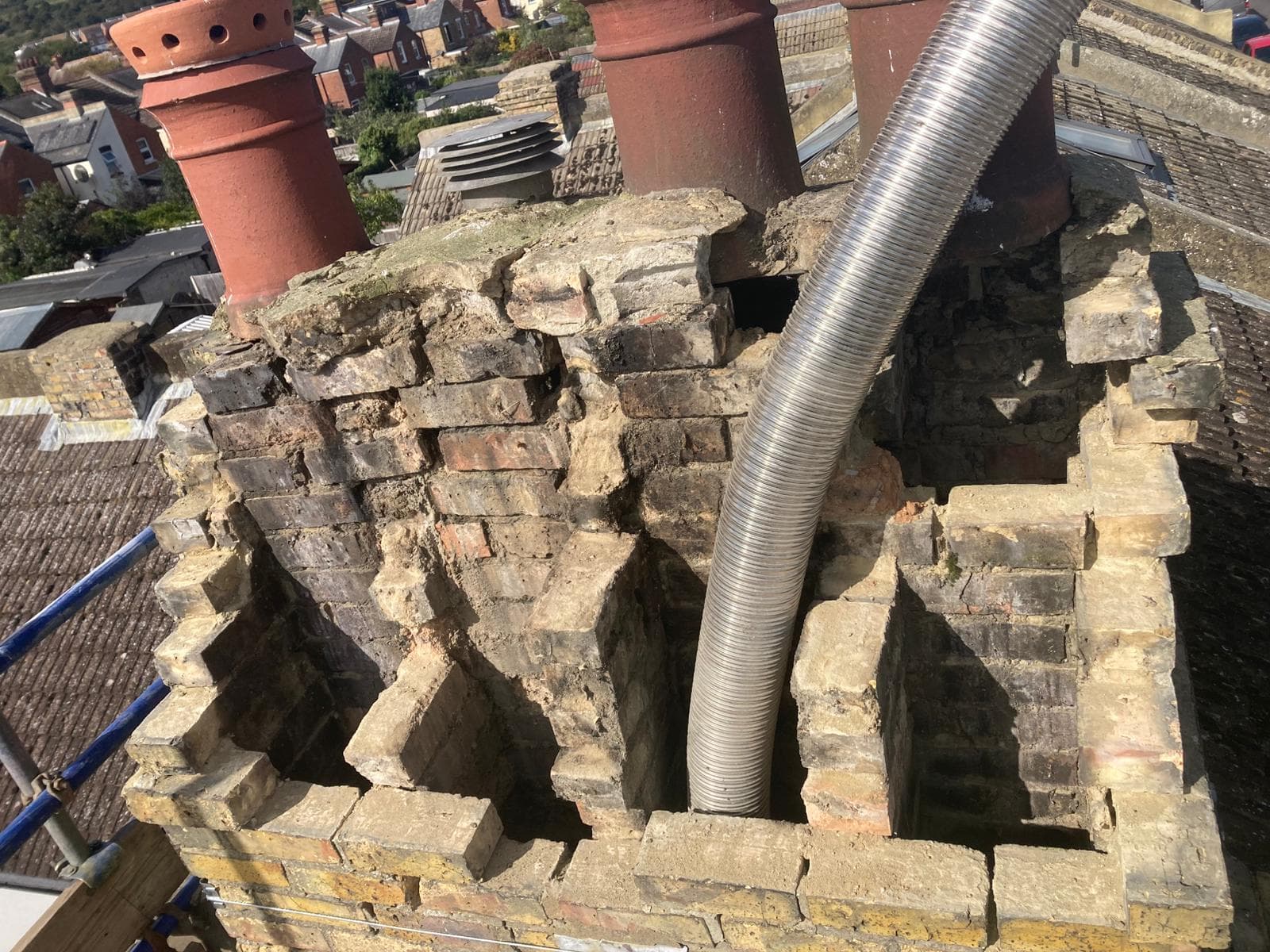
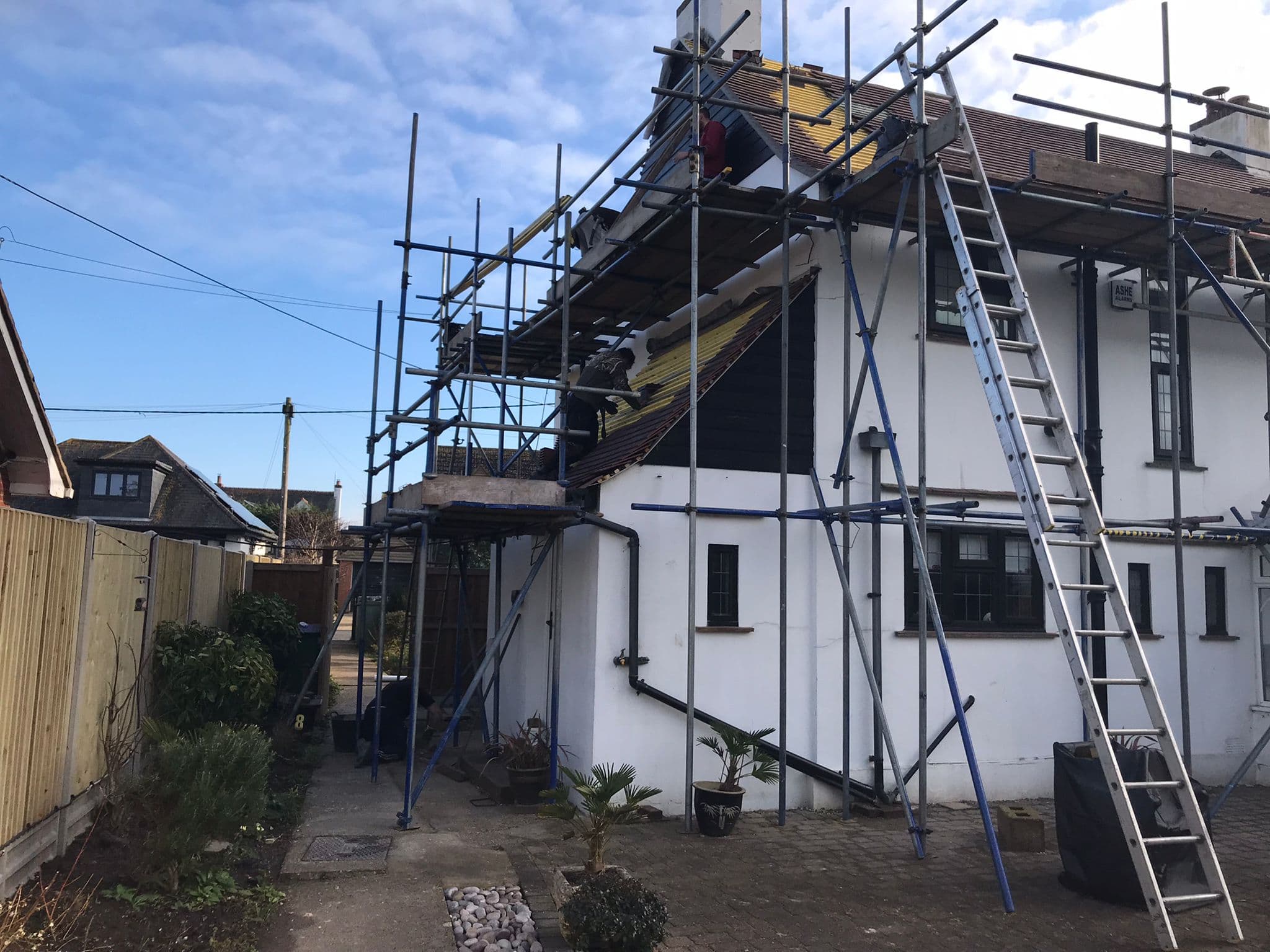
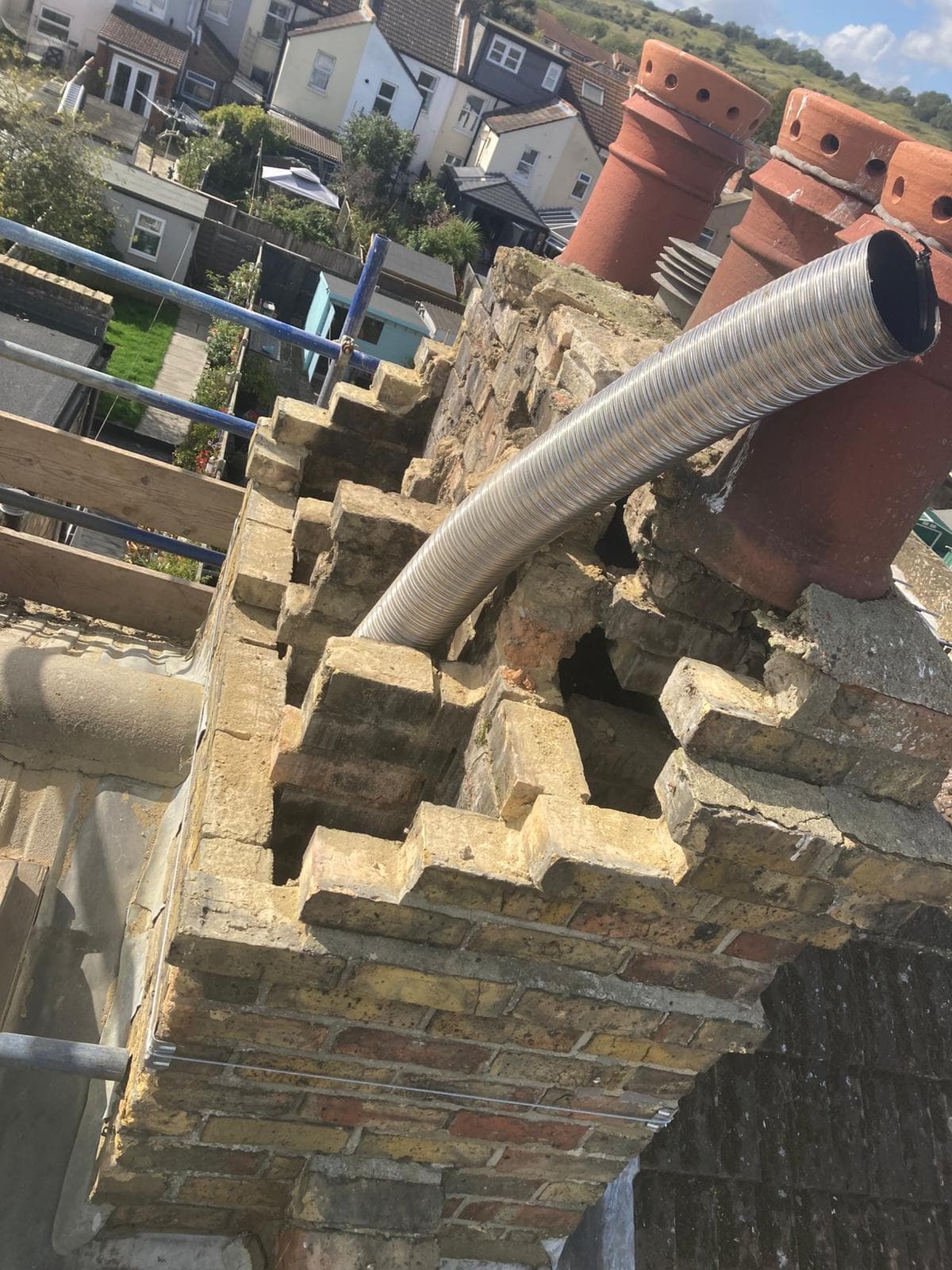
A chimney stack being rebuilt from a scaffold, with rooftops behind
When a wall needs repointing
Not every wall with some tired mortar needs repointing all over. Walls are often repointed too soon, and raking out the old mortar can itself damage the edges of the bricks. The time to act is when the mortar has actually failed.
- Mortar you can scrape out with a key, or that has fallen out and left gaps
- Joints worn back well behind the face of the brick
- Damp patches inside that line up with the wall facing the weather
- Plants or moss growing in the joints
- Cracks stepping diagonally through the joints, which need checking for movement before anyone repoints over them
Lime or cement, and why it matters
Most houses built before about 1920 have solid walls of softer brick laid in lime mortar. Lime is weaker than the brick and lets moisture evaporate out of the wall through the joints. Repoint that wall in hard cement mortar and the moisture can no longer get out through the joints, so it leaves through the bricks instead, and frost pops the faces off them. That damage is called spalling, it is common on older houses, and much of it was caused by well meant repointing.
The rule is that the mortar should always be weaker than the brick. On a Victorian house in Folkestone or Hythe that nearly always means lime mortar. On a modern house built with hard bricks and a cavity, a cement based mortar is correct. We match the mortar to the wall, not the other way round.
How repointing is done properly
The old mortar is raked out to an even depth, roughly twice the width of the joint, without widening the joints or chipping the brick edges. The joints are brushed out and dampened, and the new mortar is packed in, in layers where the joints are deep, then finished to match the profile of the rest of the wall, whether flush, struck or rounded.
Lime mortar needs looking after while it sets. It has to be kept damp and protected from sun, wind, frost and heavy rain for days rather than hours, so the weather is part of the job, and in the depths of winter it is often better to wait.
Replacing damaged bricks
Where bricks have spalled, cracked or crumbled, they are cut out and replaced one at a time with new or reclaimed bricks matched for size, colour and texture. Matching older brickwork usually means reclaimed bricks, because brick sizes have changed over the years and a modern brick sits proud or short in an old wall.
On a coastal wall, salt crystallising in the face of a soft brick causes the same kind of crumbling, and the seaward side of a house near the front can need attention long before the others. It is worth finding out why a brick failed before replacing it, or the new one goes the same way.
Chimneys and garden walls
Chimney stacks take more weather than any other brickwork on a house and often need repointing well before the walls below. Garden and boundary walls have no roof over them at all, so the coping along the top does the job a roof does, and a wall with a failed coping, or no damp proof course, deteriorates from the top down.
Freestanding walls also move. A long wall with no expansion joints, a wall with a tree root under it, or one leaning towards the road may need rebuilding rather than repointing, and a wall holding back soil is a structural job that needs an engineer's view first.
Also from us
The rest of what we do
Roof repairs
From small leaks and slipped tiles to storm damage and structural problems.
Roof installations
New roofs built to specification in tile, slate, pitched or flat systems.
Domestic roofing
Homes across east Kent, from one repair to a full replacement.
Commercial roofing
Flat, pitched and industrial systems, worked around your opening hours.
24 hour call out
Storm damage, sudden leaks and urgent work, any time, right across Kent.
Drone surveys
A full inspection with photographs and video, and no scaffold to hire.
Guttering and fascias
Gutters, downpipes, fascias and soffits repaired or replaced, cast iron included.
Chimneys and leadwork
Chimney repointing and rebuilds, flaunching, caps, flashings and lead valleys.
General building
Extensions, brickwork, rendering, chimneys, guttering, driveways and groundworks.
Extensions
Extensions and conversions, with the roof done by people who roof for a living.
Rendering
Cracked and blown render repaired, and walls re-rendered in the right render for them.
Driveways and patios
Driveways and patios laid on a proper base, built to drain and to the planning rules.
Tell us what the roof is doing
Tell us the address and what you are seeing, and we will come and look. Hythe, Folkestone and across east Kent.
126-128 High Street, Hythe, Kent, CT21 5LE
Emergency work is covered 24 hours a day, right across Kent.