Guttering, fascias and soffits in Hythe, Folkestone and Kent
Leaking joints, sagging runs, rotten boards and tired cast iron, sorted so the water goes where it should.
Guttering is the least glamorous part of a house and one of the most expensive to ignore. A gutter that leaks at a joint or overflows at a corner sends water down the same stretch of wall every time it rains, and that is how a blocked outlet turns into damp inside, blown render or a rotten window head.
We repair and replace guttering, downpipes, fascias and soffits across Hythe, Folkestone and east Kent. Because we are roofers, we look at the bottom edge of the roof at the same time, and a surprising amount of gutter trouble starts there.
- Leaking joints and outlets resealed or replaced
- Sagging runs rebracketed and set back to a proper fall
- Blocked gutters, hoppers and downpipes cleared
- Rotten fascia boards and soffits replaced, not capped over
- Soffit and eaves ventilation where the roof space needs air
- Old cast iron assessed for repair before anyone suggests replacing it
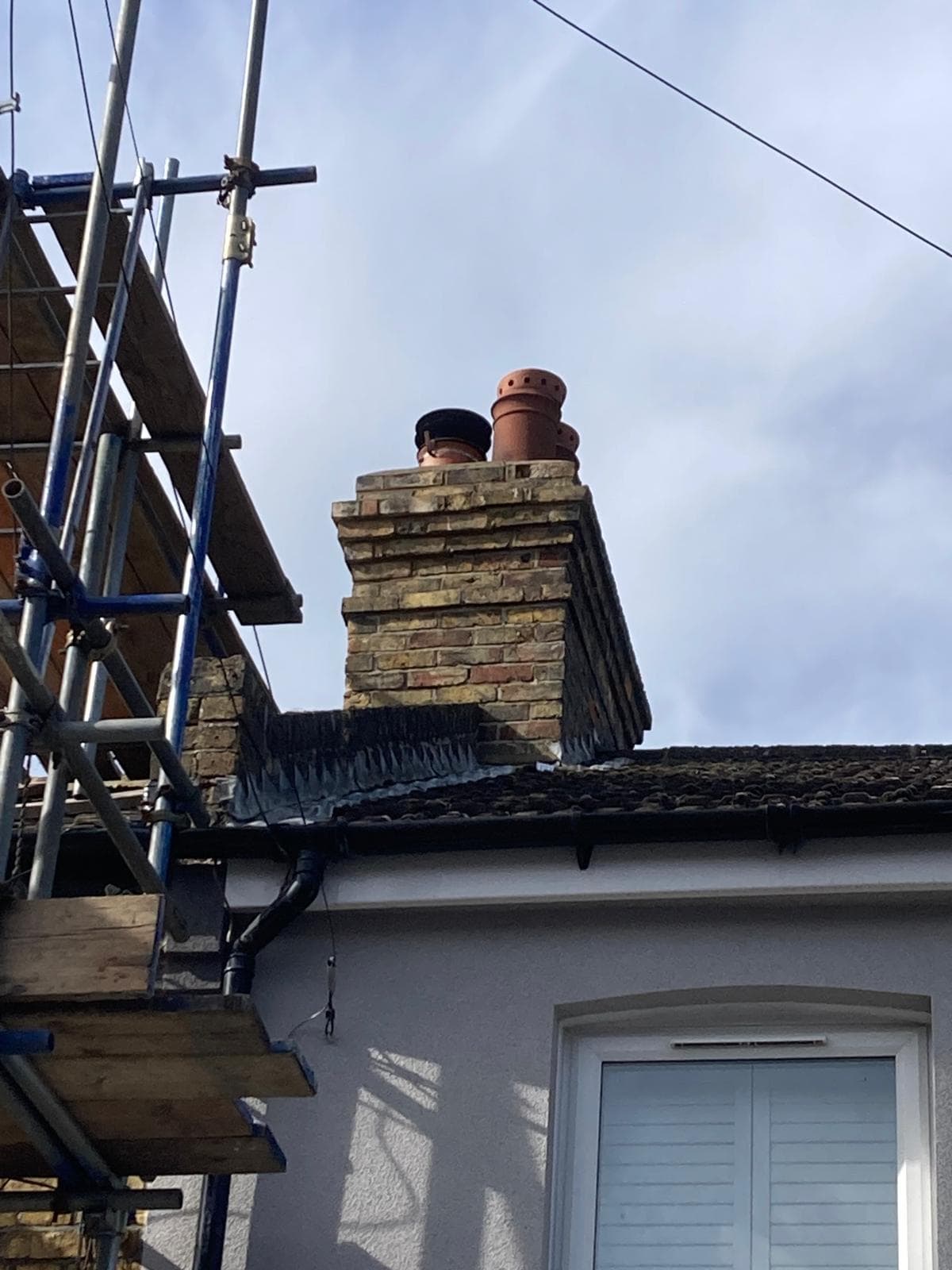
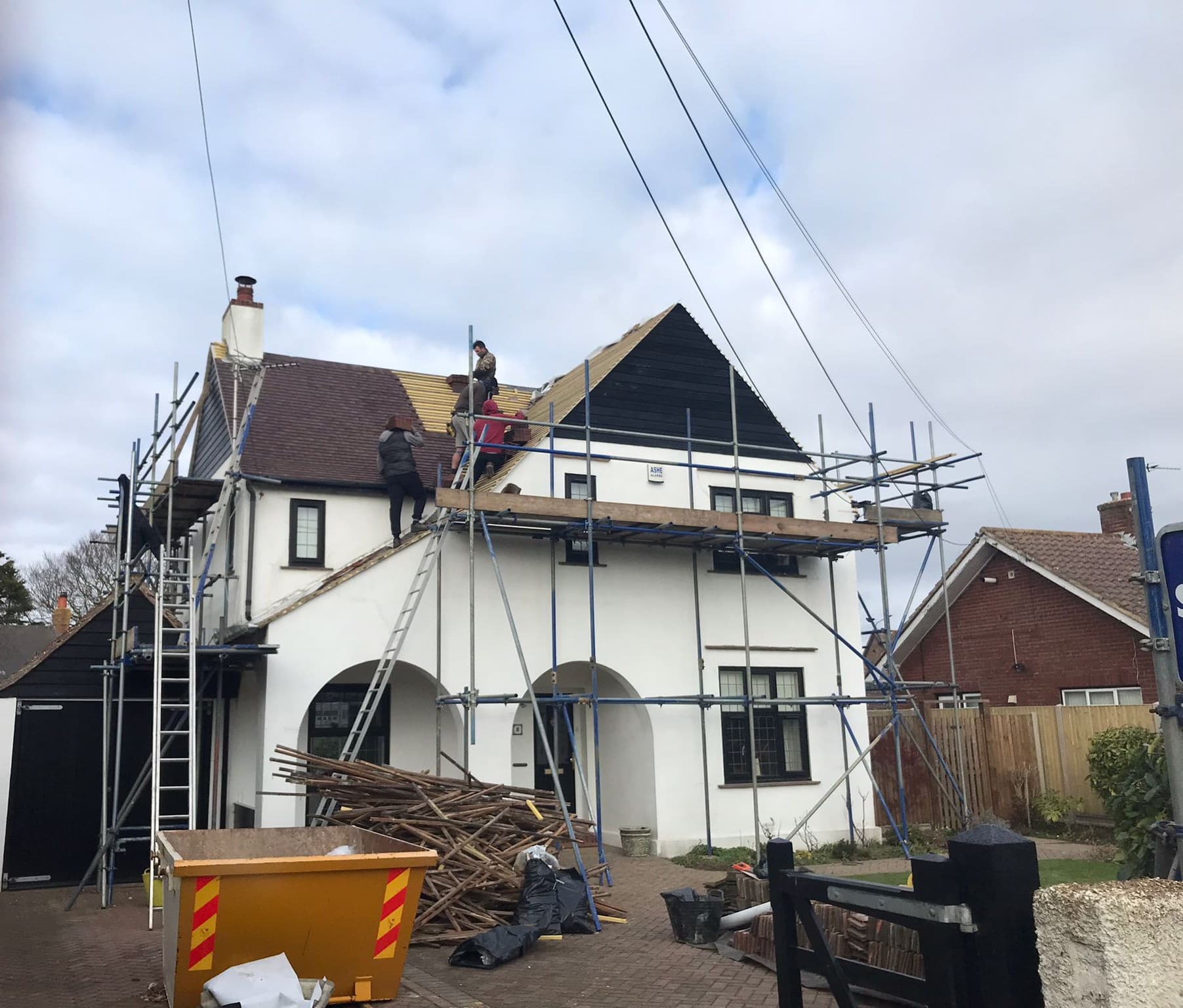
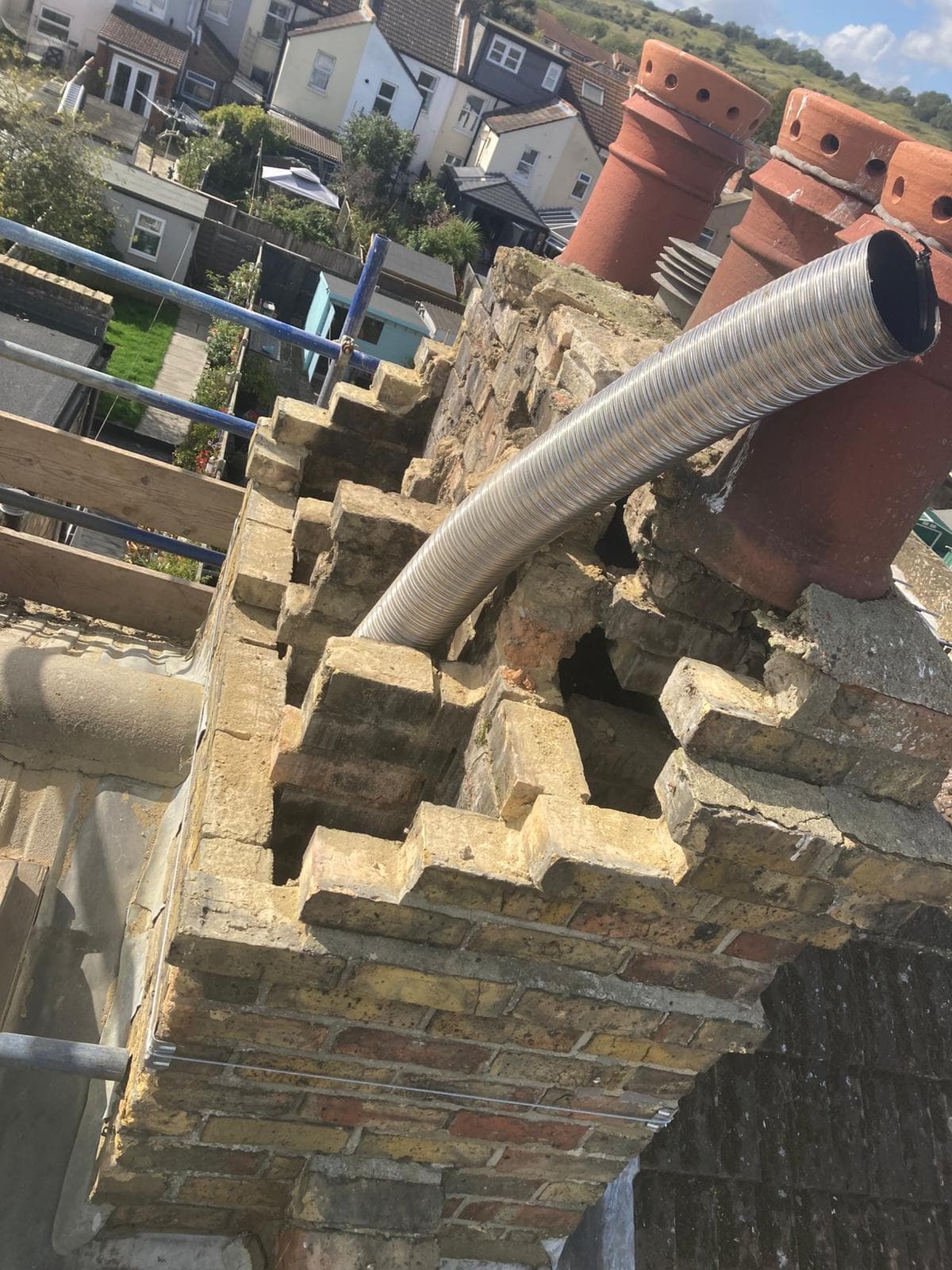
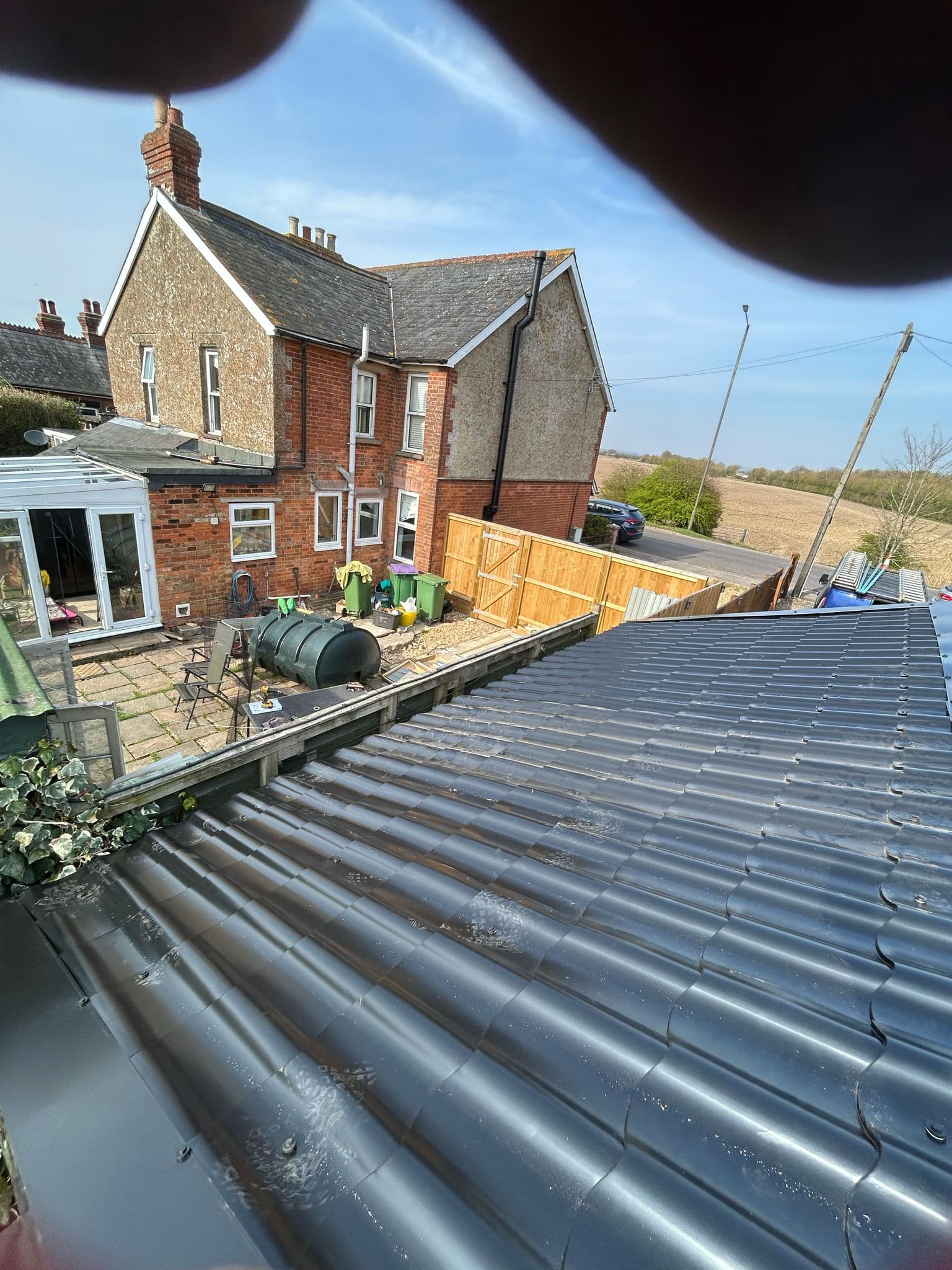
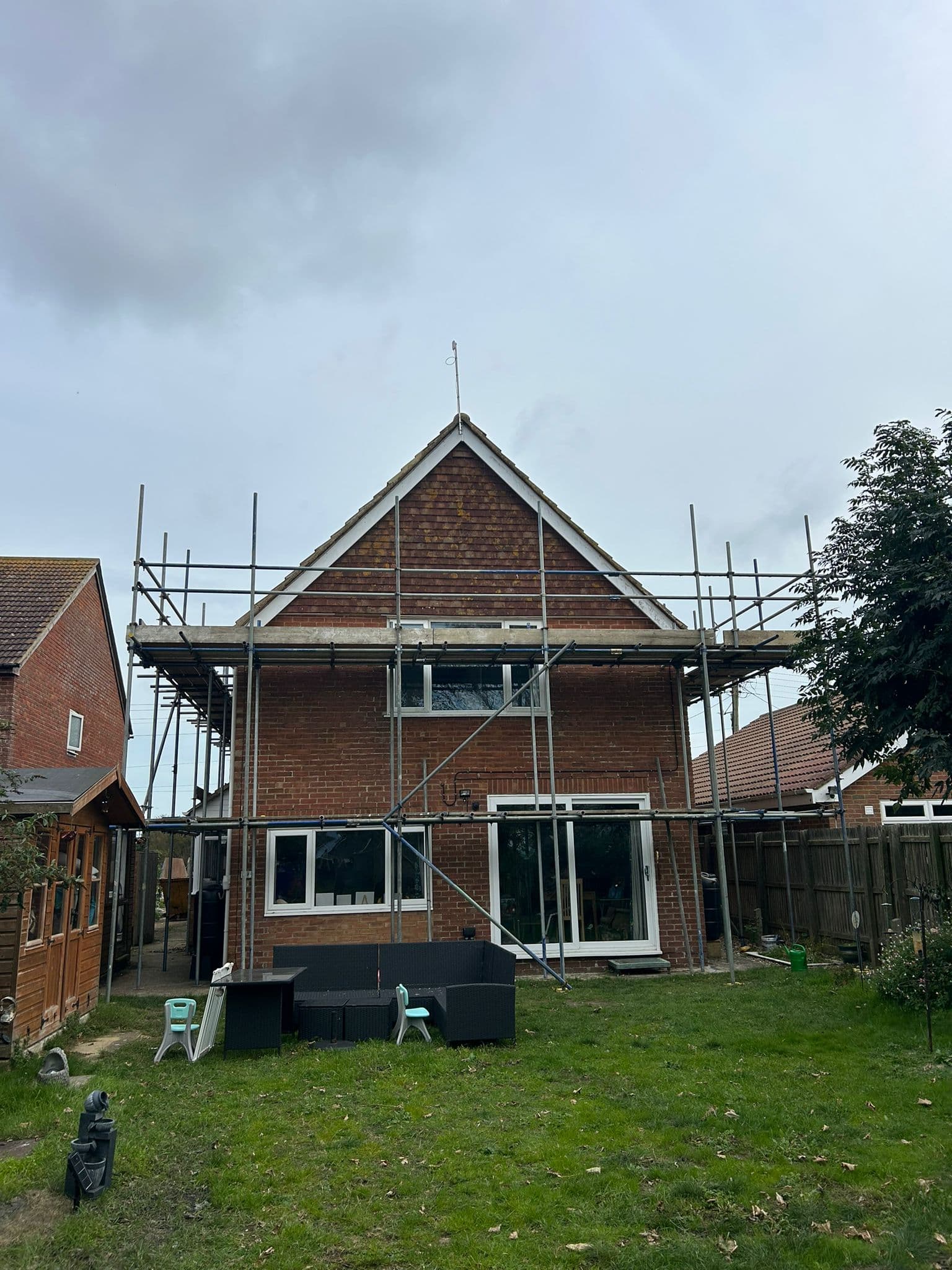
Fascia and gutter work on a rendered house in Hythe, with scaffolding up beside the chimney
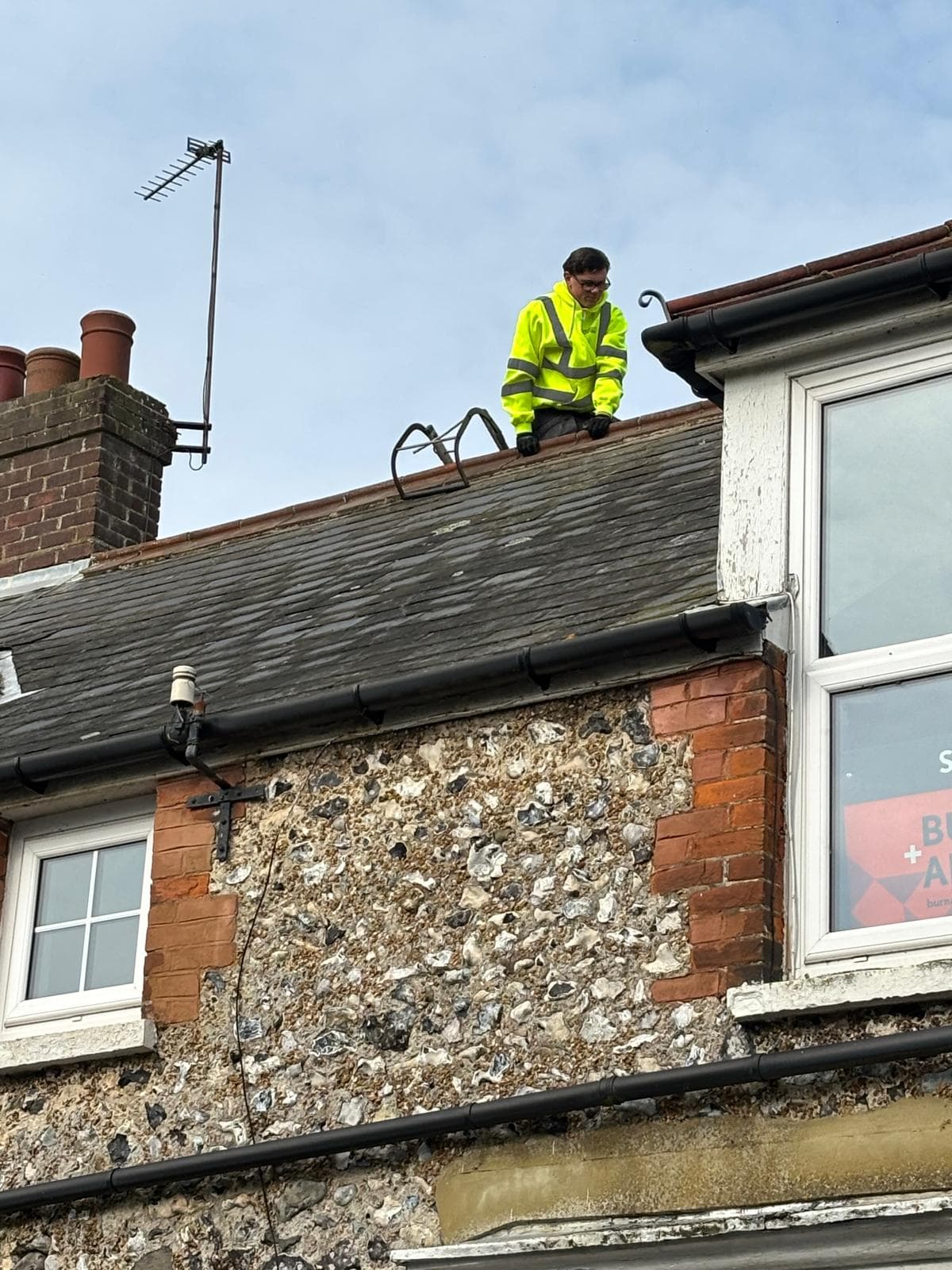
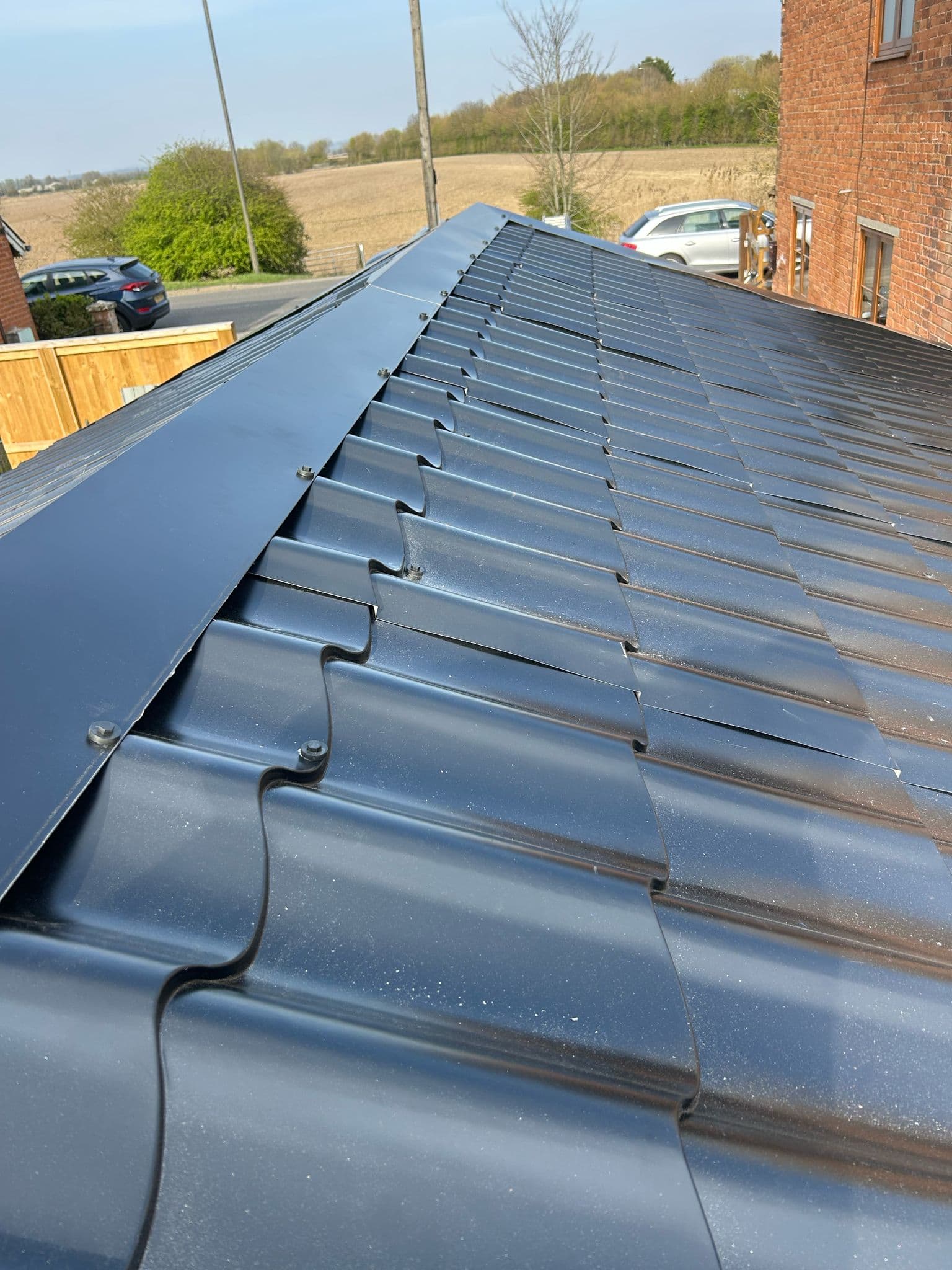
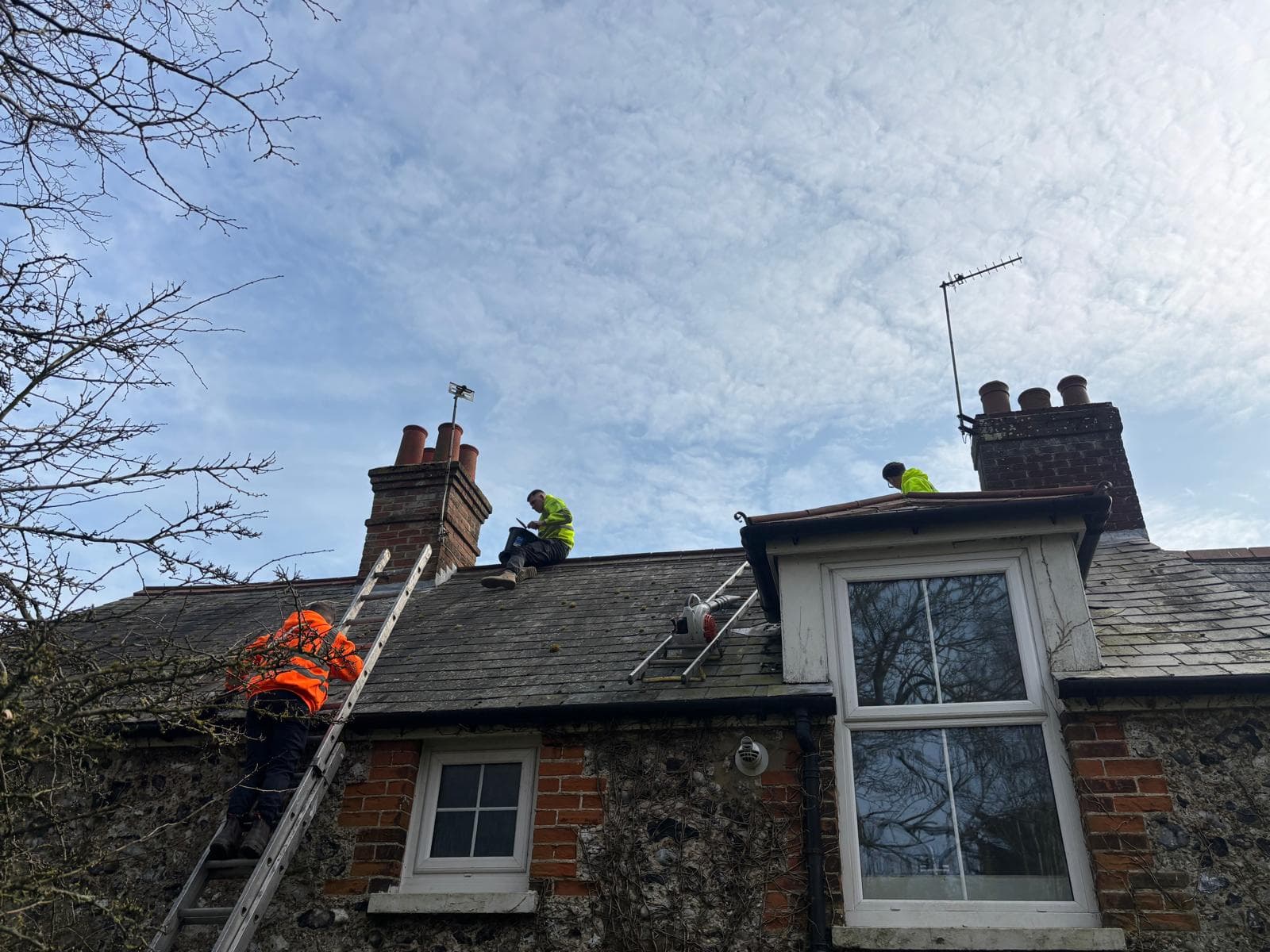
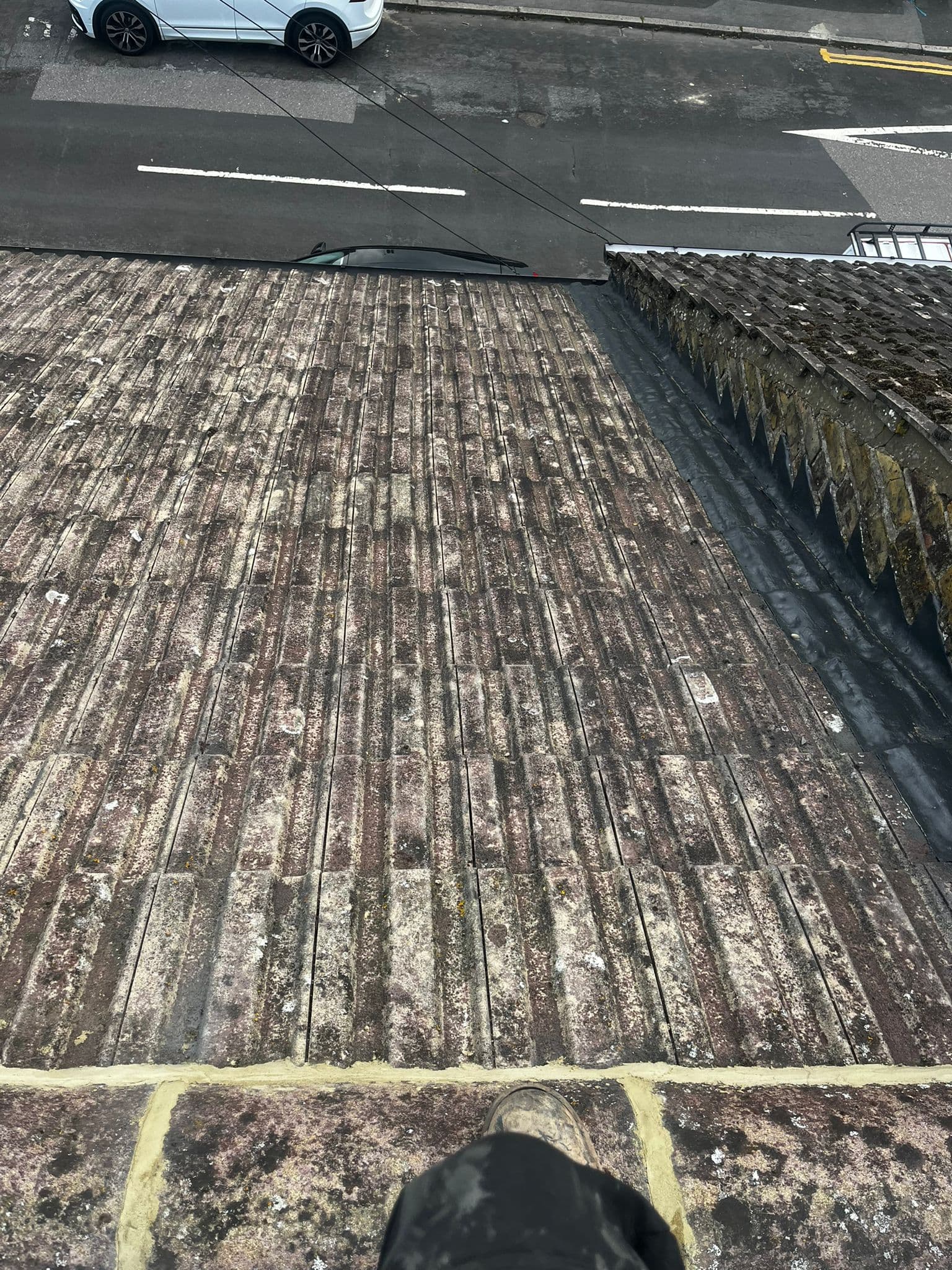
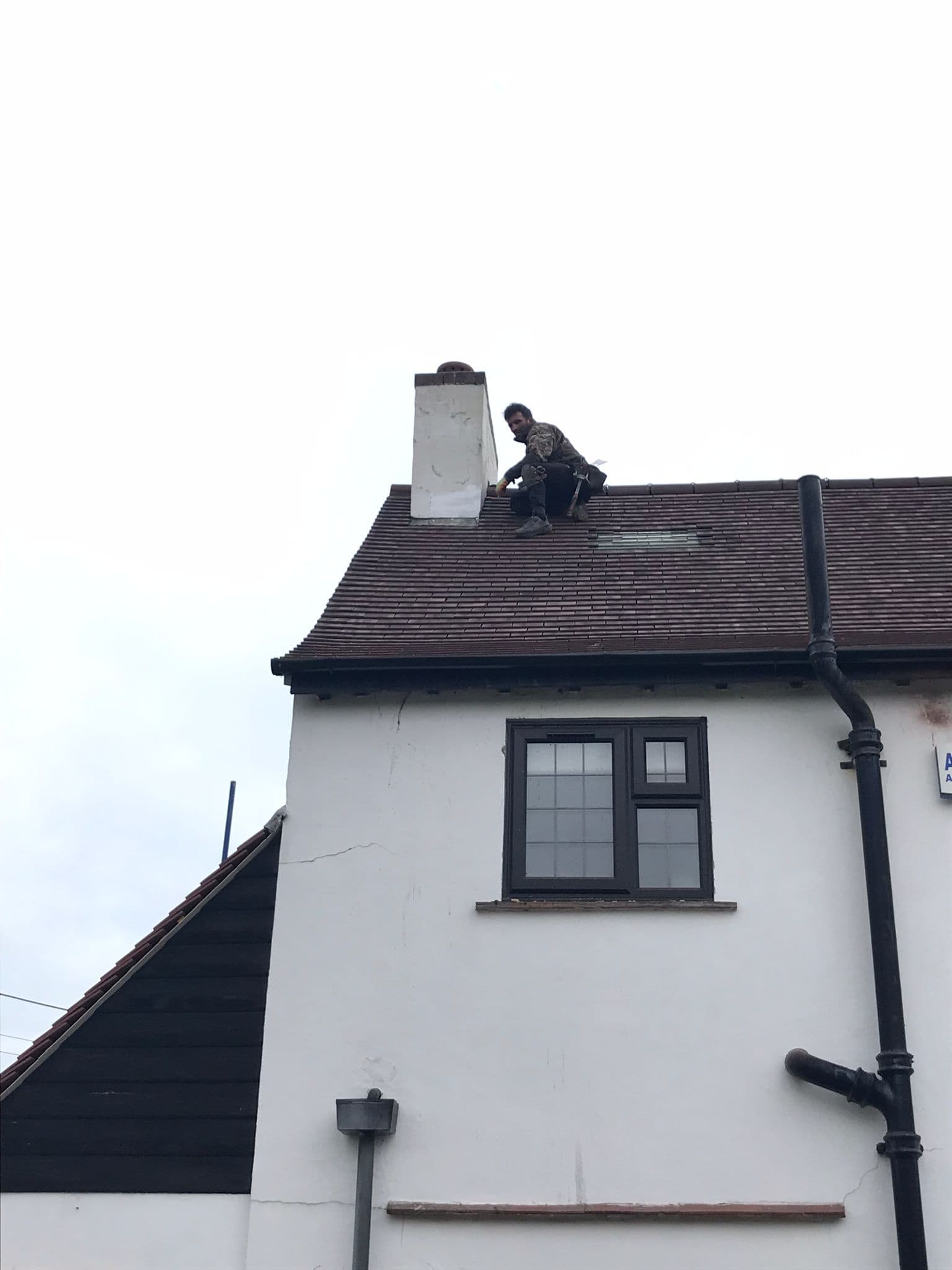
A roofer on the roof of a flint and brick house, above its gutter and fascia
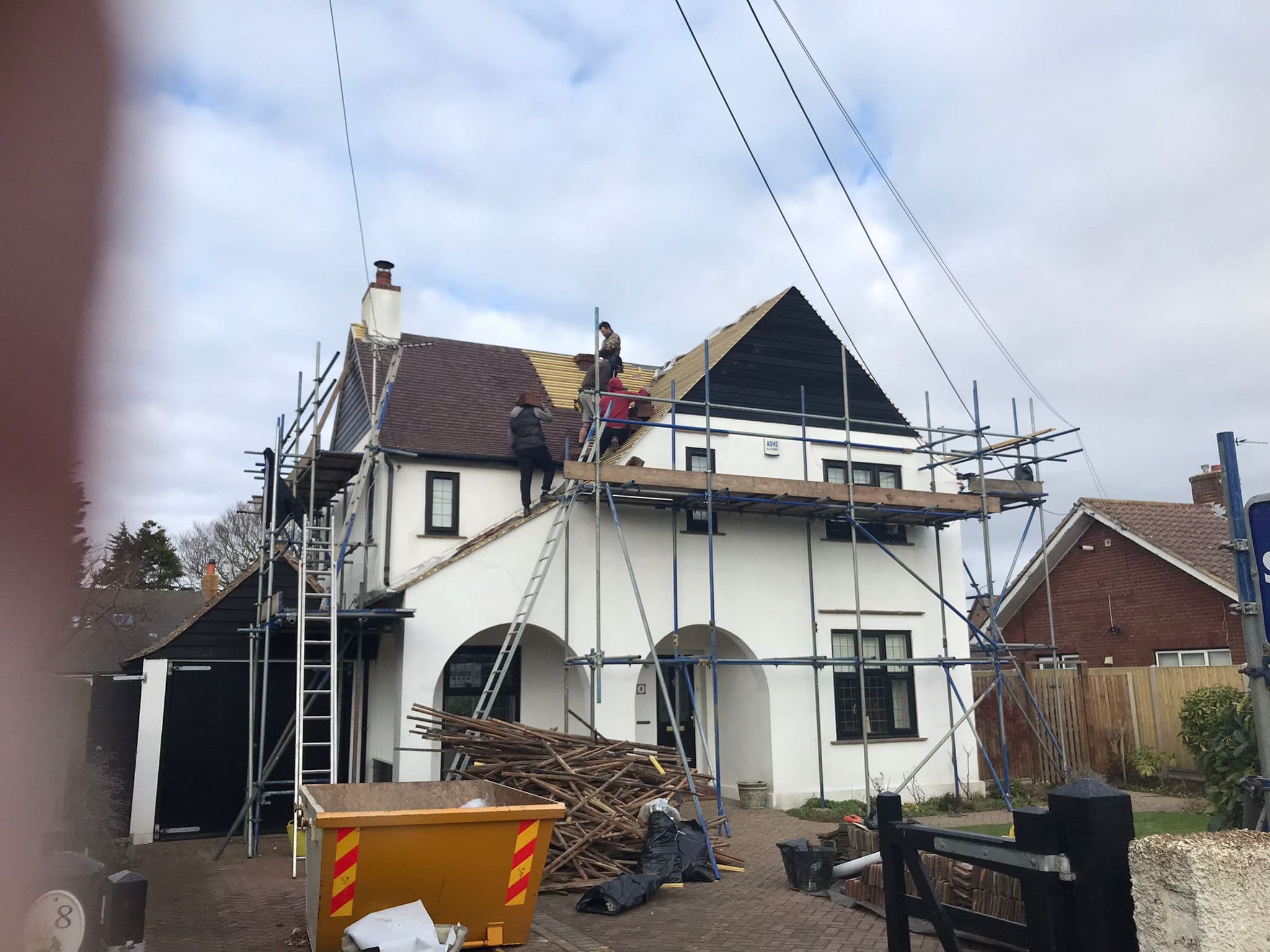
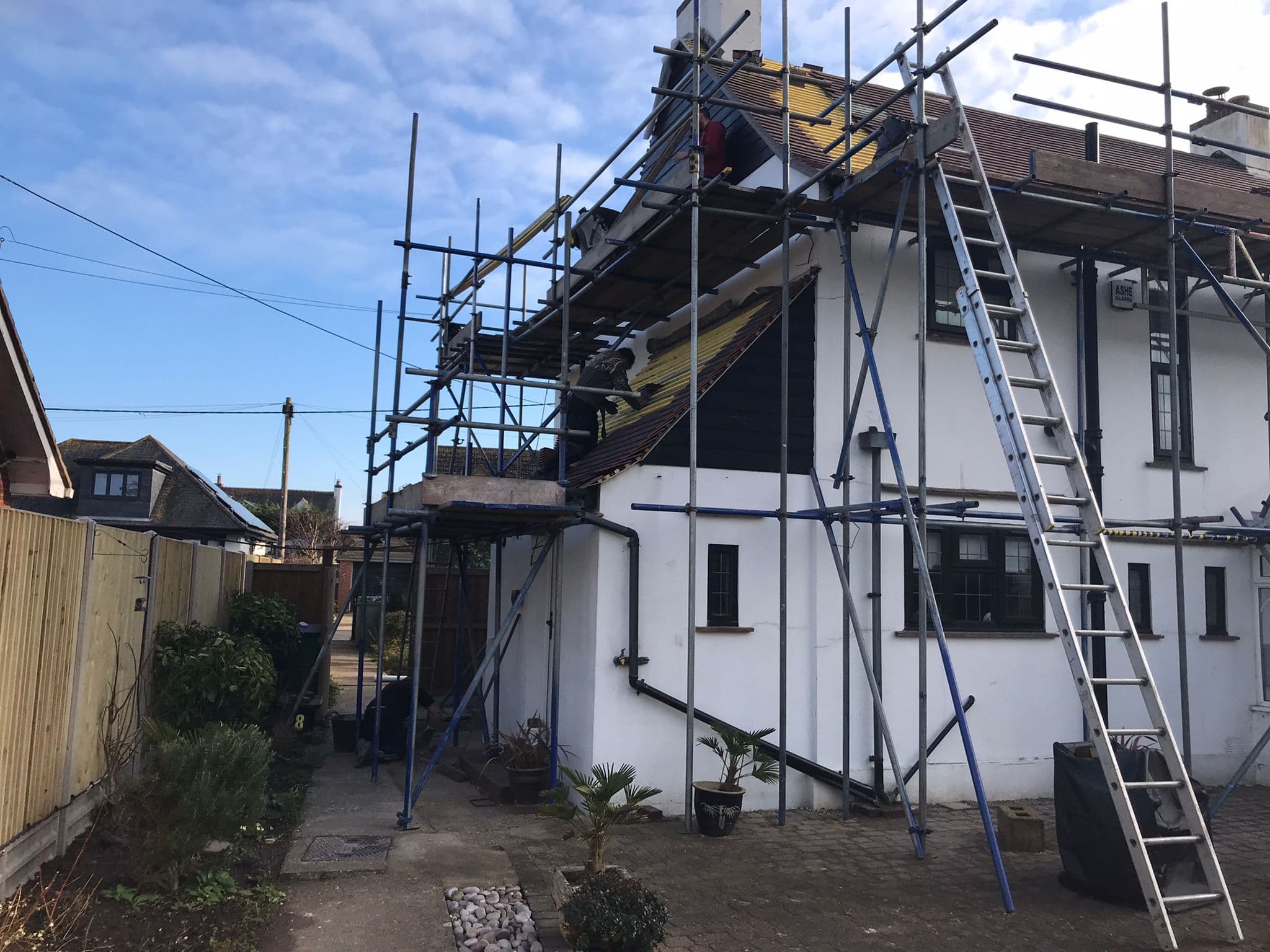
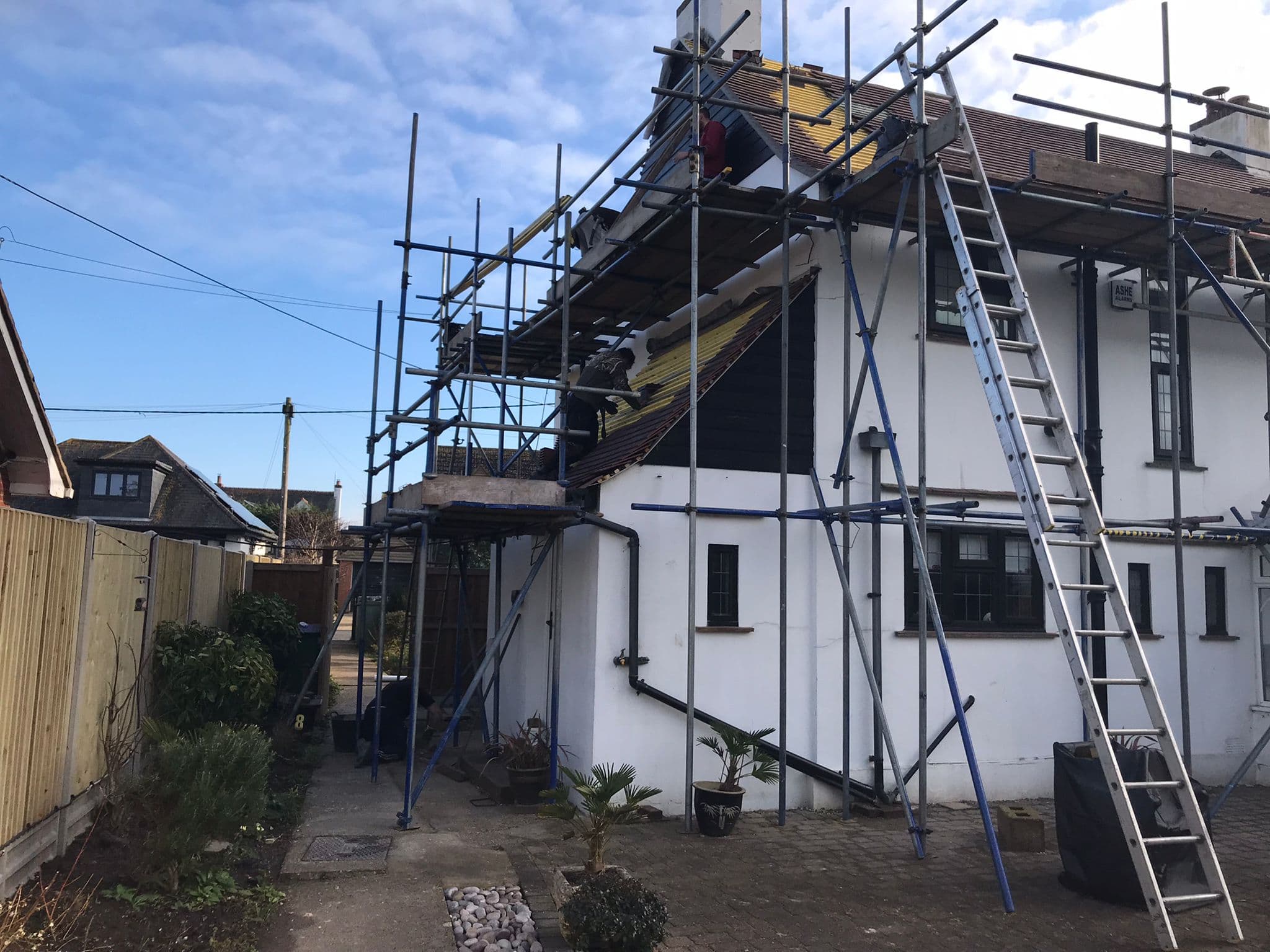
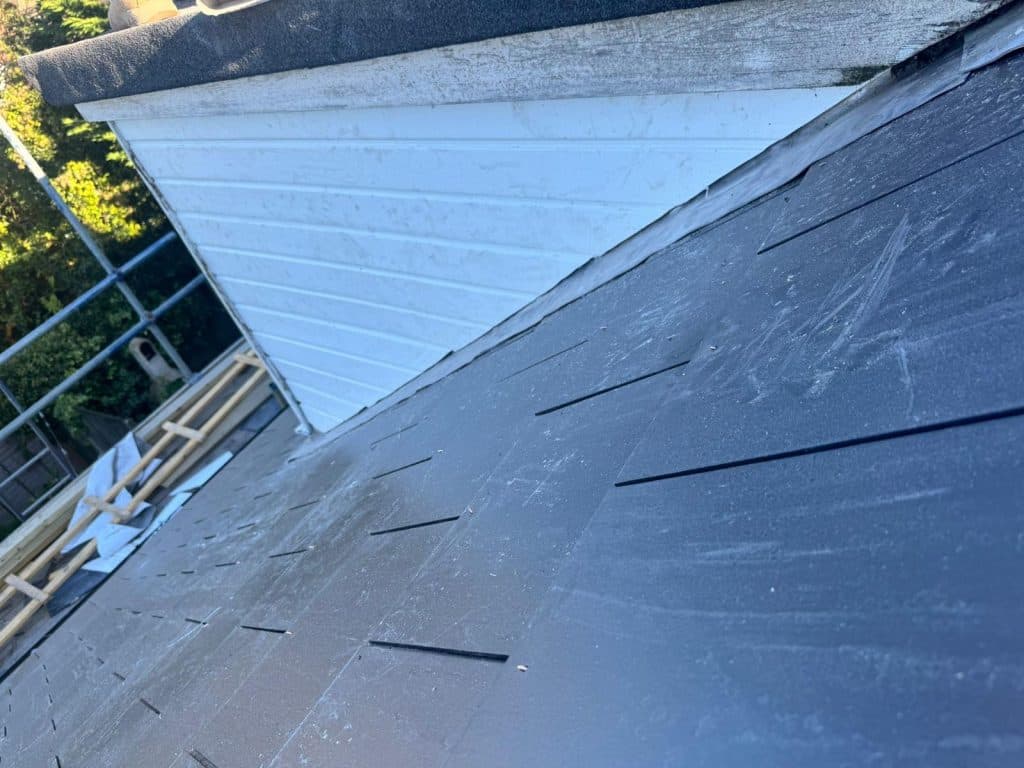
Scaffolding up round a white rendered house in Kent while its fascias are repaired
What goes wrong with gutters here
Most gutter problems come down to water not reaching the outlet. A run needs a slight fall towards the downpipe, and once a bracket works loose or a section drops, water sits in the low spot, finds a joint and drips down the wall. On older plastic runs the rubber seals in the joints harden and shrink, which is why a gutter that has been fine for years can start leaking at every joint in the same winter.
On this coast there is more to it. Salt air corrodes steel brackets and screws, strong sun on south facing elevations makes cheaper plastic brittle, and the gulls that nest on rooftops in Hythe and Folkestone leave nesting material and debris that blocks gutters and outlets every spring.
Signs your guttering needs attention
Most of these can be seen from the pavement. The ones to take seriously are the ones that happen in the same place every time it rains.
- Water spilling over the front edge of the gutter in heavy rain
- Drips or staining at the joints and corners
- A green or dark streak down the brickwork or render below a gutter
- Plants or moss growing out of the gutter
- A run that visibly dips between brackets
- Flaking paint, soft spots or gaps along the fascia board
- Damp inside at the top of an outside wall, just below the roof
Fascias and soffits, and why capping over is a false economy
The fascia is the board along the bottom edge of the roof that the gutter is fixed to, and the soffit closes the gap underneath it. On older houses both are timber, and once the paint goes the timber rots, usually worst where a gutter joint has been dripping on it for years.
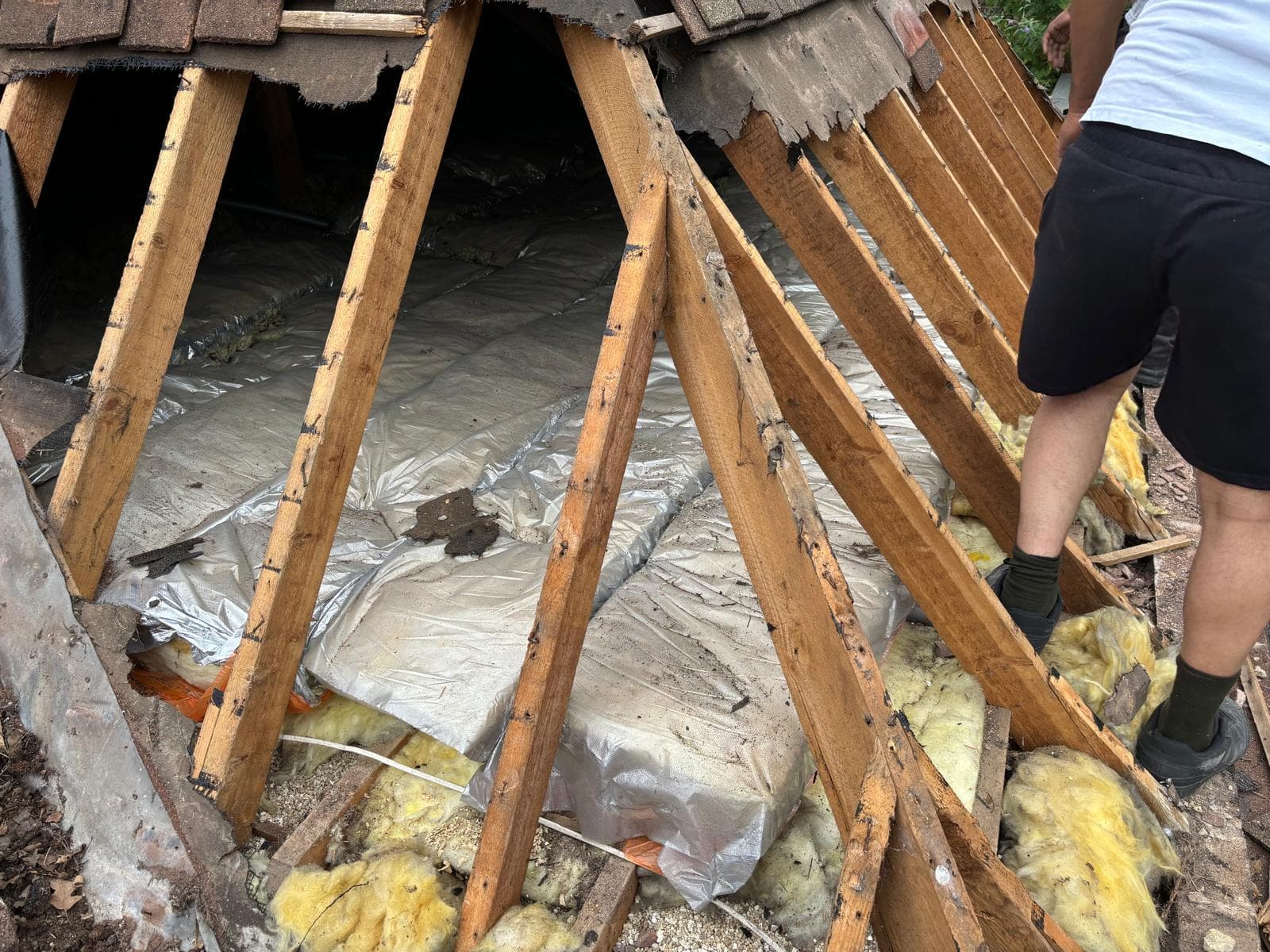
The cheap fix is to clad the old boards in thin plastic, known as capping over. It looks new on the day, but the rotten timber is still underneath holding the gutter brackets, and it carries on rotting where nobody can see it. We would rather take the old boards off, see what state the rafter ends are in, and fix new boards to sound timber.
Soffits matter for another reason. On many roofs they are where air gets into the roof space, and vented soffits or a vent strip at the eaves keep air moving through the loft, which is what stops condensation forming on the underside of the roof in winter.
Cast iron: repair it or replace it?
A lot of Victorian and Edwardian houses in Folkestone, Hythe and Sandgate still have their cast iron gutters and downpipes. Kept painted, cast iron lasts a very long time, and most of what goes wrong with it can be repaired: joints resealed, a cracked length replaced, brackets reset, and the whole run cleaned back and repainted.
Swapping it for plastic is cheaper and needs no painting, but plastic moves more with temperature, looks lighter on a period front and does not last as long. On a listed building, and in some conservation areas, changing cast iron for plastic can need consent, so check with the council before assuming it can go.
Choosing a new run
When a run does need replacing, plastic is the most common choice: light, cheap and quick to fit, in half round, square, deep flow and ogee profiles. Deep flow sections carry noticeably more water, which is worth having on a big roof or where a gutter takes the water from a valley. Aluminium, often formed on site in one seamless length, has no joints along the run to leak. Cast iron, or cast aluminium made to look like it, is the right answer on a period front or a listed building.
Size matters as much as material. A gutter that overflows on a large or steep roof is often simply too small for the area it drains, and replacing it like for like repeats the problem.
What a gutter job involves
Most gutter work is done from ladders or a tower. A tall house, a steep bank or a terrace with no side access needs scaffolding, and scaffolding that stands on the pavement needs a licence from Kent County Council. We will tell you at quote stage which of those your house needs, so the price covers it.
While we are up there we check the bottom row of tiles and the felt behind the gutter. When that eaves felt has perished, rainwater runs down behind the gutter instead of into it and rots the fascia, and a new gutter on its own just moves the leak along.
Related reading
More on guttering and fascias
Also from us
The rest of what we do
Roof repairs
From small leaks and slipped tiles to storm damage and structural problems.
Roof installations
New roofs built to specification in tile, slate, pitched or flat systems.
Domestic roofing
Homes across east Kent, from one repair to a full replacement.
Commercial roofing
Flat, pitched and industrial systems, worked around your opening hours.
24 hour call out
Storm damage, sudden leaks and urgent work, any time, right across Kent.
Drone surveys
A full inspection with photographs and video, and no scaffold to hire.
Chimneys and leadwork
Chimney repointing and rebuilds, flaunching, caps, flashings and lead valleys.
General building
Extensions, brickwork, rendering, chimneys, guttering, driveways and groundworks.
Extensions
Extensions and conversions, with the roof done by people who roof for a living.
Brickwork and repointing
Repointing in the right mortar, damaged bricks replaced, walls and stacks rebuilt.
Rendering
Cracked and blown render repaired, and walls re-rendered in the right render for them.
Driveways and patios
Driveways and patios laid on a proper base, built to drain and to the planning rules.
Tell us what the roof is doing
Tell us the address and what you are seeing, and we will come and look. Hythe, Folkestone and across east Kent.
126-128 High Street, Hythe, Kent, CT21 5LE
Emergency work is covered 24 hours a day, right across Kent.