Chimney repairs and leadwork in Hythe, Folkestone and Kent
Repointing, rebuilds, flaunching and caps, and the lead that keeps water out where a roof meets a stack or a wall.
Chimneys and the lead around them cause more leaks than any other part of a pitched roof. A stack stands above the roof in the full weather, it is built of brick and mortar that soak up rain, and the joint between it and the tiles depends on lead that has to be cut, dressed and fixed properly to stay watertight.
We repair, repoint and rebuild chimney stacks across Hythe, Folkestone and east Kent, replace flaunching and pots, cap flues that are no longer used, and do the leadwork that goes with all of it: flashings, soakers, back gutters, valleys and box gutters.
- Chimney stacks repointed, repaired or rebuilt
- Cracked flaunching replaced around the pots
- Pots reset or replaced, and disused flues capped with ventilation
- Lead flashings, soakers and back gutters renewed
- Lead valleys and box gutters relined
- Leaning or damaged stacks made safe
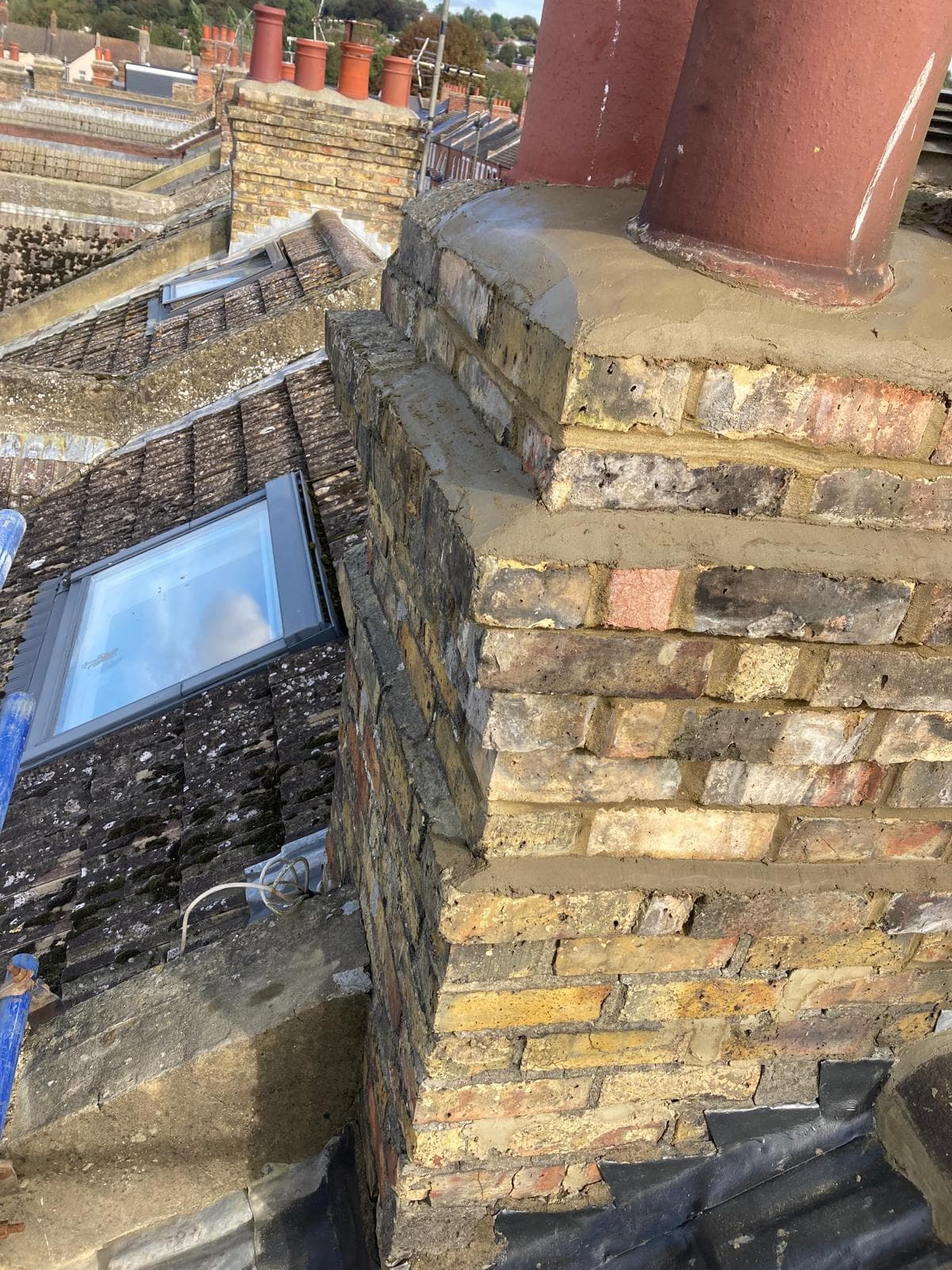
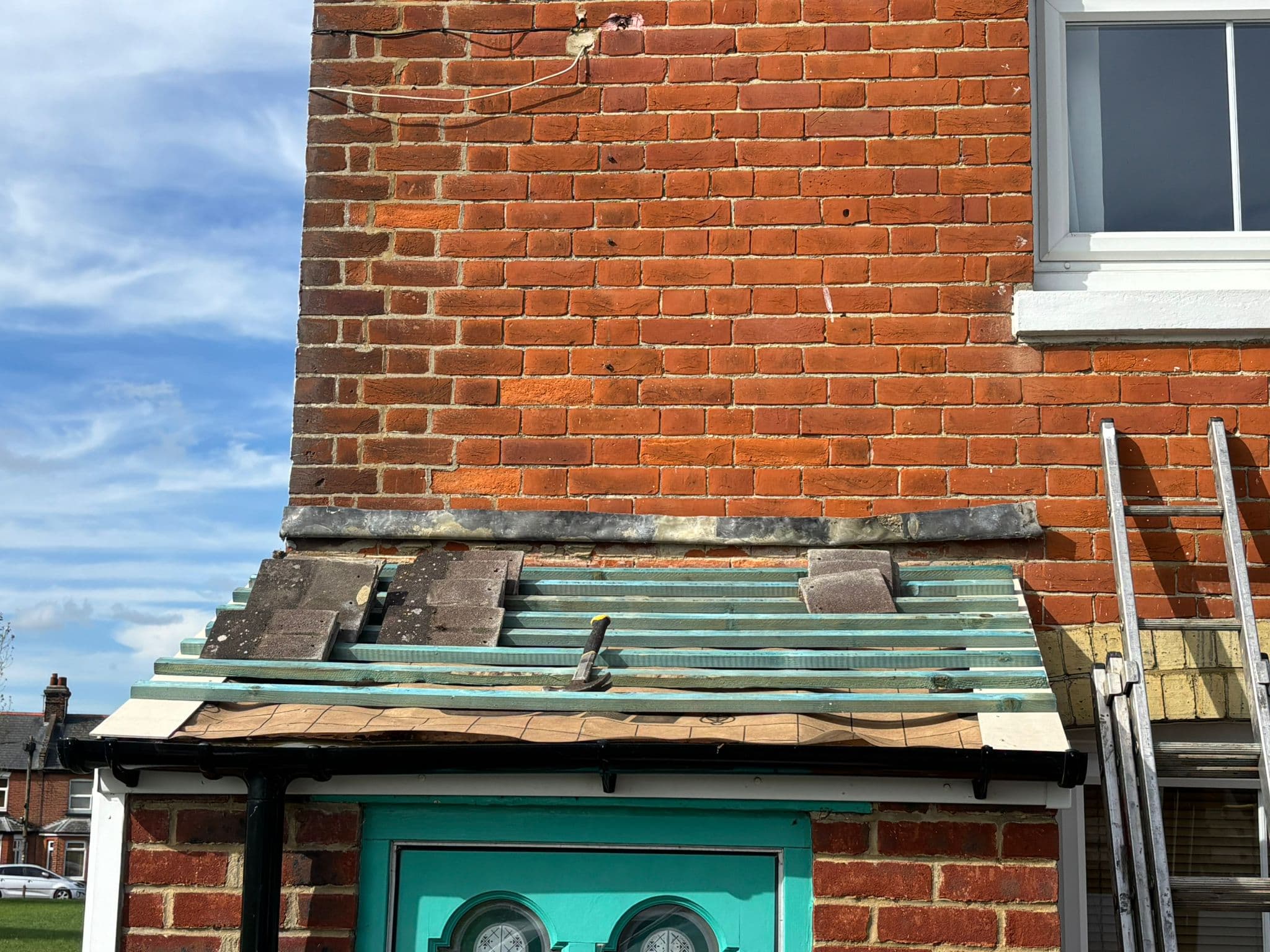
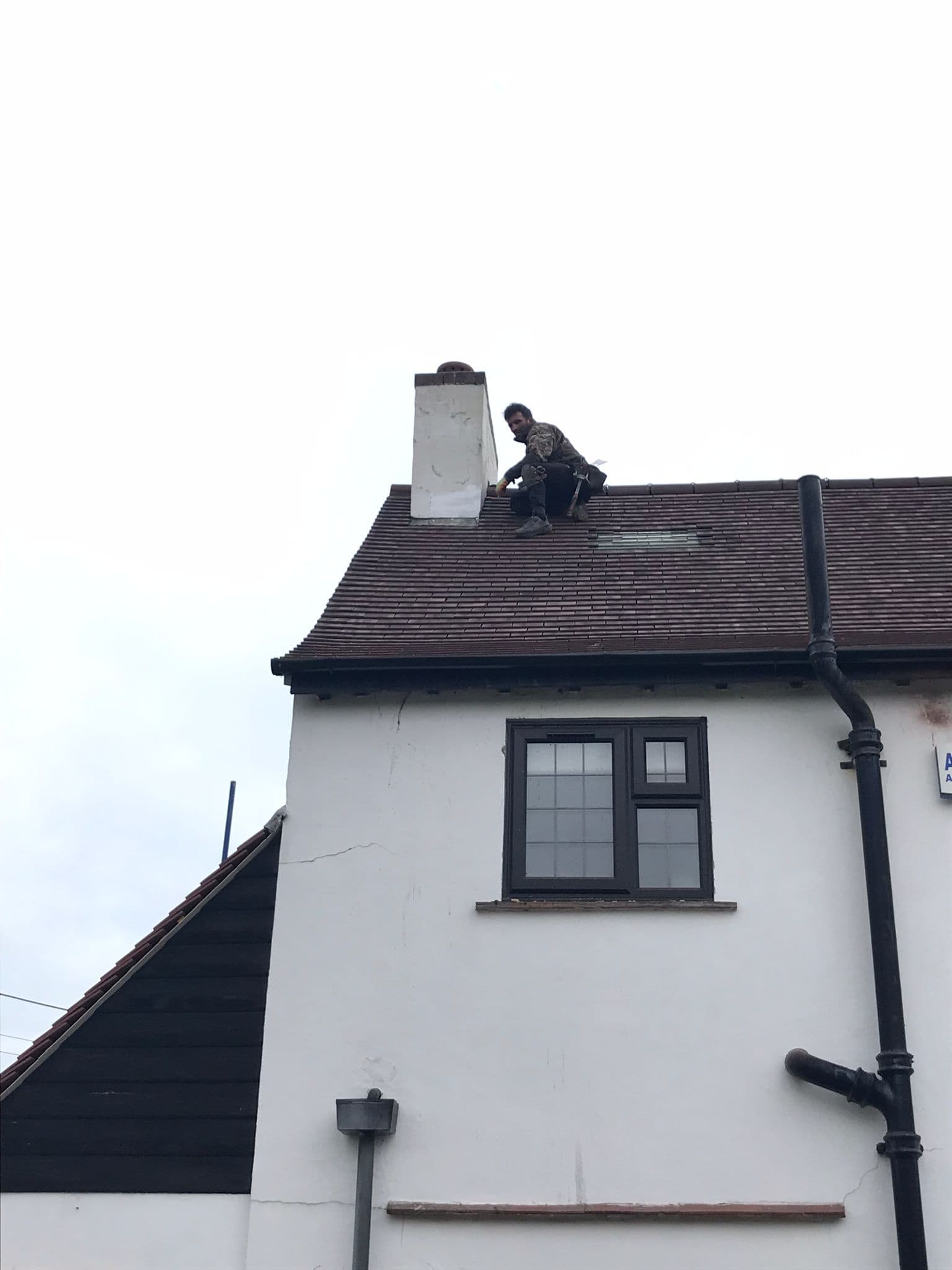
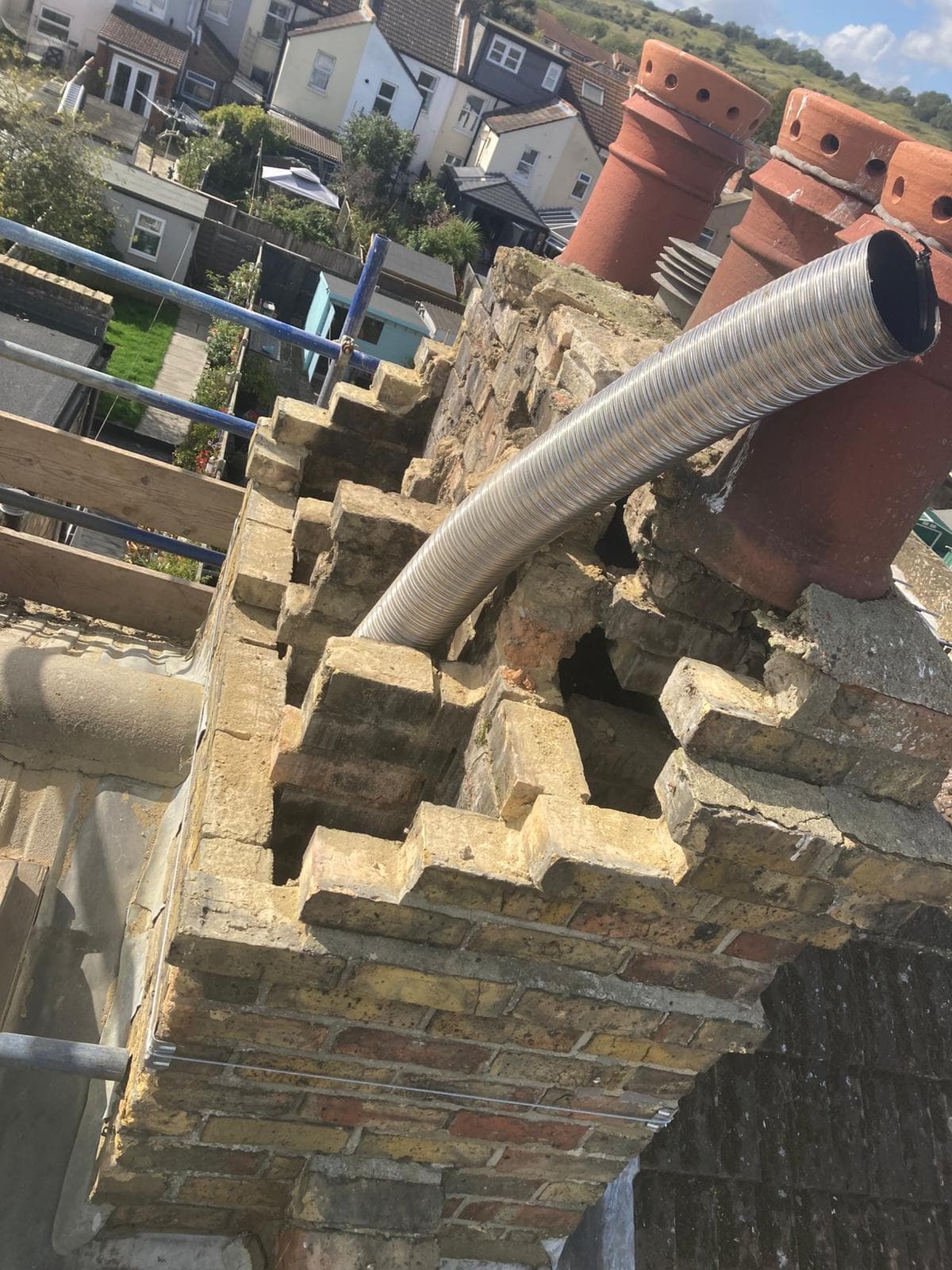
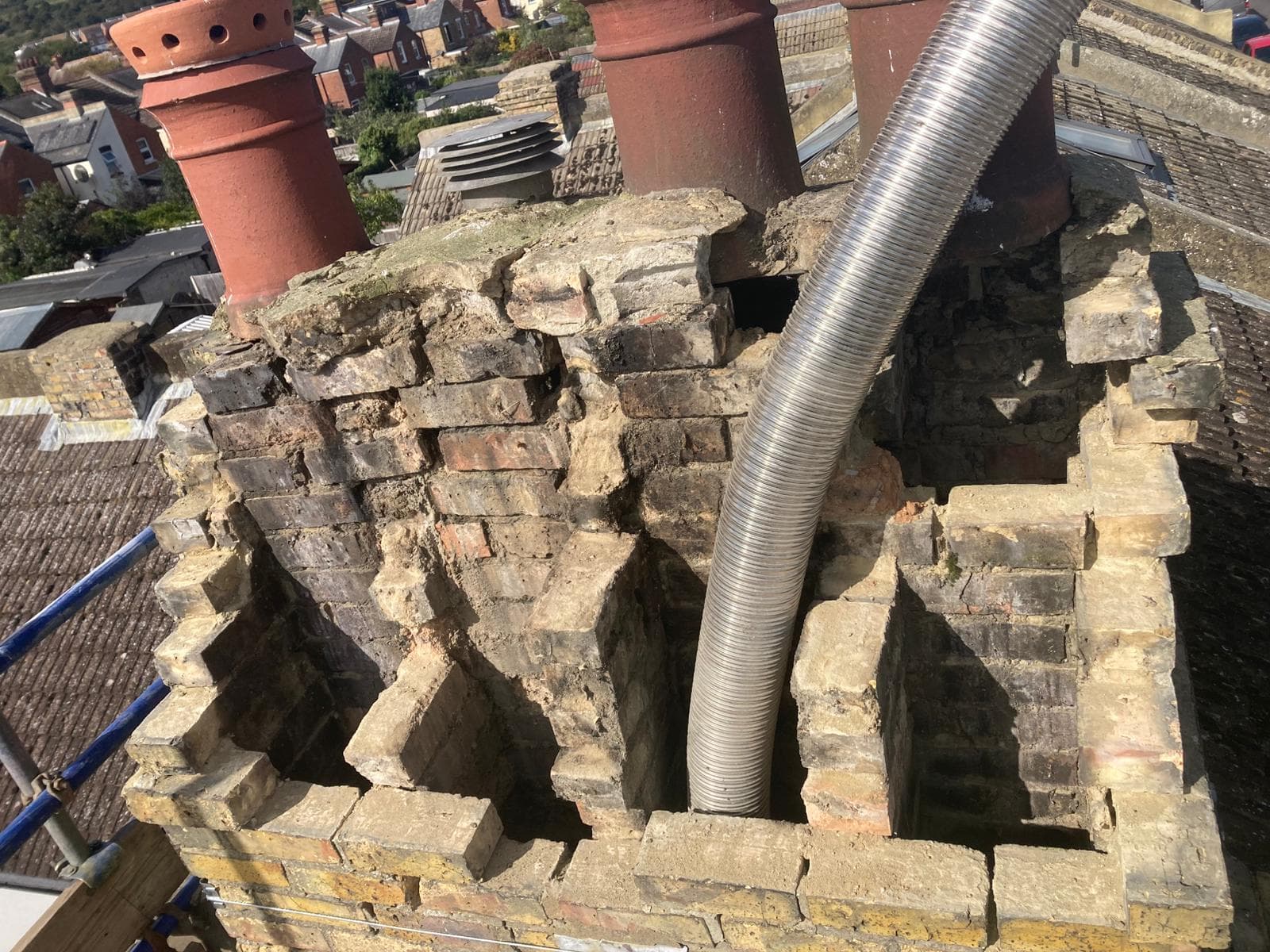
A repointed brick chimney stack with new flaunching, beside a roof window, with lead flashing at its base
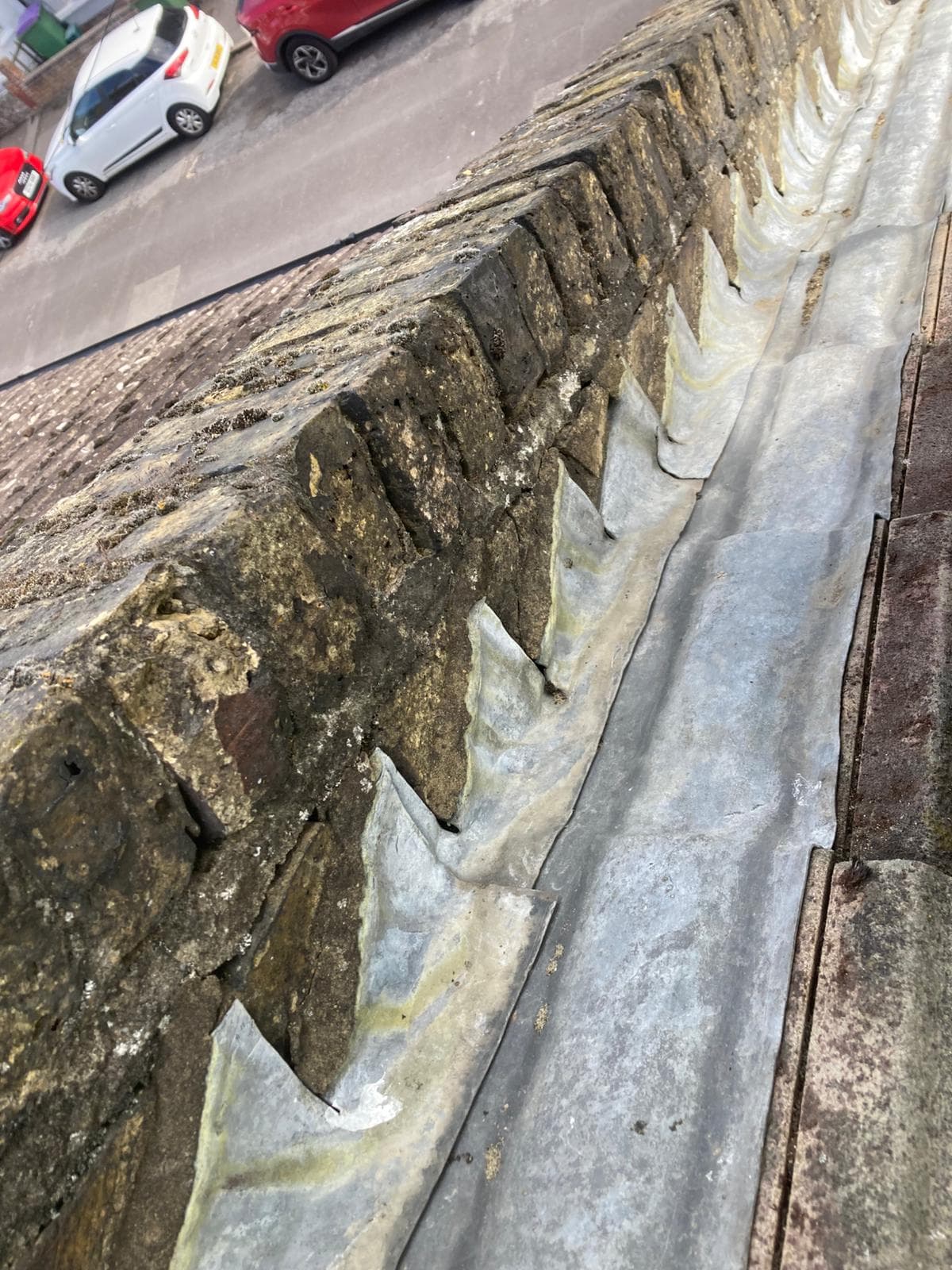
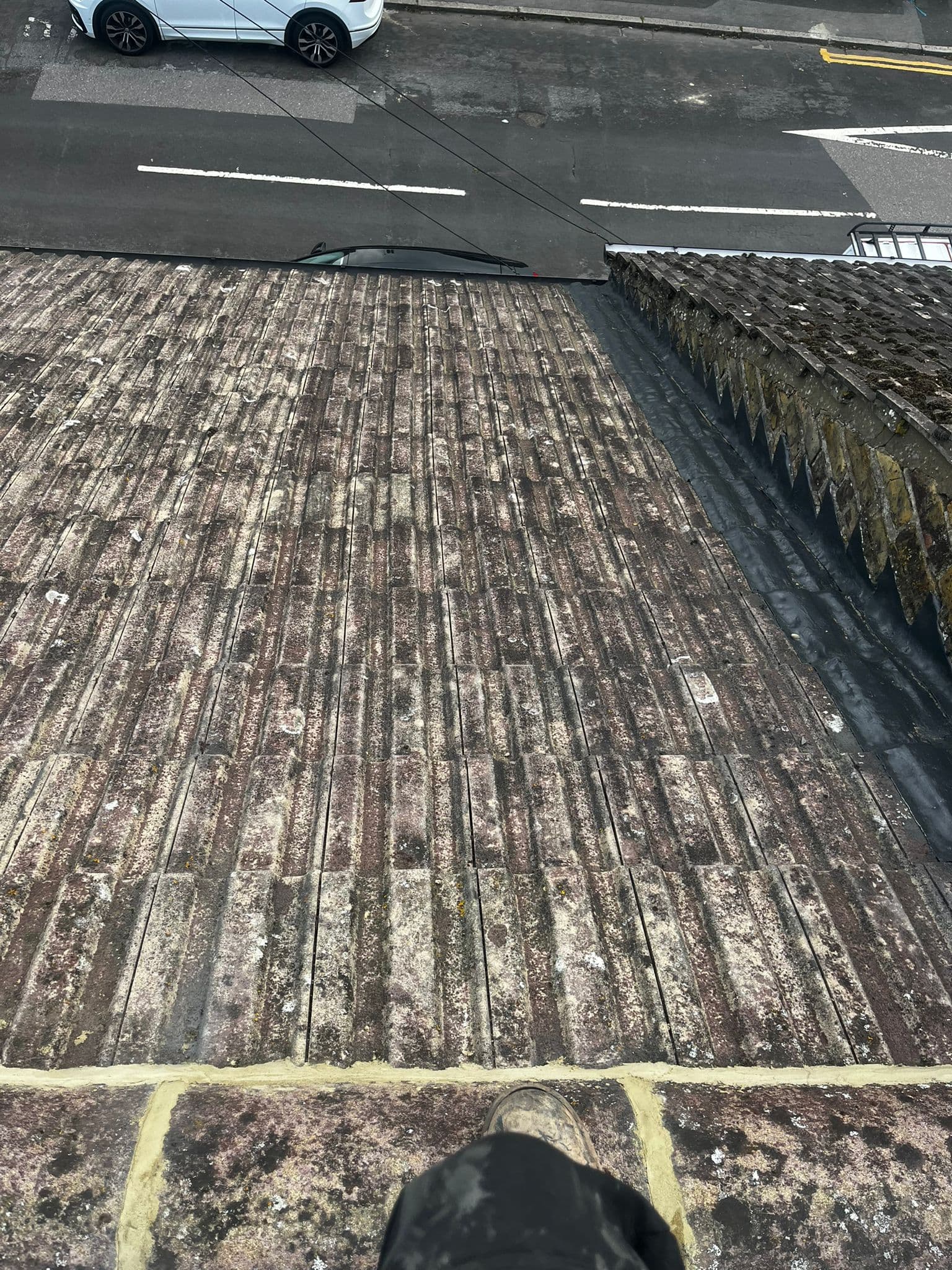
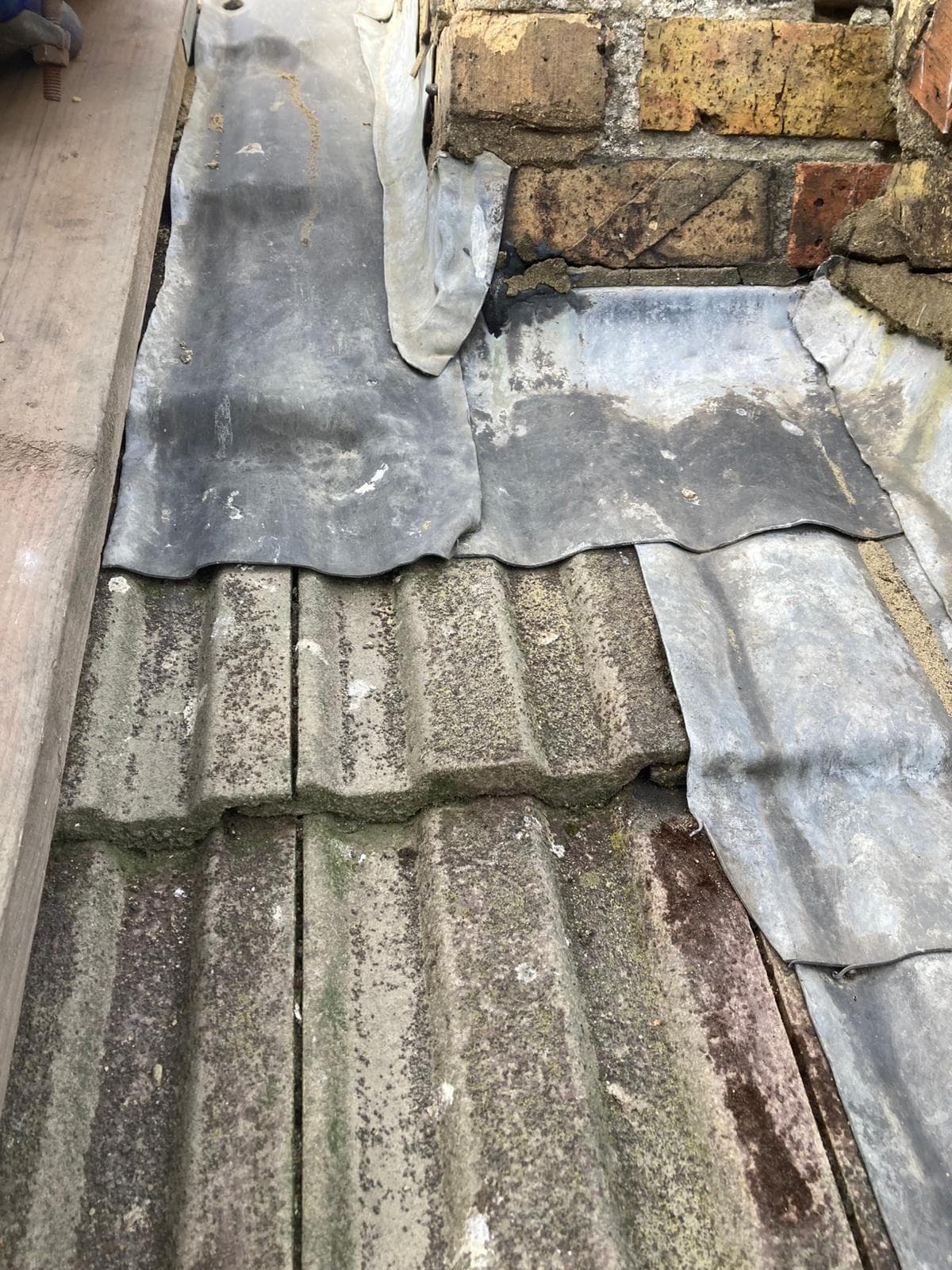
A lead gutter running along a stepped brick parapet, with lead flashing dressed up the brickwork
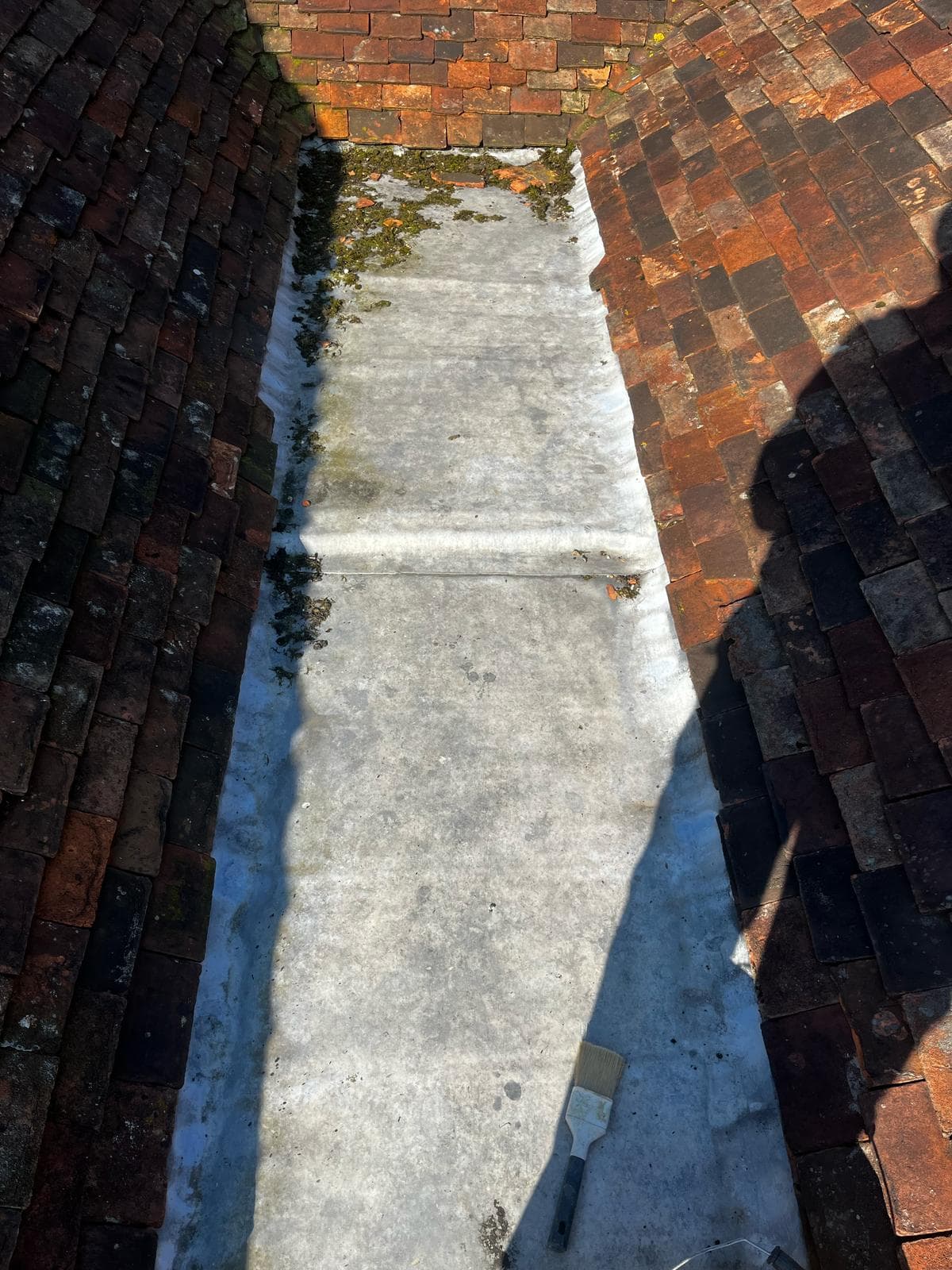
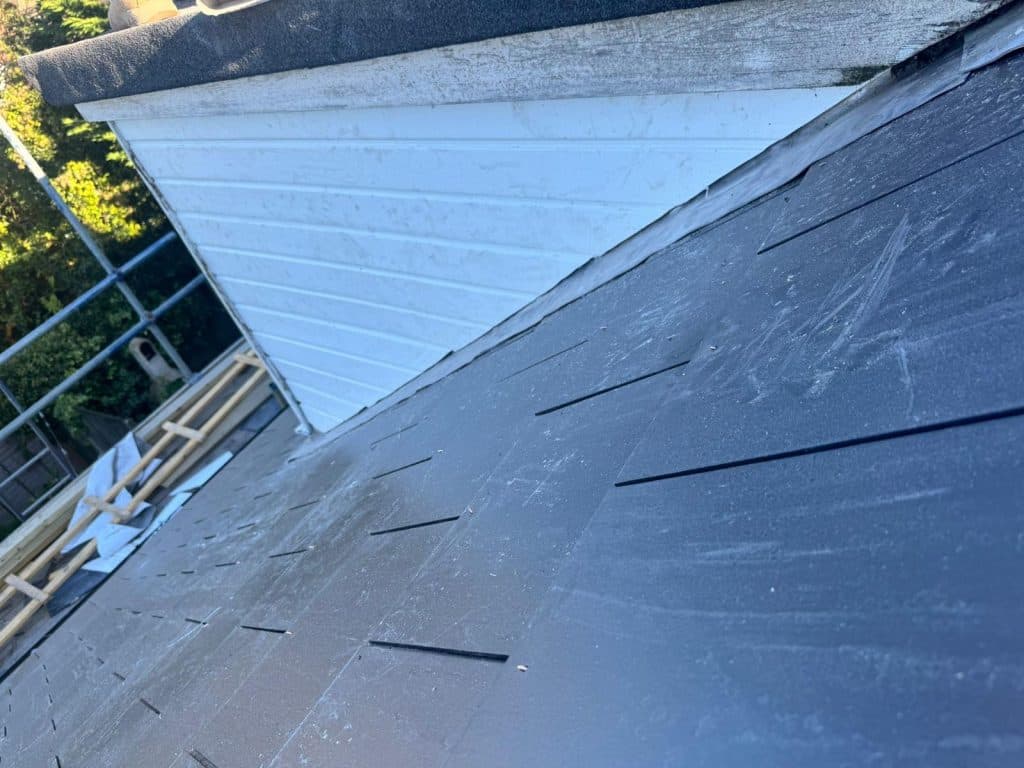
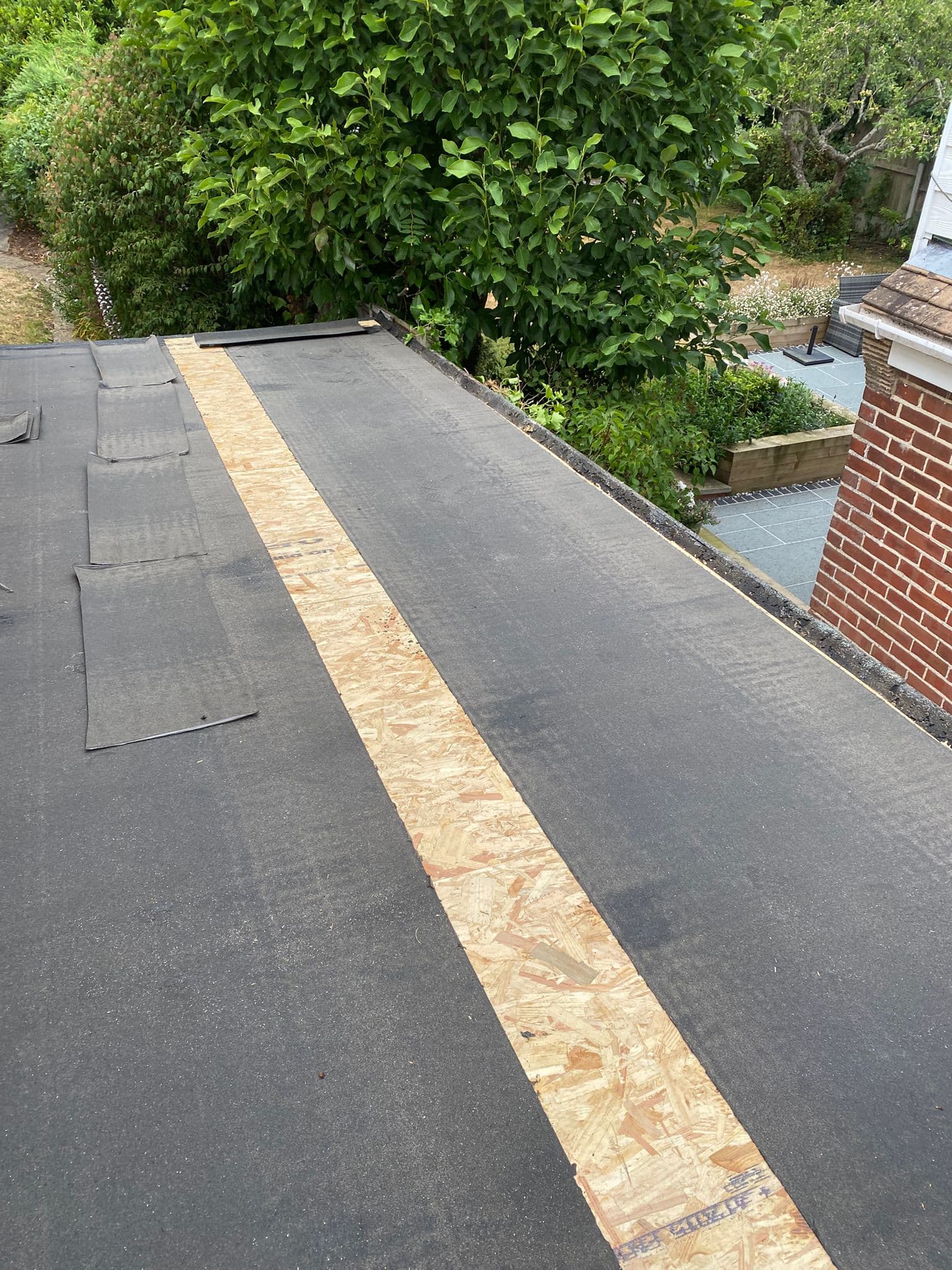
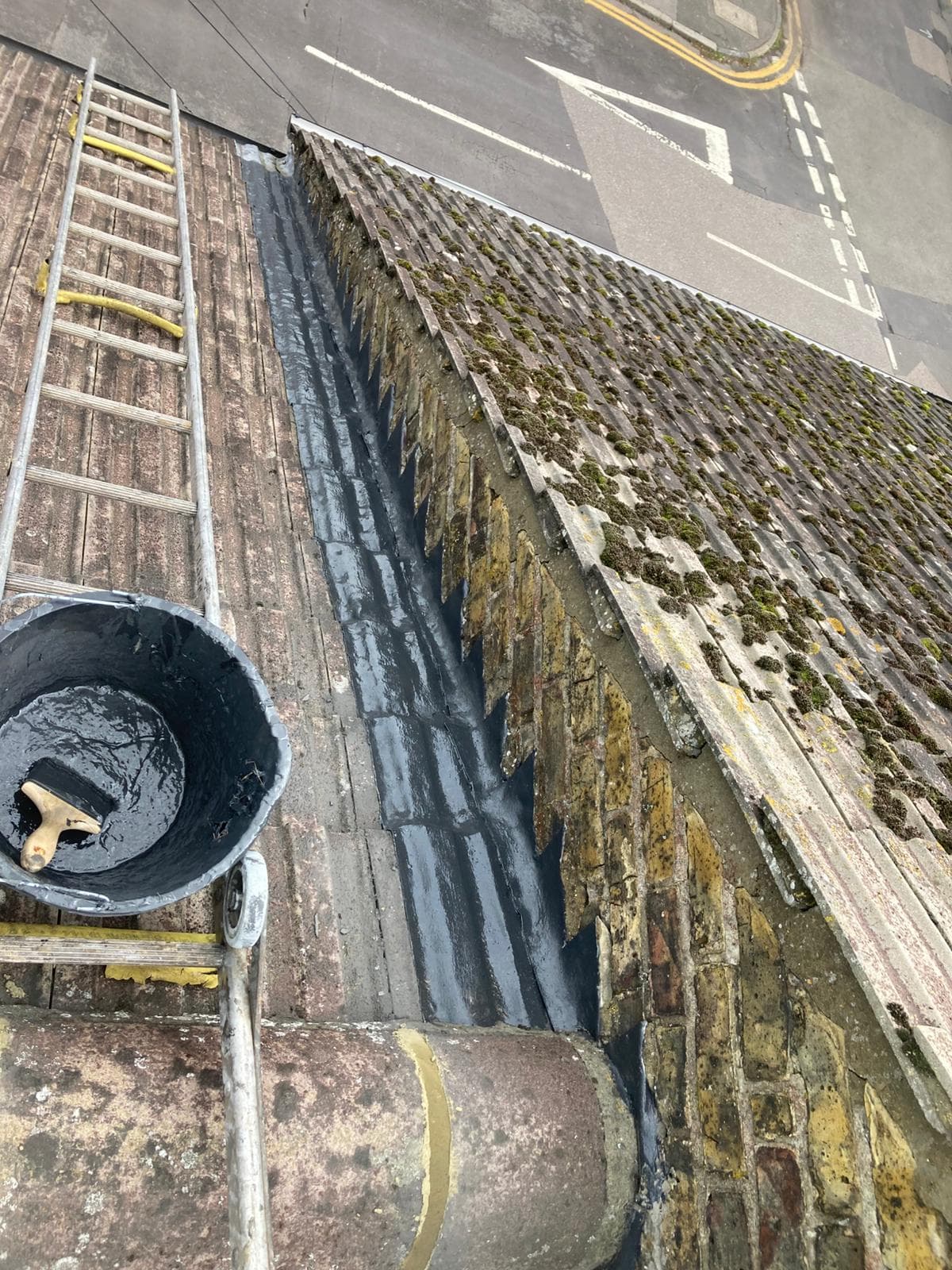
A lead lined gutter running between two clay tiled roof slopes
Why chimneys leak
When water shows up on a chimney breast, or on a ceiling next to one, it is almost always getting in at one of five places. The fix depends entirely on which, so we find out before we quote: resealing a flashing will not stop a leak that is coming through the flaunching.
- The flashing, where the lead at the base of the stack has lifted, split or pulled out of the mortar joint it was tucked into
- The flaunching, the sloped mortar cap around the pots, which cracks and lets water straight down inside the stack
- An open pot, taking rain directly down a flue nobody uses any more
- The brickwork and pointing, which soak up driven rain on the weather side until it comes through inside
- The back gutter behind the stack, where leaves and silt build up until water overtops the lead
Repointing, rebuilding and leaning stacks
Chimney mortar has a harder life than any other mortar on a house. The weather gets at every face, and on a stack that served coal fires, the flue gases leave sulphates in the mortar that make it swell over the years. It usually swells more on the wetter side, which is why so many old stacks lean slightly away from the prevailing weather.
A slight, long standing lean on an old stack is common. What matters is change: a lean that is getting worse, bricks loose at the top, or pots that have shifted. Repointing is the answer while the brickwork is sound. Where the top courses are loose or the lean is growing, the stack comes down to sound brickwork and is rebuilt, reusing the old bricks where they are good enough, with new flaunching on top.
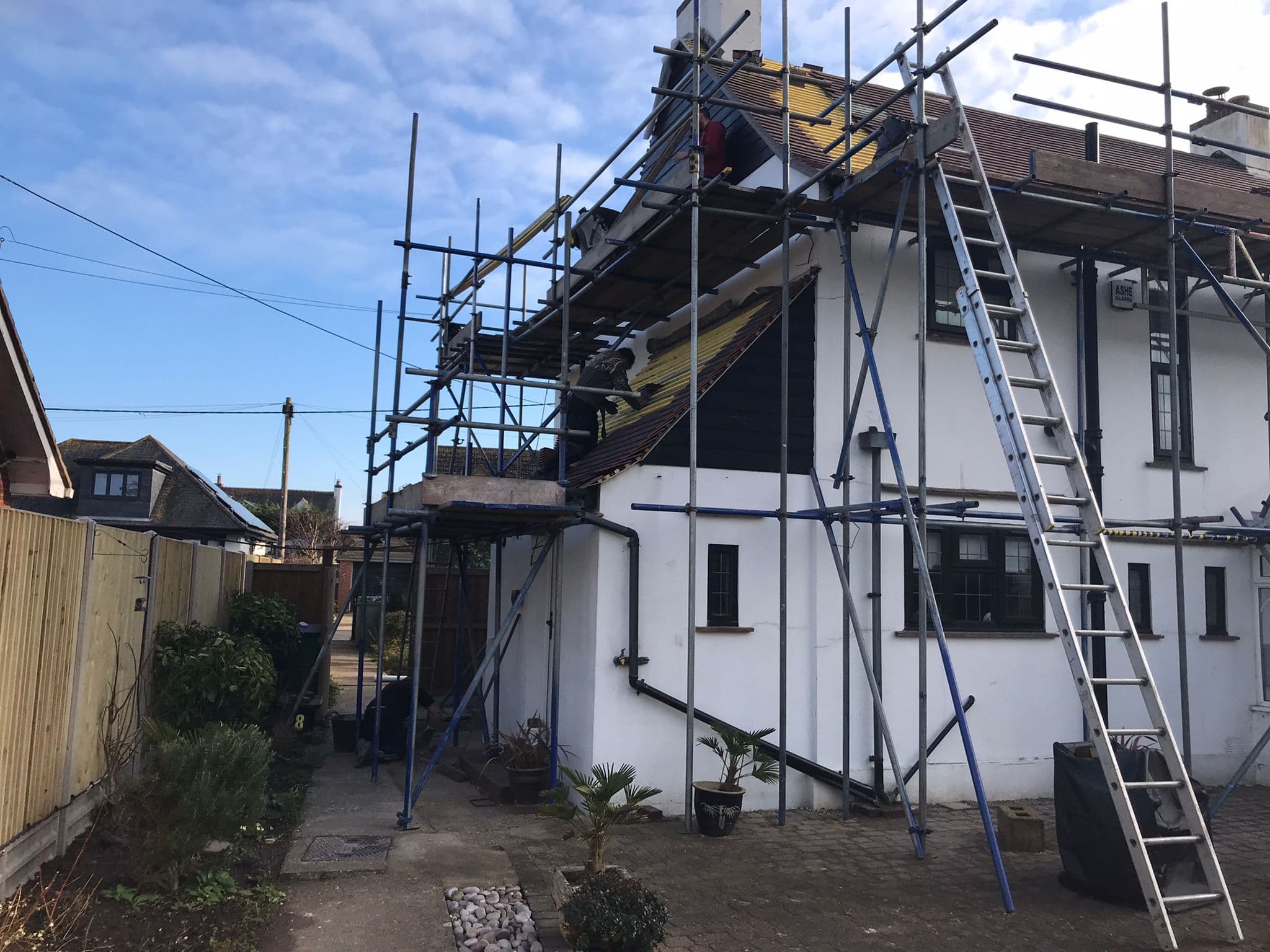
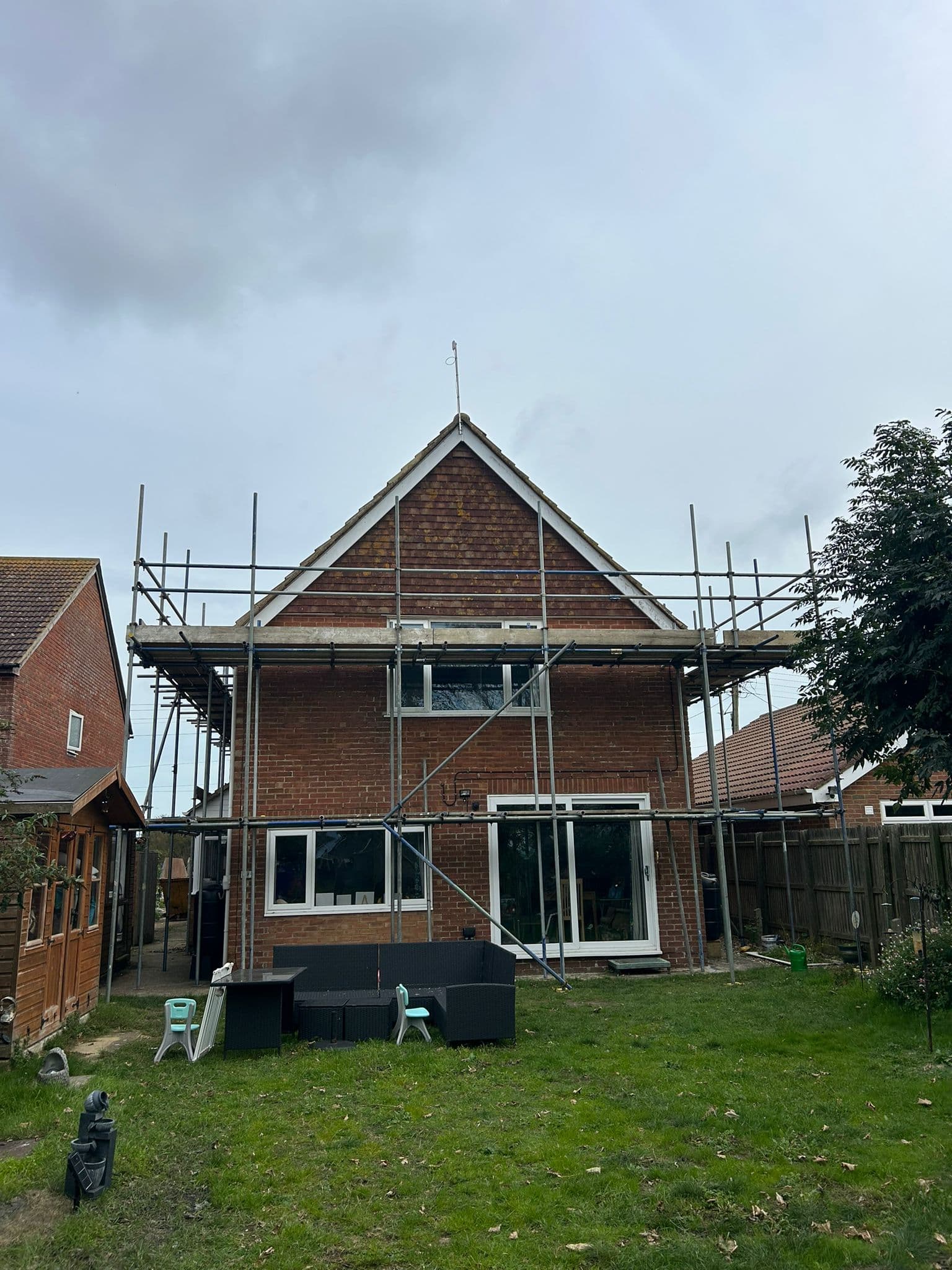
Chimney work almost always needs a scaffold round the stack, and on a terrace the stack is often shared with the house next door. We will tell you at quote stage whose chimney is whose and what that means, because it is far easier to agree before the scaffold goes up.
Leadwork done properly
Lead is still the best material for weathering the joints on a roof, because it can be dressed to any shape and lasts a very long time when it is fitted properly. Most of the lead failures we are called to are fitting faults rather than worn out lead: lengths that are too long, lead fixed so it cannot move, or flashings stuck on with sealant instead of tucked into the brickwork.
Done right, lead goes on in short lengths so it can expand and contract with the weather, tucked into a raked out mortar joint, wedged and pointed. The thickness is matched to the job, with heavier lead in gutters and valleys than in a simple flashing. On a chimney that usually means a front apron, stepped flashings down each side with soakers under the tiles, and a back gutter behind.
Valleys, box gutters and parapets
Where two roof slopes meet in a valley, or a roof drains into a gutter behind a parapet wall, the lead is doing all the work, and there is nothing behind it if it fails. Old lead valleys split along their length, and box gutters behind parapets fill with silt, leaves and gull nesting material until the water overtops the lining and runs into the house.
On terraces a valley or box gutter is often shared with the houses either side. Relining one means laying the joints between sheets so water runs over them rather than into them, and outlets big enough to cope with a storm off the Channel.
Capping a chimney you no longer use
An unused flue with an open pot takes rain straight down into the house and lets heat straight out. The answer is a cap, but it has to be a ventilated one. A flue sealed at both ends traps moisture and gives you damp patches on the chimney breast instead, so the fireplace or flue below needs a vent too, to keep air moving through it.
If you might want a fire again one day, say so, because a cap that suits a disused flue is not one to light a fire under.
Stolen lead, and the alternatives
Lead is valuable and it does get stolen, from houses as well as churches. If yours has gone, the roof is open to the weather and needs a temporary cover straight away, then proper replacement. Report the theft to the police and to your insurer.
Where the risk is high, or on a low extension where the lead is easy to reach, there are lead free alternatives that look similar and have no scrap value. They are not a like for like substitute everywhere, and on a listed building the conservation officer is likely to expect lead, so it is a decision for each job rather than a rule.
Related reading
More on chimneys and leadwork
Also from us
The rest of what we do
Roof repairs
From small leaks and slipped tiles to storm damage and structural problems.
Roof installations
New roofs built to specification in tile, slate, pitched or flat systems.
Domestic roofing
Homes across east Kent, from one repair to a full replacement.
Commercial roofing
Flat, pitched and industrial systems, worked around your opening hours.
24 hour call out
Storm damage, sudden leaks and urgent work, any time, right across Kent.
Drone surveys
A full inspection with photographs and video, and no scaffold to hire.
Guttering and fascias
Gutters, downpipes, fascias and soffits repaired or replaced, cast iron included.
General building
Extensions, brickwork, rendering, chimneys, guttering, driveways and groundworks.
Extensions
Extensions and conversions, with the roof done by people who roof for a living.
Brickwork and repointing
Repointing in the right mortar, damaged bricks replaced, walls and stacks rebuilt.
Rendering
Cracked and blown render repaired, and walls re-rendered in the right render for them.
Driveways and patios
Driveways and patios laid on a proper base, built to drain and to the planning rules.
Tell us what the roof is doing
Tell us the address and what you are seeing, and we will come and look. Hythe, Folkestone and across east Kent.
126-128 High Street, Hythe, Kent, CT21 5LE
Emergency work is covered 24 hours a day, right across Kent.