
Driveways and patios in Hythe, Folkestone and Kent
Gravel, resin and paved driveways and patios, laid on a proper base and built to drain.
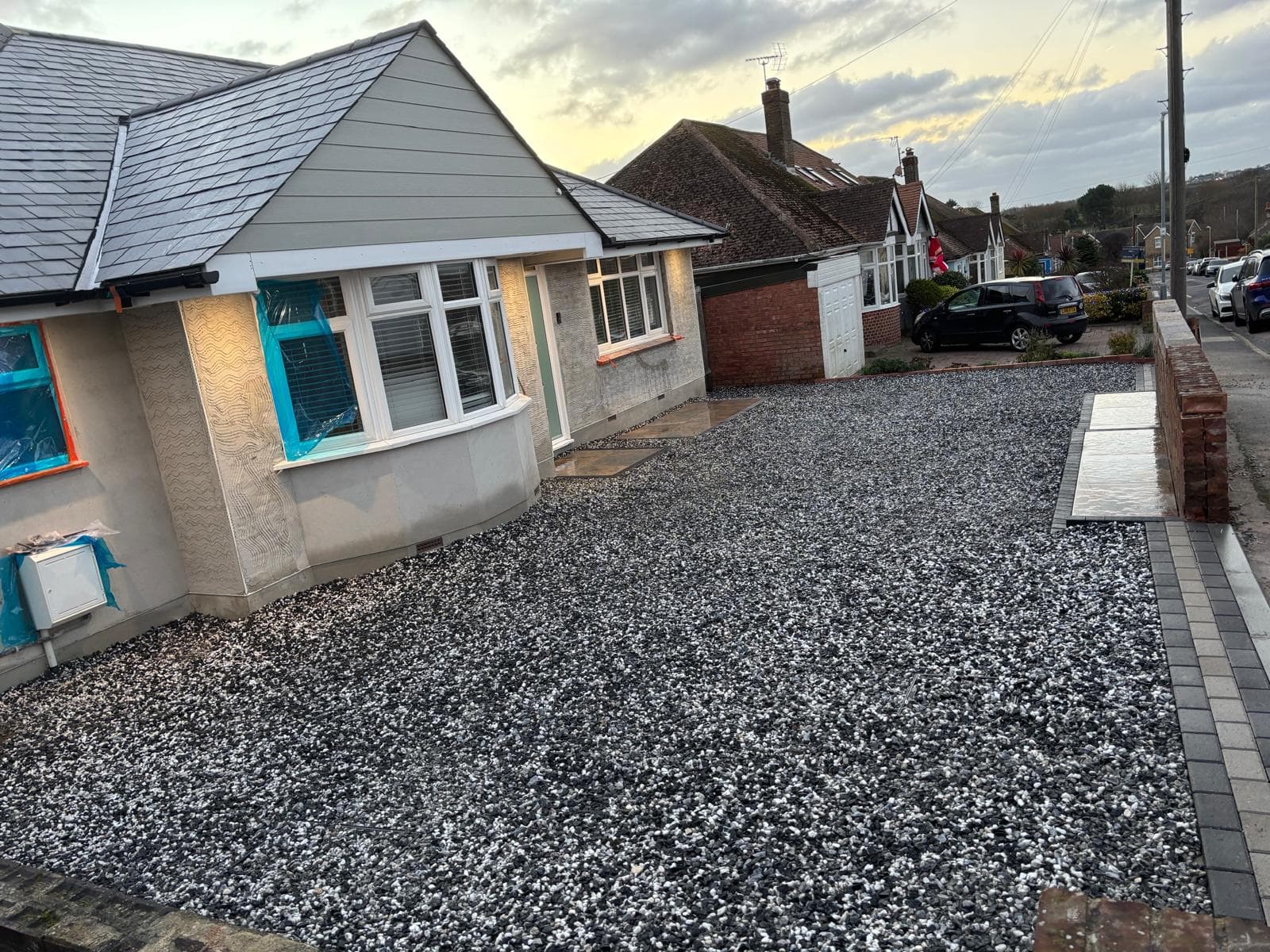
A driveway or a patio is mostly underground. What you see is the surface, but what decides whether it stays flat, drains and lasts is the dig, the sub-base and the edging underneath, and that is the part a cheap quote saves money on. Ruts, puddles, sinking edges and weeds pushing through are nearly always a base problem, not a surface one.
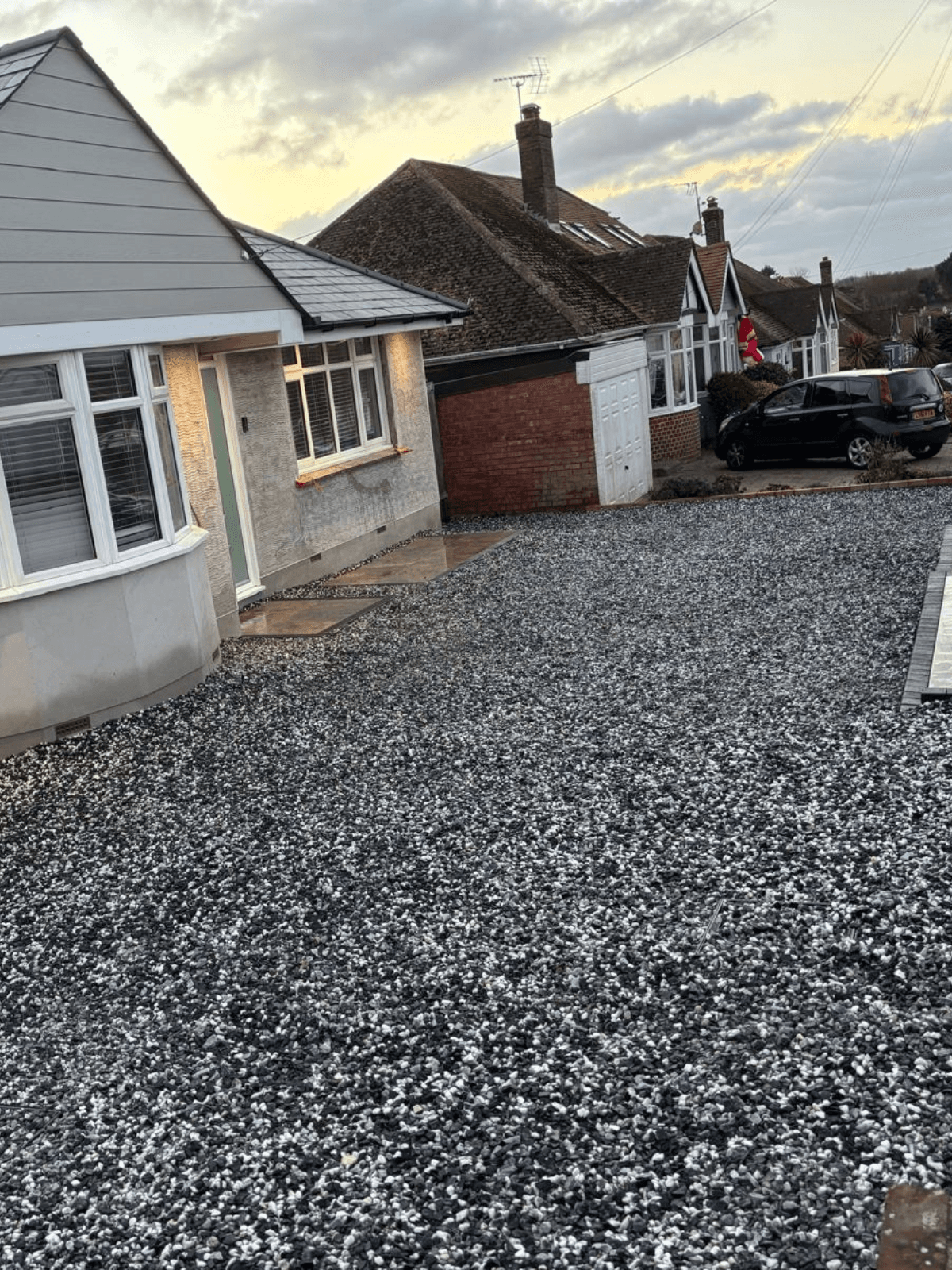
We lay driveways and patios across Hythe, Folkestone and east Kent as part of our general building work, from gravel and resin drives to paved patios, and we build them to drain, which matters more now that the rules on front gardens turn on where the rainwater goes.
- Gravel and resin driveways
- Paved patios in stone and porcelain
- Excavation, sub-base and edging done properly
- Drainage designed in, including permeable options for front gardens
- Steps, paths and edging to finish
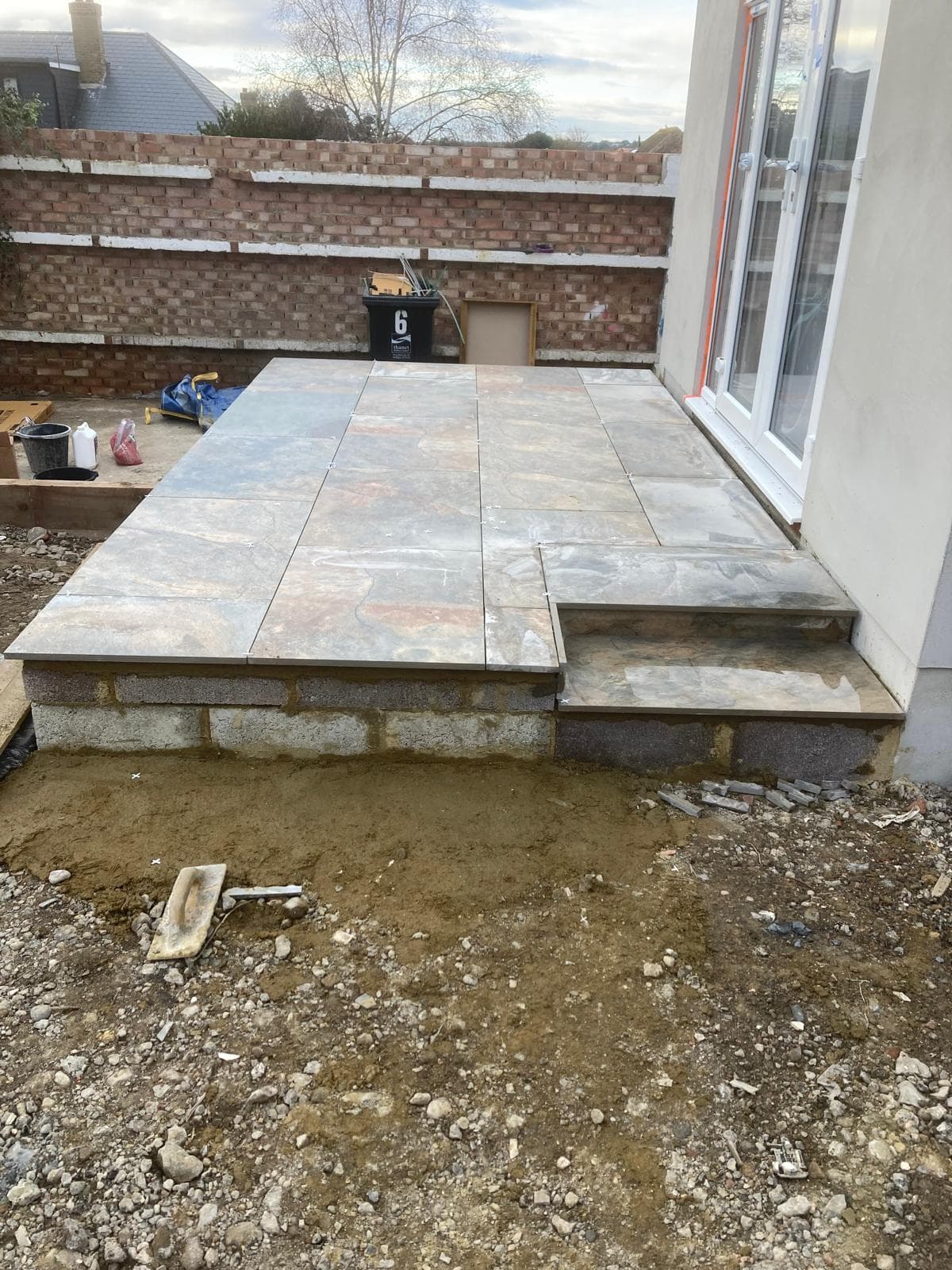
A newly laid stone effect patio with two steps up to the patio doors
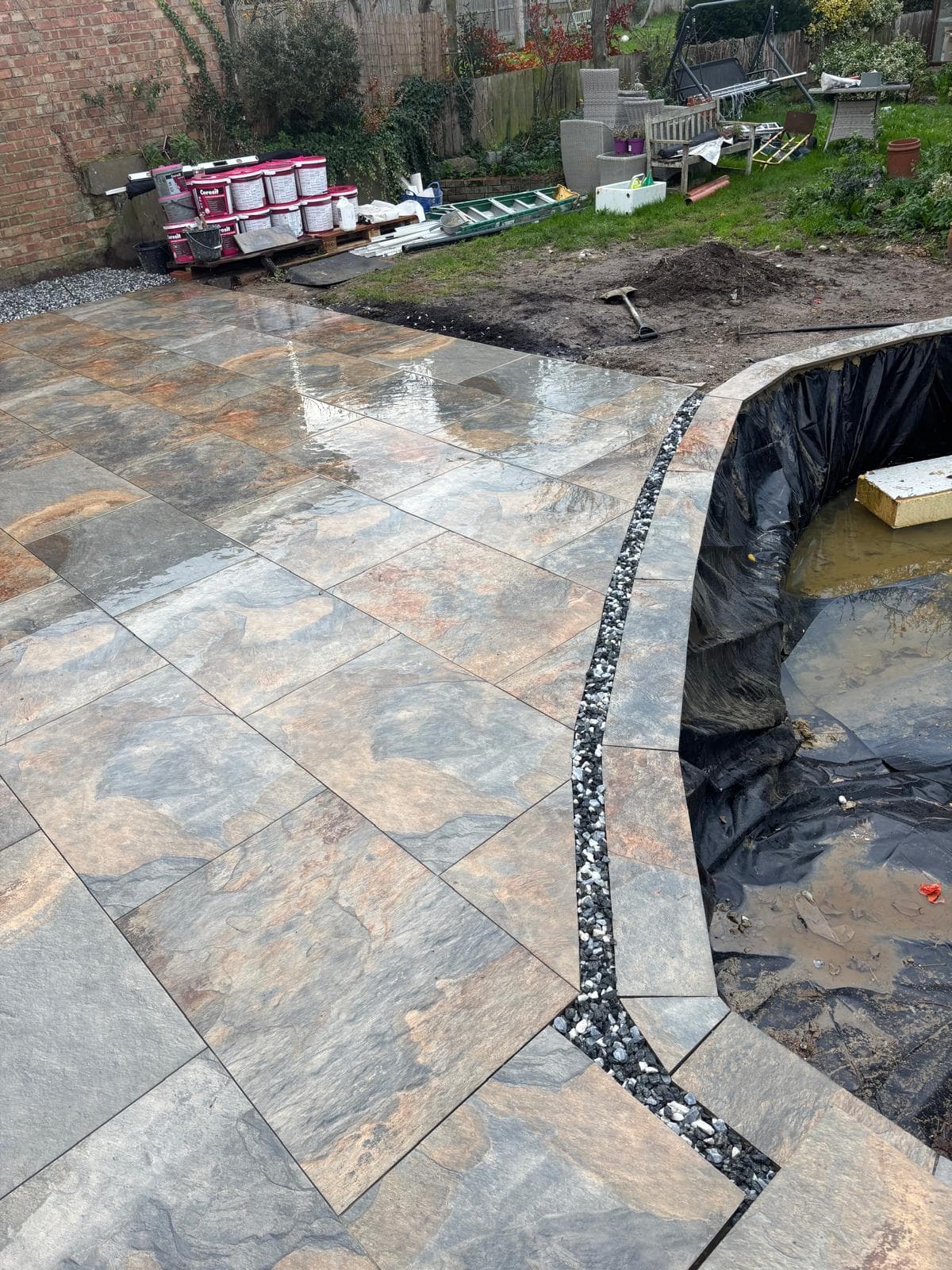
A newly laid stone effect patio with a curved edge beside a garden pond under construction
Do you need planning permission for a driveway?
Since 2008, paving over a front garden in England needs planning permission if the new hard surface is more than five square metres and does not let water through, unless the rainwater is directed to a lawn or border where it can soak away. A permeable surface, or a conventional one drained to a planted area or a soakaway on your own land, needs no application.
Dropping the kerb to get a car onto the drive is a separate matter. That needs permission from Kent County Council as the highway authority, and on a classified road it can need planning permission as well. Listed buildings and conservation areas have their own rules, so check before starting.
Gravel, resin or paving
Gravel is the cheapest surface and drains naturally, but it moves, it needs topping up, and it scatters onto paths and the road unless it is laid in a stabilising grid with a solid edge. Resin bound gravel is smooth, permeable and tidy, and lasts well when it is laid on a sound base in dry weather. Block paving and slabs are hard wearing and easy to repair a section at a time, and on a front garden they need either permeable joints or drainage to a planted area.
For patios, porcelain has become the popular choice because it is hard, frost proof and barely stains, though it needs cutting with the right tools and bedding fully in mortar. Natural stone looks softer and suits period houses, but it needs sealing and more upkeep.
What goes under a driveway
A drive that takes a car needs digging out to firm ground, a membrane where the ground is soft, and a sub-base of crushed stone deep enough for the load, laid and compacted in layers. A patio needs less depth but the same care: most patios that rock, sink or puddle were laid on too little base, or straight onto soil.
The finished surface needs a fall, so water runs off rather than sitting on it, and away from the house rather than towards it. A patio laid above the damp proof course, or sloping back to the wall, puts water into the house and is a common cause of damp.
Drainage and where the water goes
Where the water goes is now the heart of driveway design. A permeable surface lets rain soak through into the ground below, which is why resin bound gravel, gravel in a grid and permeable block paving are the easy route on a front garden. A conventional sealed surface needs channel drains, or a fall to a planted area or a soakaway on your own land, and never onto the road.
On clay soil or a sloping plot, a soakaway may not drain fast enough, and that is worth testing before the design is settled rather than after the first downpour.
Levels, steps and edges
Most gardens are not level, so a patio usually needs building up on one side or digging in on the other, sometimes with a retaining edge or steps. Steps need even heights to be safe, and a patio that meets the house has to stay below the damp proof course, even if that means a step down from the door.
Edging holds everything in place. Without a restraint along the edges, block paving and slabs spread and gravel wanders, so a proper kerb or edge course set in concrete is part of doing the job properly.
Also from us
The rest of what we do
Roof repairs
From small leaks and slipped tiles to storm damage and structural problems.
Roof installations
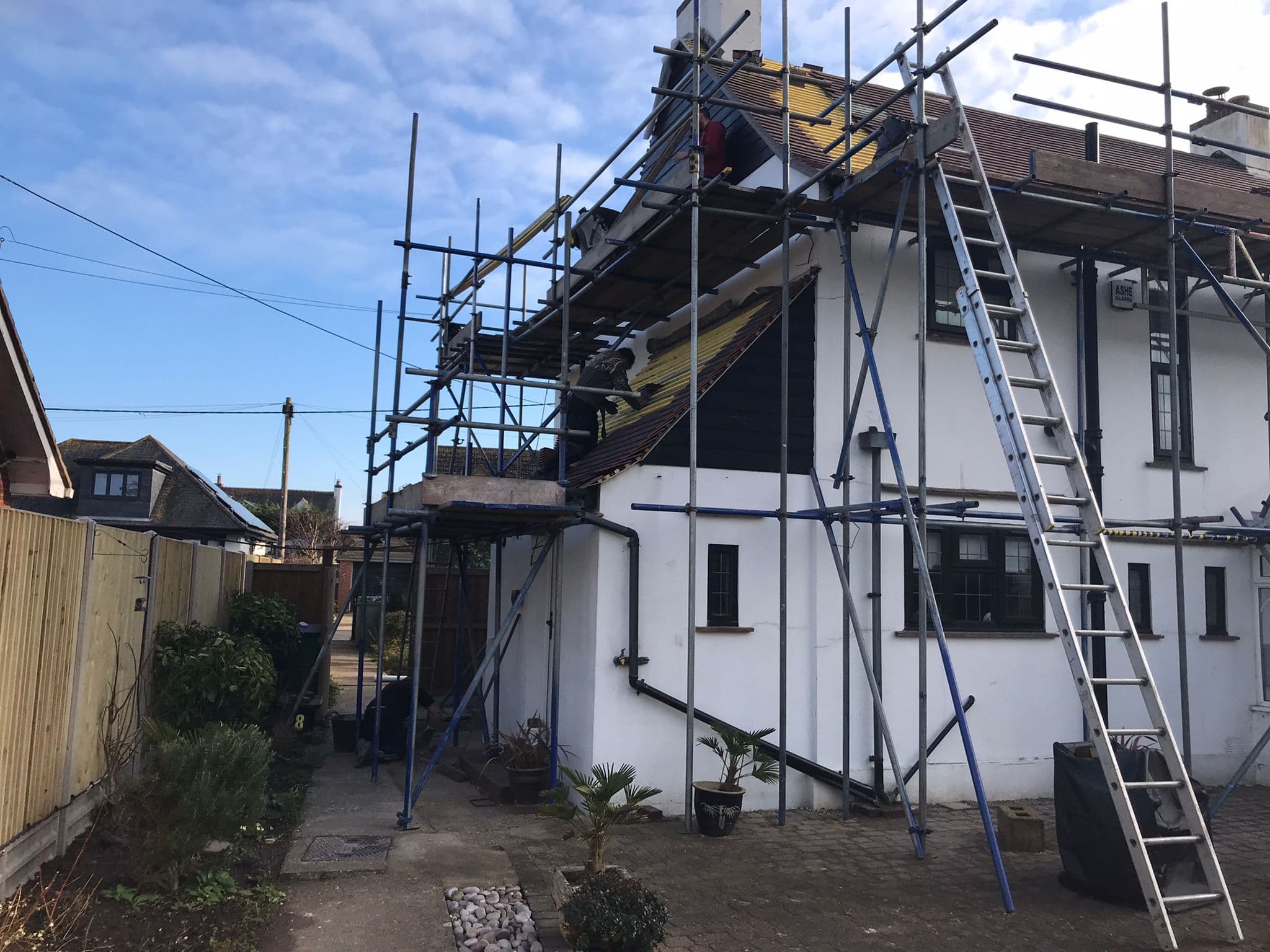
New roofs built to specification in tile, slate, pitched or flat systems.
Domestic roofing
Homes across east Kent, from one repair to a full replacement.
Commercial roofing
Flat, pitched and industrial systems, worked around your opening hours.
24 hour call out
Storm damage, sudden leaks and urgent work, any time, right across Kent.
Drone surveys
A full inspection with photographs and video, and no scaffold to hire.
Guttering and fascias
Gutters, downpipes, fascias and soffits repaired or replaced, cast iron included.
Chimneys and leadwork
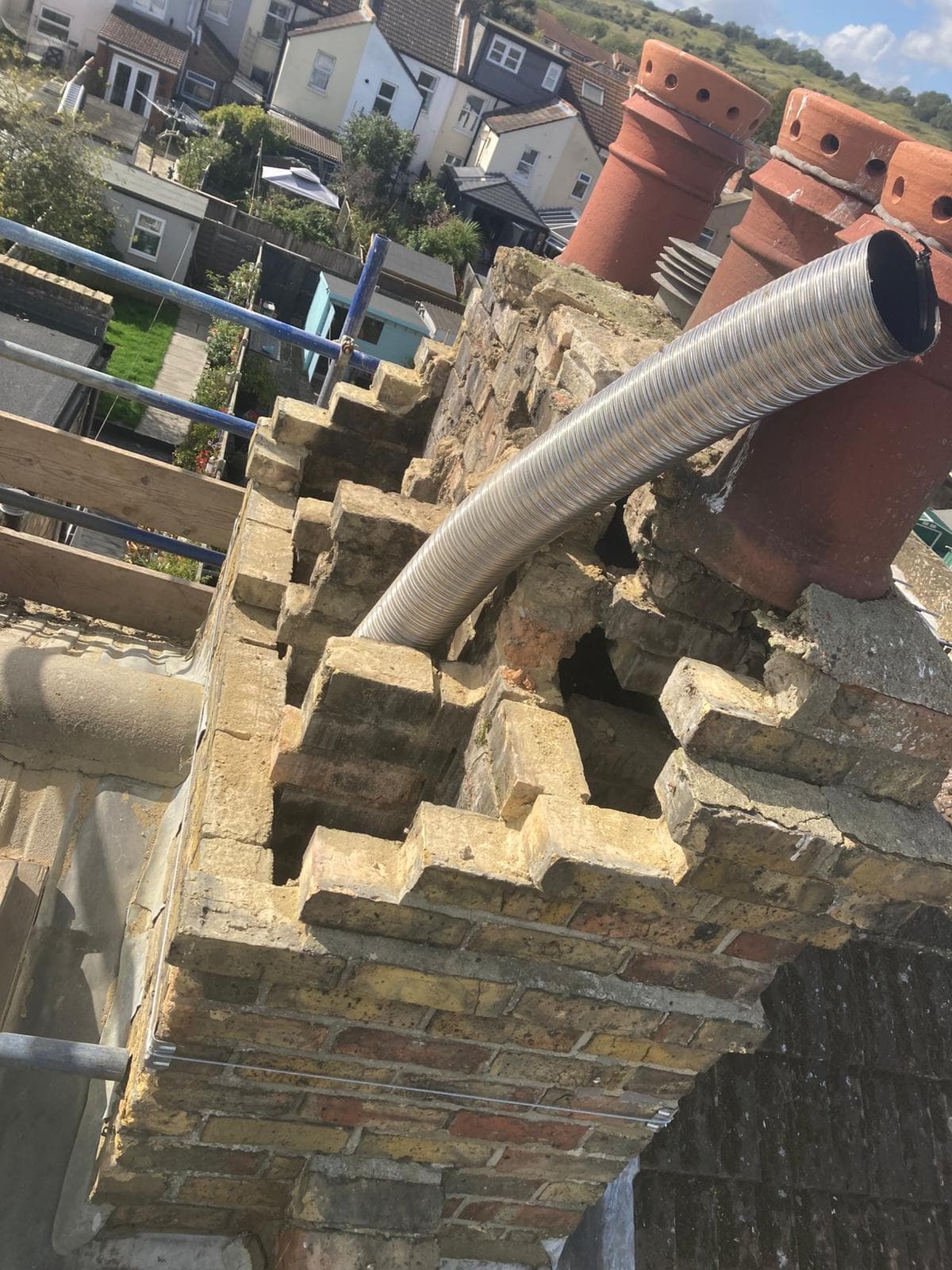
Chimney repointing and rebuilds, flaunching, caps, flashings and lead valleys.
General building
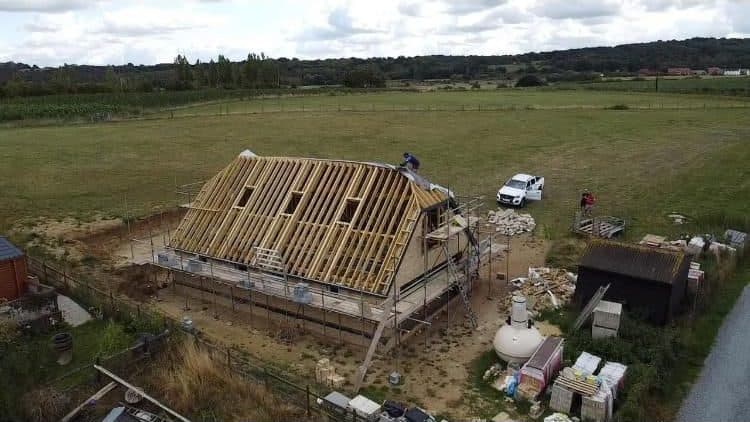
Extensions, brickwork, rendering, chimneys, guttering, driveways and groundworks.
Extensions
Extensions and conversions, with the roof done by people who roof for a living.
Brickwork and repointing
Repointing in the right mortar, damaged bricks replaced, walls and stacks rebuilt.
Rendering
Cracked and blown render repaired, and walls re-rendered in the right render for them.
Tell us what the roof is doing
Tell us the address and what you are seeing, and we will come and look. Hythe, Folkestone and across east Kent.
126-128 High Street, Hythe, Kent, CT21 5LE
Emergency work is covered 24 hours a day, right across Kent.