
Rendering and render repairs in Hythe, Folkestone and Kent
Cracked and blown render repaired or replaced, in a render that suits the wall behind it and the weather in front of it.
Render is a house's raincoat, and like a raincoat it only works while it is whole. A hairline crack in hard render lets driven rain in behind it, the render then stops that water drying out, and the wall stays wet. On a coastal house facing the weather that is often the real reason for damp inside, long before anyone suspects the render.
We repair and replace render across Hythe, Folkestone and east Kent, from cracks and blown patches to stripping and re-rendering whole elevations, and we choose the render to suit the wall rather than using one mix for everything.
- Cracks and blown patches cut out and repaired
- Whole elevations stripped and re-rendered
- Lime render on older solid walls
- Beads, drips and the base of the render detailed to shed water
- Pebbledash and roughcast repaired to match
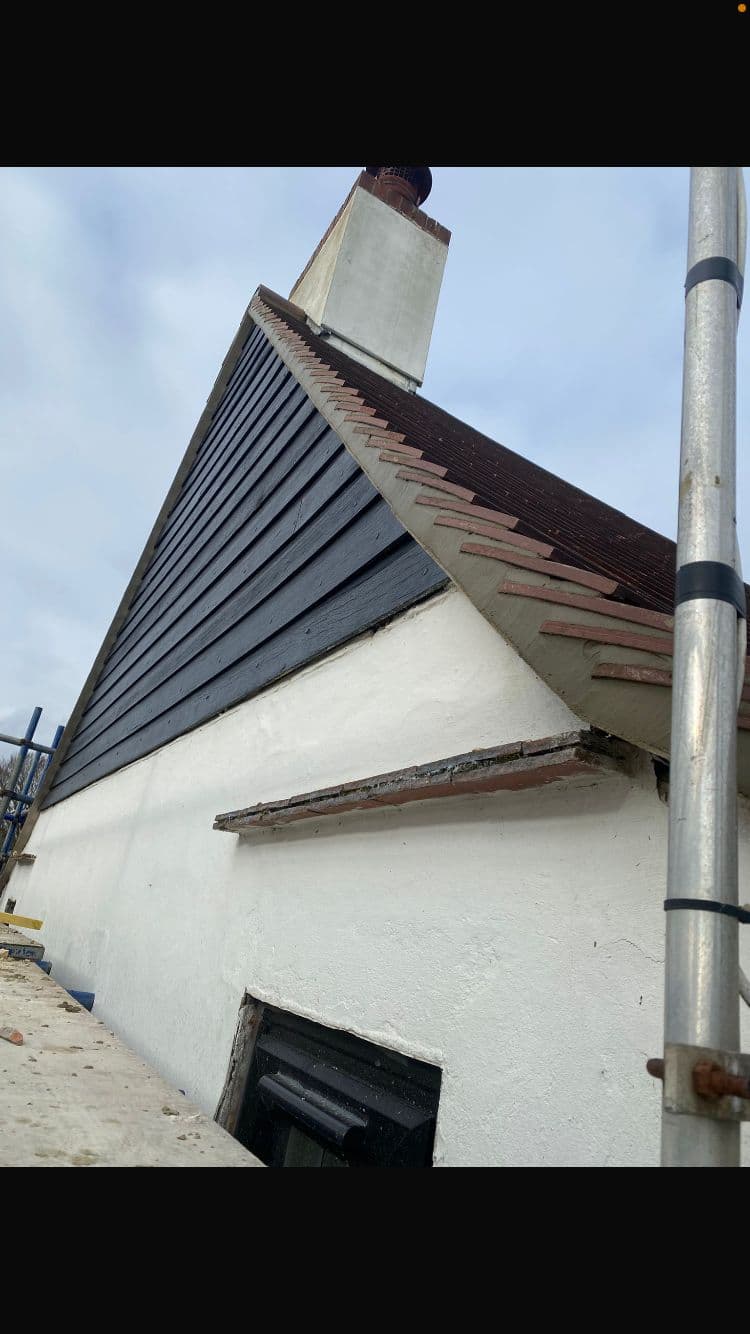
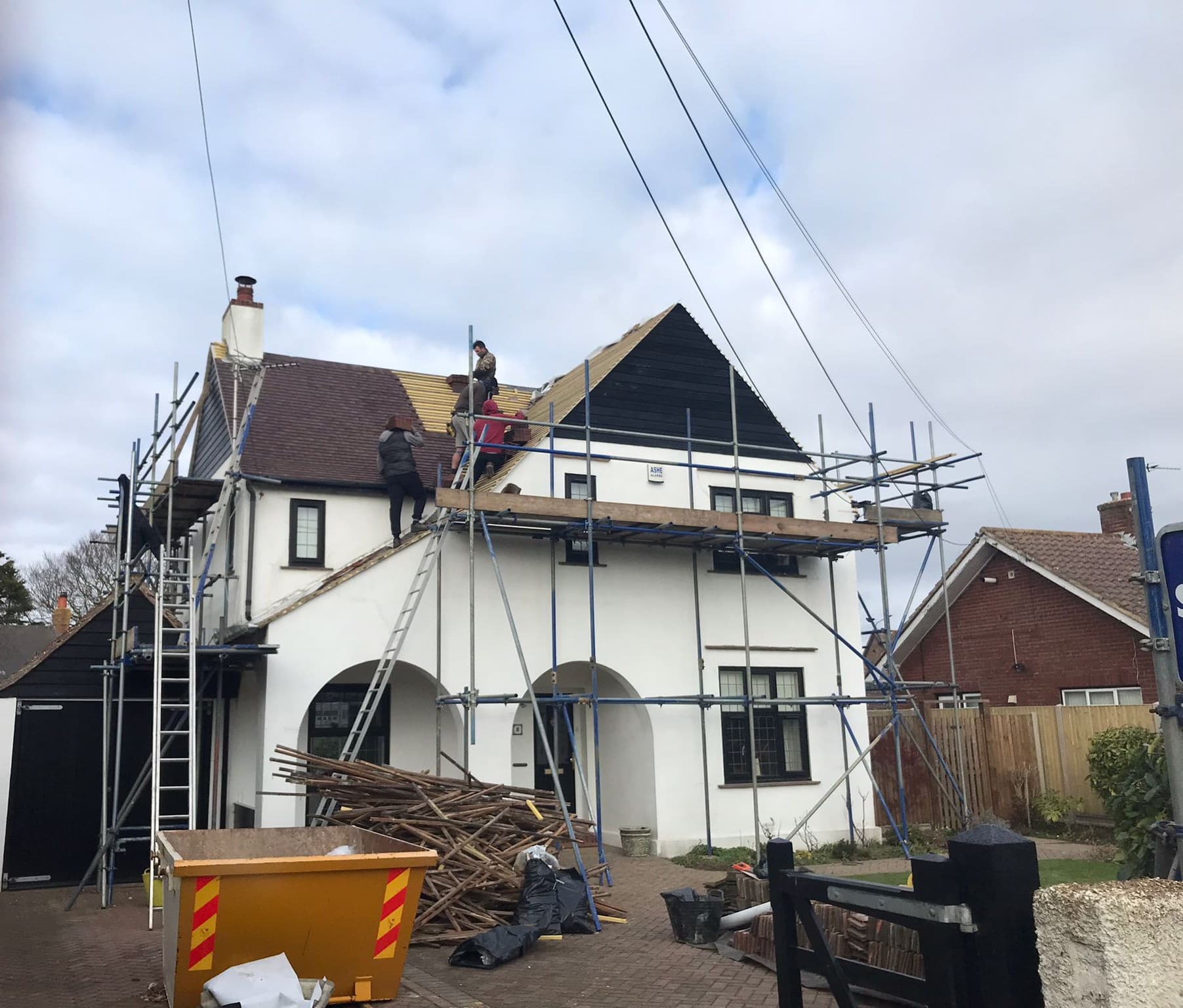
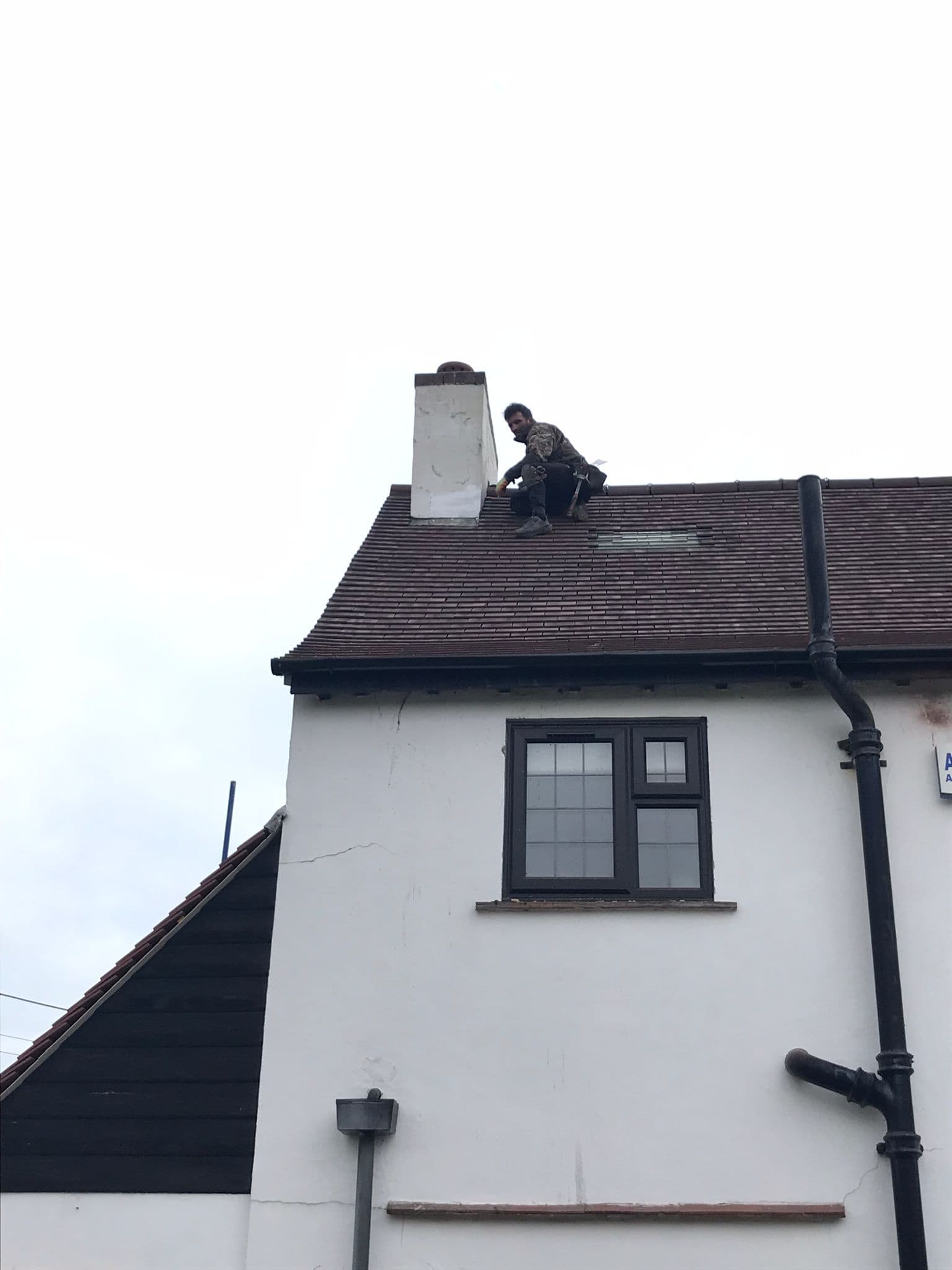
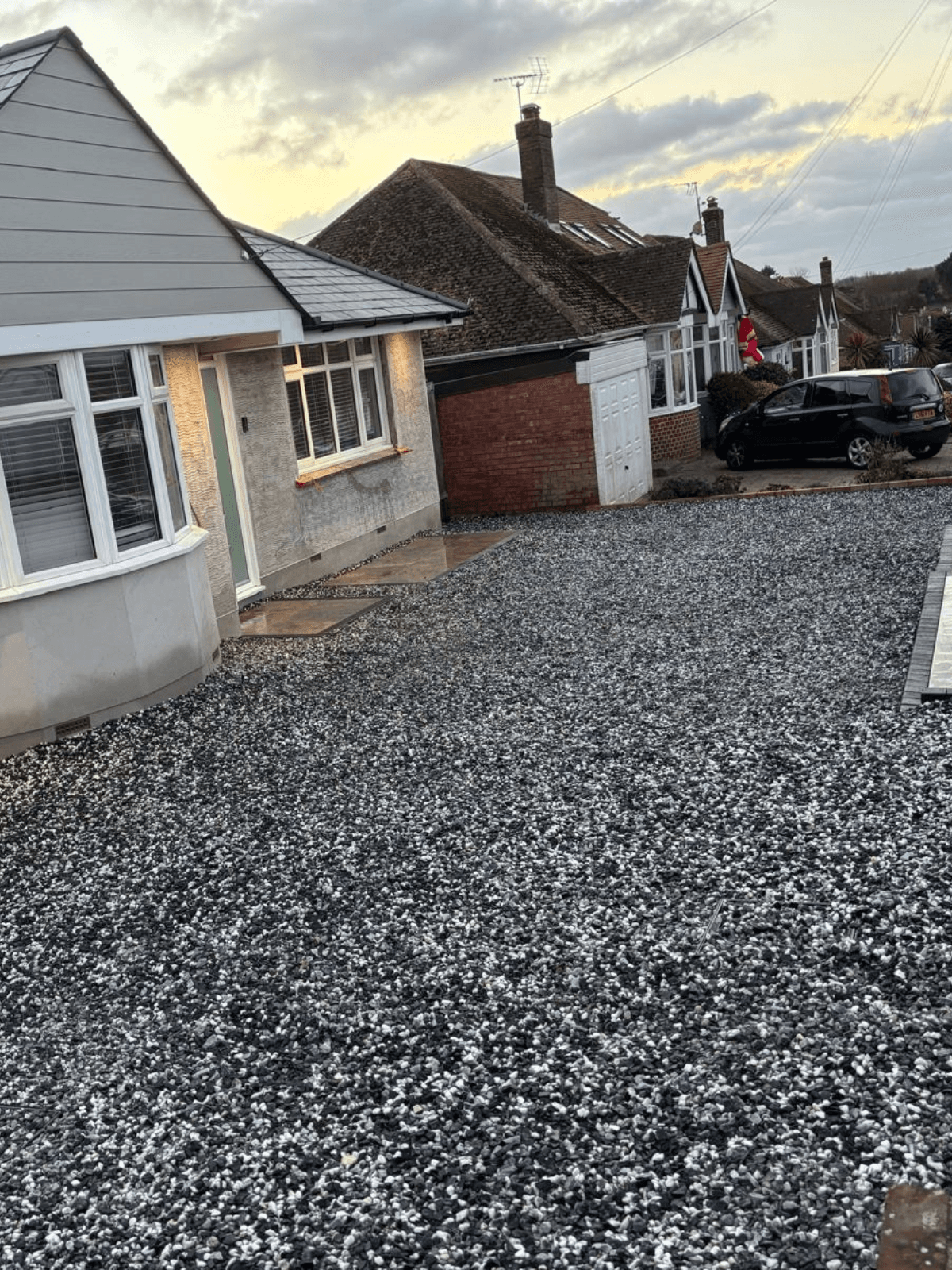
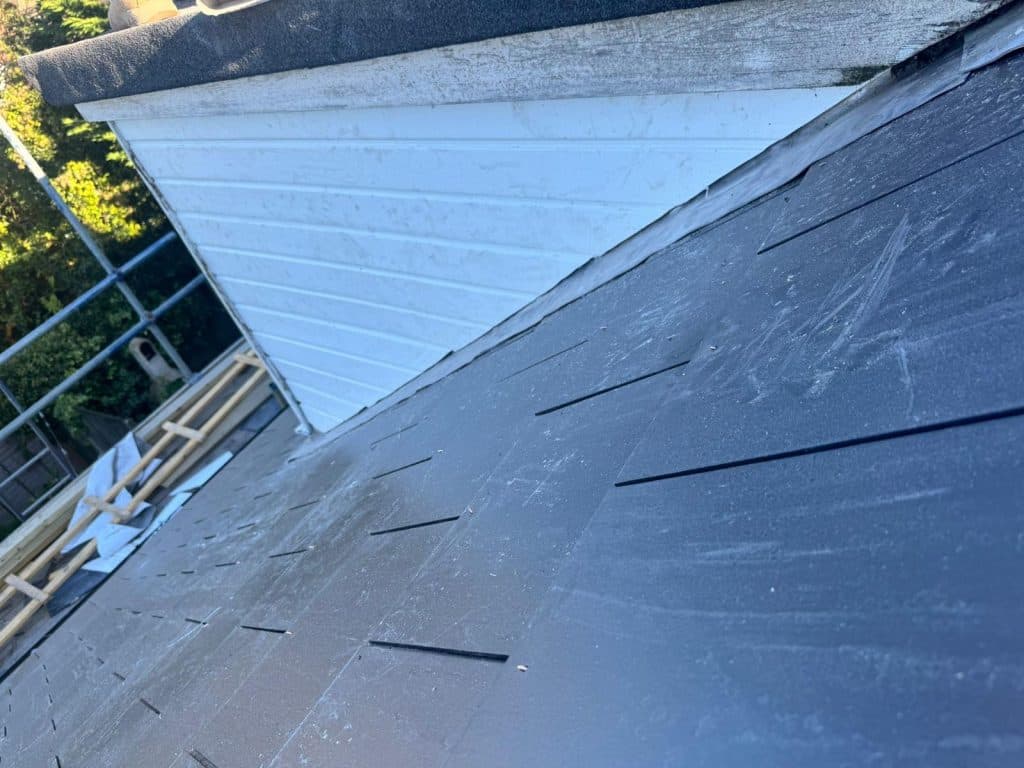
The white rendered gable end of a house, with a dark tiled roof, a chimney and a downpipe
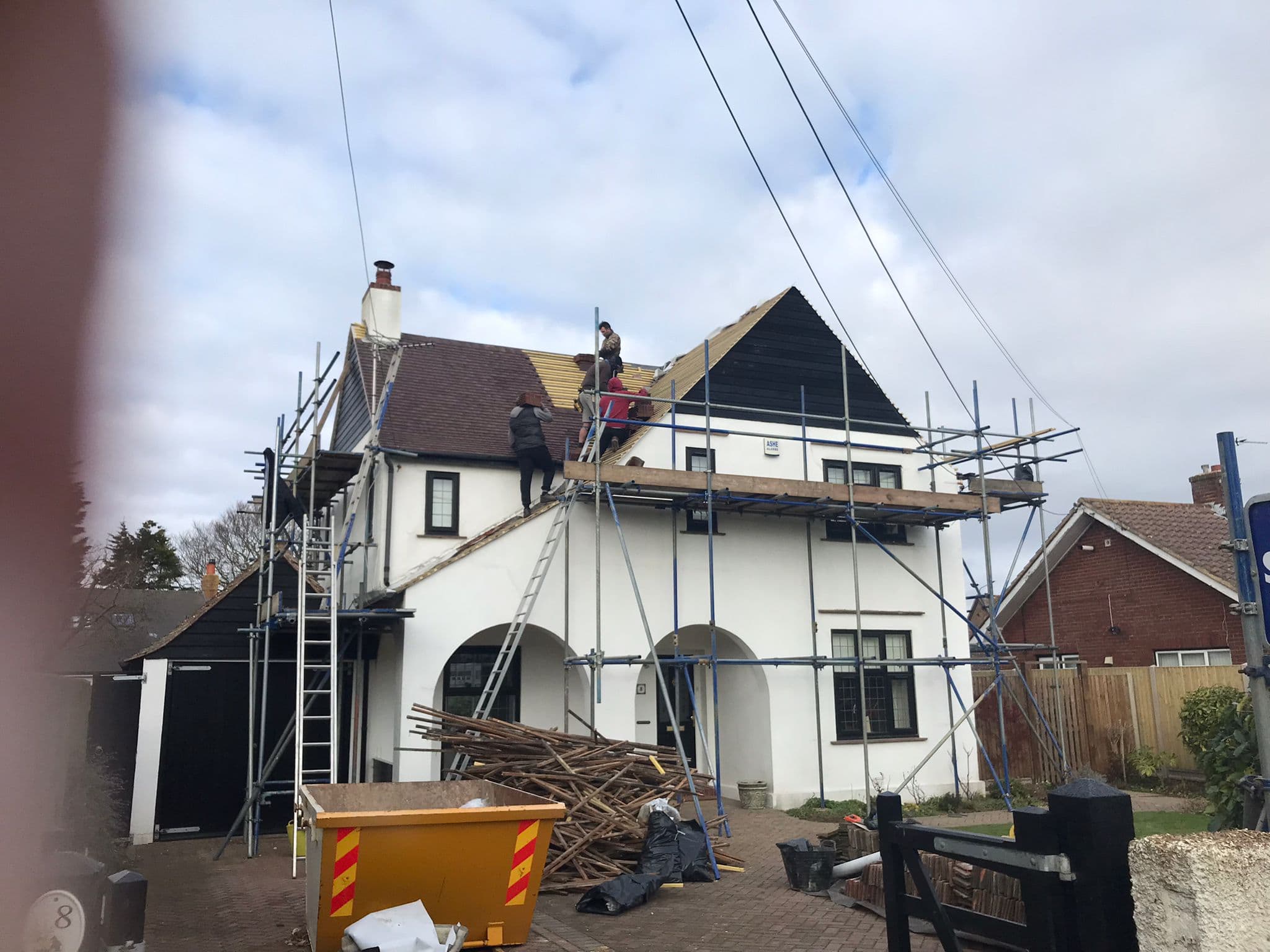
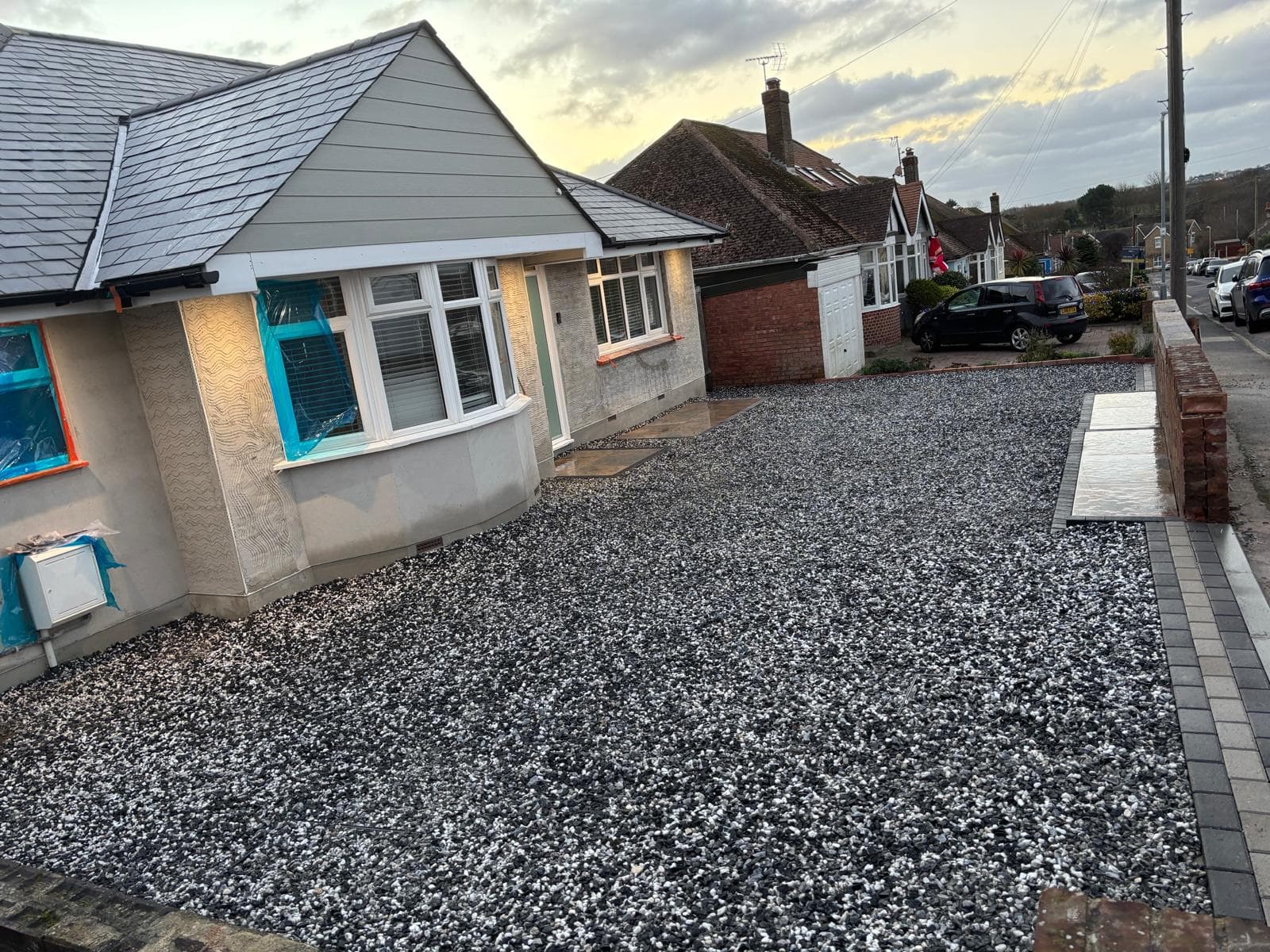
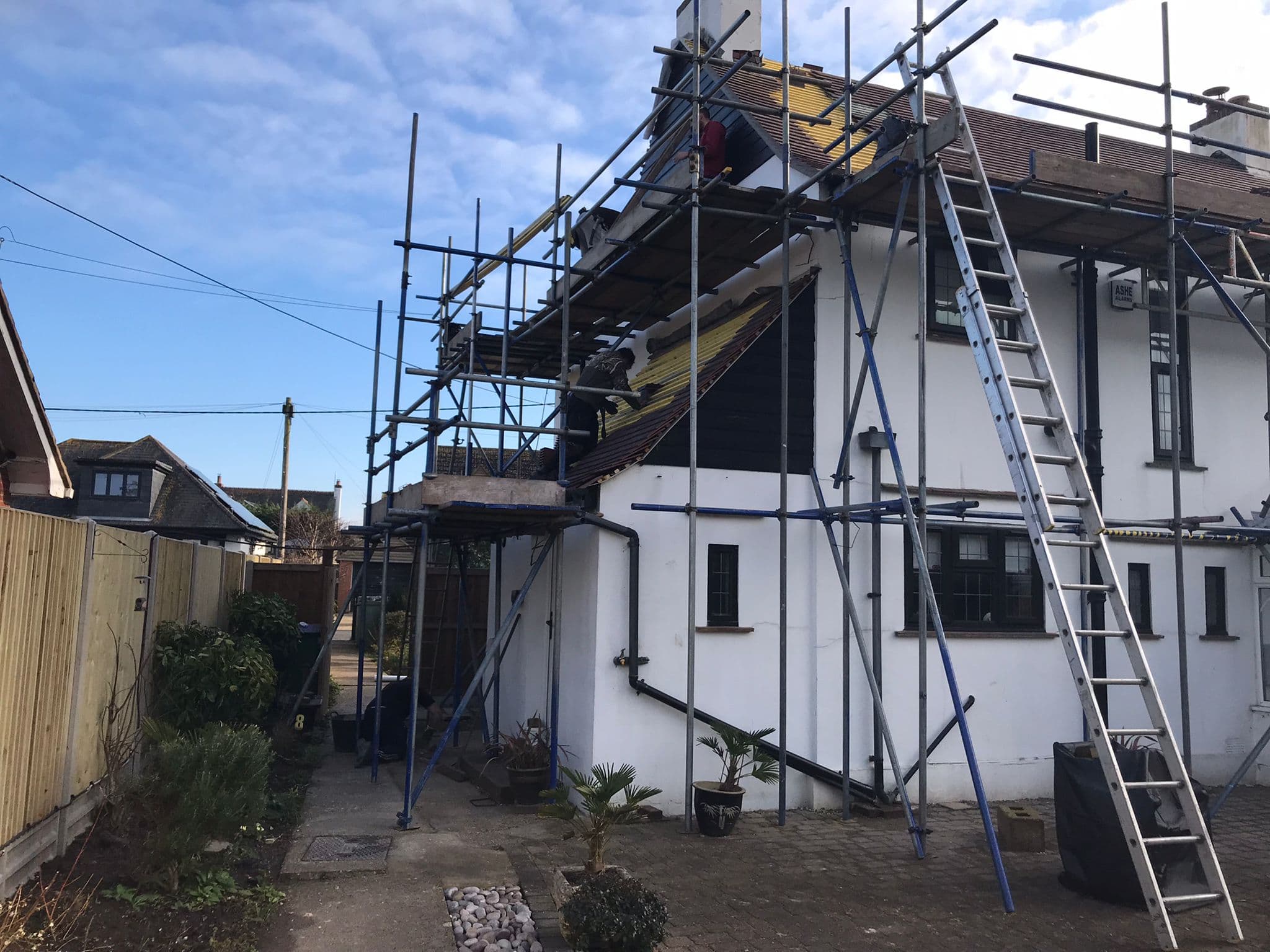
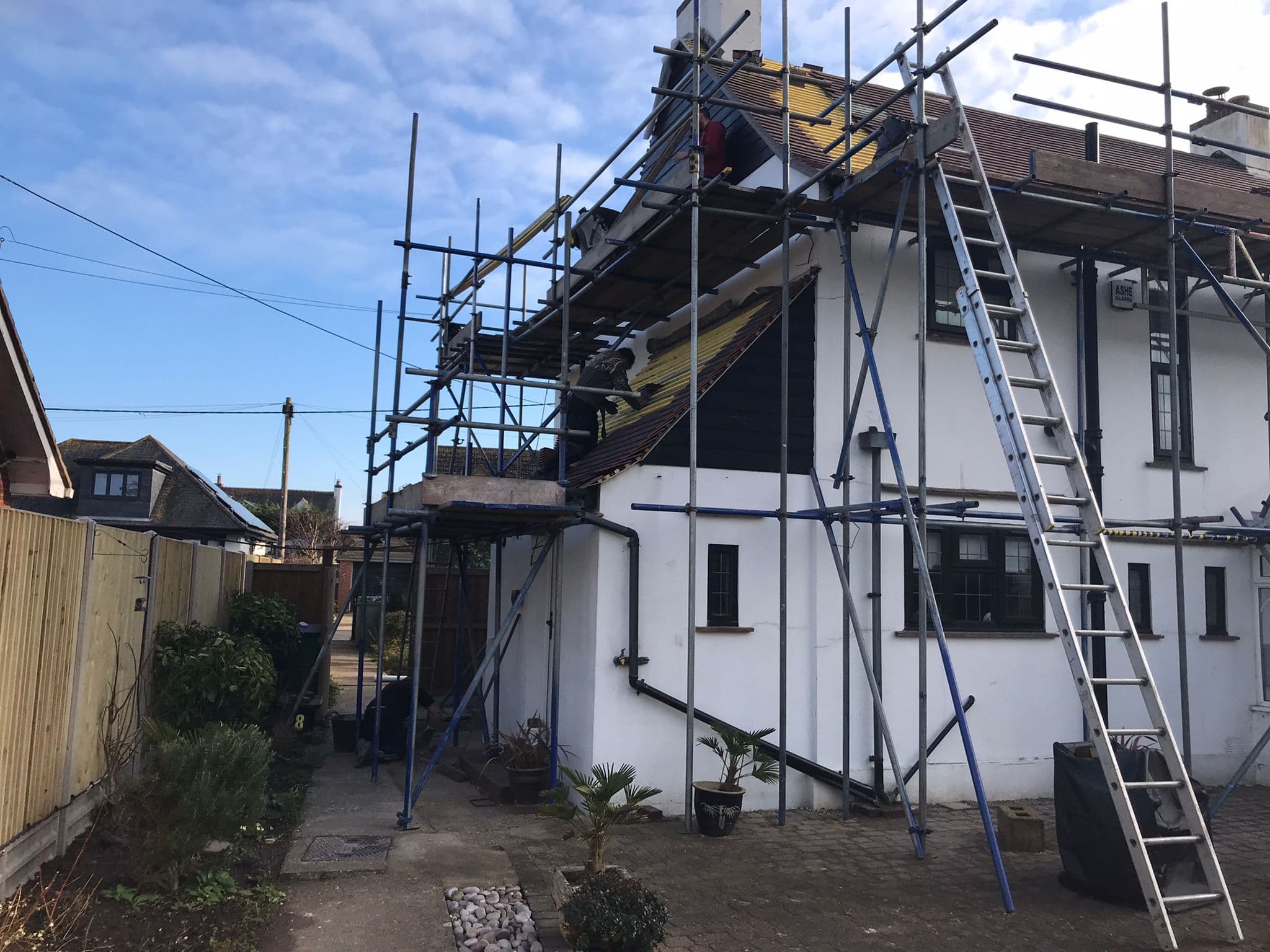
A white rendered house in Hythe with arched windows, under scaffolding with a skip on the drive
Signs render needs attention
Render usually fails slowly and in patches. Tap it lightly with a knuckle or the handle of a screwdriver: sound render rings solid, and render that has come away from the wall sounds hollow, which is called blown render.
- Cracks, especially ones that open up around windows, doors and corners
- Hollow sounding areas, or bulges where the render has lifted
- Staining or green growth following a crack or a gutter line
- Render broken away at the base of the wall or around a pipe
- Damp patches inside behind an outside wall that faces the weather
Patch repair or re-render
Small cracks and the odd blown patch can be cut back to sound render and repaired, matched as closely as possible for texture. Colour is harder: a patch on painted render disappears when the wall is repainted, but a patch on old weathered or through coloured render will show.
When a large share of an elevation sounds hollow, patching becomes a false economy, because the sound render around each patch is usually the next to go. Stripping back to the wall and starting again costs more, but it is the repair that lasts, and it shows you the state of the wall underneath, which on an older house is worth knowing.
Re-rendering a large part of a wall can bring in the Building Regulations, because it can count as renovating the wall, which may mean improving its insulation at the same time. Building control will tell you whether your job does.
The right render for the wall
Older houses with solid brick or stone walls need to breathe. They were built to take in some moisture and dry out again, and a hard cement render stops the drying half of that. On those walls lime render is the right material: softer, more flexible and able to let the wall dry. A lot of damp in older houses traces back to cement render or cement pointing on a wall that was built with lime.
Modern cavity wall houses are a different case. Sand and cement render suits them, and thin coat silicone or through coloured renders are increasingly used because they shed water, stay cleaner and need no painting, and some are designed to go over external insulation. They cost more than traditional render and only perform when applied to the system's rules, so the choice comes down to the wall, the budget and how much upkeep you want.
Render on a coastal house
Houses near the sea get more driven rain, more wind and salt in the air, and the elevations facing the south west take the worst of it. Render on those sides cracks and weathers faster, and any water that gets behind it has longer to do damage. A crack you might watch on a sheltered inland house is worth sealing promptly here.
The details matter as much as the render. Render should stop above the damp proof course, finished on a bell shaped bead that throws water clear of the wall, and never carry on down to the ground, where it draws moisture up past the damp course. Window sills need drips that throw water off rather than down the face, and every gutter above needs to work, because an overflowing gutter will stain and eventually blow the render beneath it.
Planning and conservation areas
Repairing existing render like for like needs no permission. Rendering a house that is currently brick changes its appearance, and depending on where the house is and what the render looks like, that can need planning permission. In a conservation area it does, and on a listed building it needs listed building consent.
Painted and rendered fronts are a large part of the character of Hythe's High Street and of Folkestone's older streets, so check with Folkestone and Hythe District Council before changing one.
Also from us
The rest of what we do
Roof repairs
From small leaks and slipped tiles to storm damage and structural problems.
Roof installations
New roofs built to specification in tile, slate, pitched or flat systems.
Domestic roofing
Homes across east Kent, from one repair to a full replacement.
Commercial roofing
Flat, pitched and industrial systems, worked around your opening hours.
24 hour call out
Storm damage, sudden leaks and urgent work, any time, right across Kent.
Drone surveys
A full inspection with photographs and video, and no scaffold to hire.
Guttering and fascias
Gutters, downpipes, fascias and soffits repaired or replaced, cast iron included.
Chimneys and leadwork
Chimney repointing and rebuilds, flaunching, caps, flashings and lead valleys.
General building
Extensions, brickwork, rendering, chimneys, guttering, driveways and groundworks.
Extensions
Extensions and conversions, with the roof done by people who roof for a living.
Brickwork and repointing
Repointing in the right mortar, damaged bricks replaced, walls and stacks rebuilt.
Driveways and patios
Driveways and patios laid on a proper base, built to drain and to the planning rules.
Tell us what the roof is doing
Tell us the address and what you are seeing, and we will come and look. Hythe, Folkestone and across east Kent.
126-128 High Street, Hythe, Kent, CT21 5LE
Emergency work is covered 24 hours a day, right across Kent.