
Why Is My Chimney Leaking When It Rains?
24 September 2026By Richard Wood
When a chimney leaks in the rain, the water is almost always getting in at one of five places. The flashings where the stack meets the roof, the back gutter on the uphill side of the stack, the mortar flaunching around the pots on top, an open pot on a flue nobody uses, or the brickwork and pointing of the stack itself. The good news is that when and where the water shows up usually tells you which one it is, and most of them are repairs rather than a rebuild.
As a rough guide, water that only appears in wind-driven rain from one direction points to the brickwork or a side flashing on the weather side. Water after any heavy downpour, whatever the wind, points to an open flue, cracked flaunching or an overflowing back gutter. A damp patch on the chimney breast that comes and goes with humid weather rather than with rain is often not a leak at all. The rest of this article takes each cause in turn, what it looks like from inside the house, and what a proper repair involves.
Why Chimneys Leak More Than the Rest of the Roof
A chimney stands proud of the roof slope and takes the weather from every side. Every place it passes through the roof is a joint, and each joint is kept dry by a separate piece of work, whether that is lead, mortar or a gutter. None of those joints lasts forever, and on an exposed coast the wind drives rain into them far harder than it does on a sheltered inland street.
A chimney is only one of the places a roof lets water in, but it is the one where the wet patch inside is most likely to be some distance from the real problem. Water that gets in at the top of a stack can run down inside the brickwork and appear a floor lower, on the chimney breast in a bedroom, long after the rain has stopped.
The Flashings Where the Stack Meets the Roof
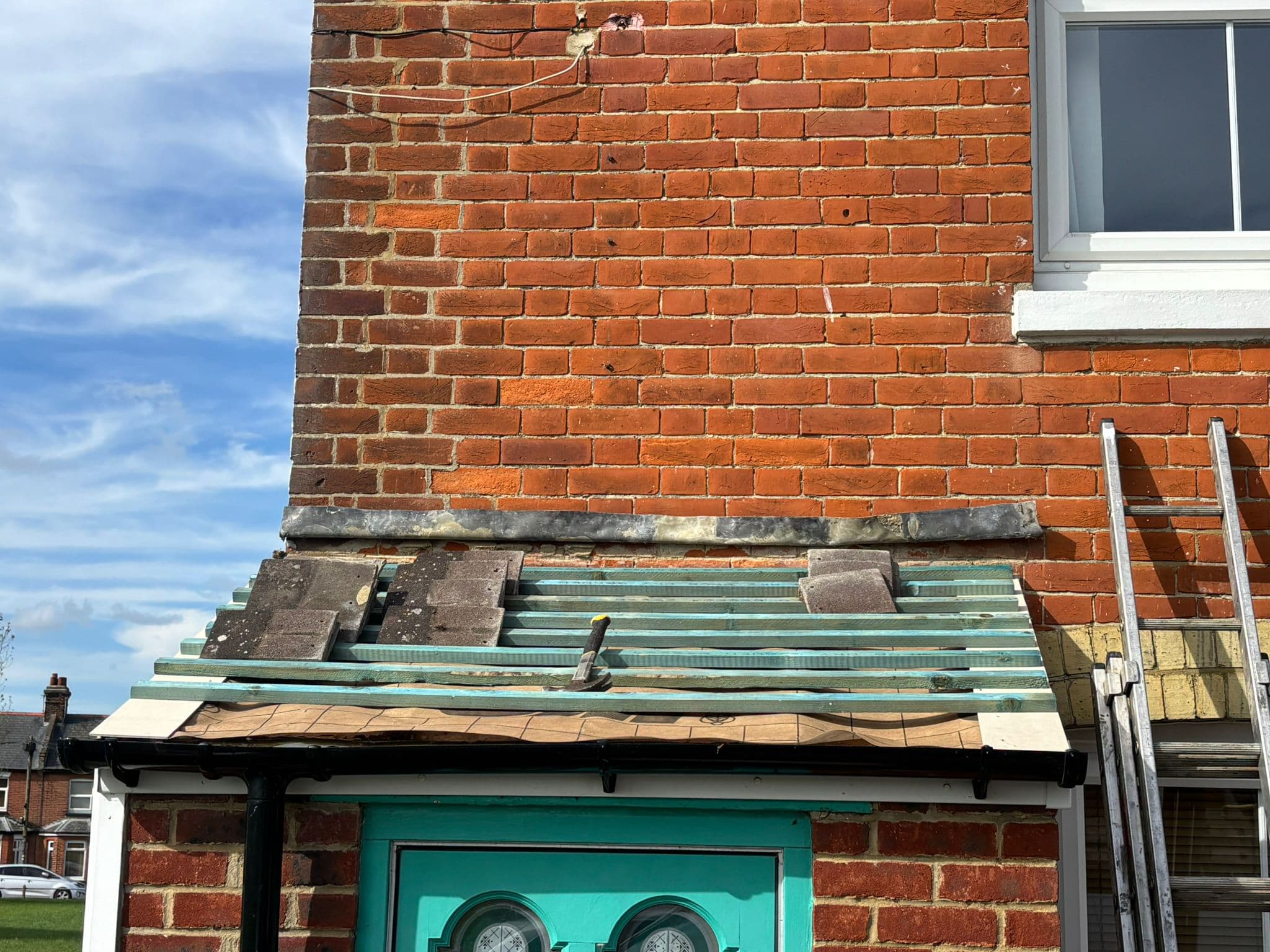
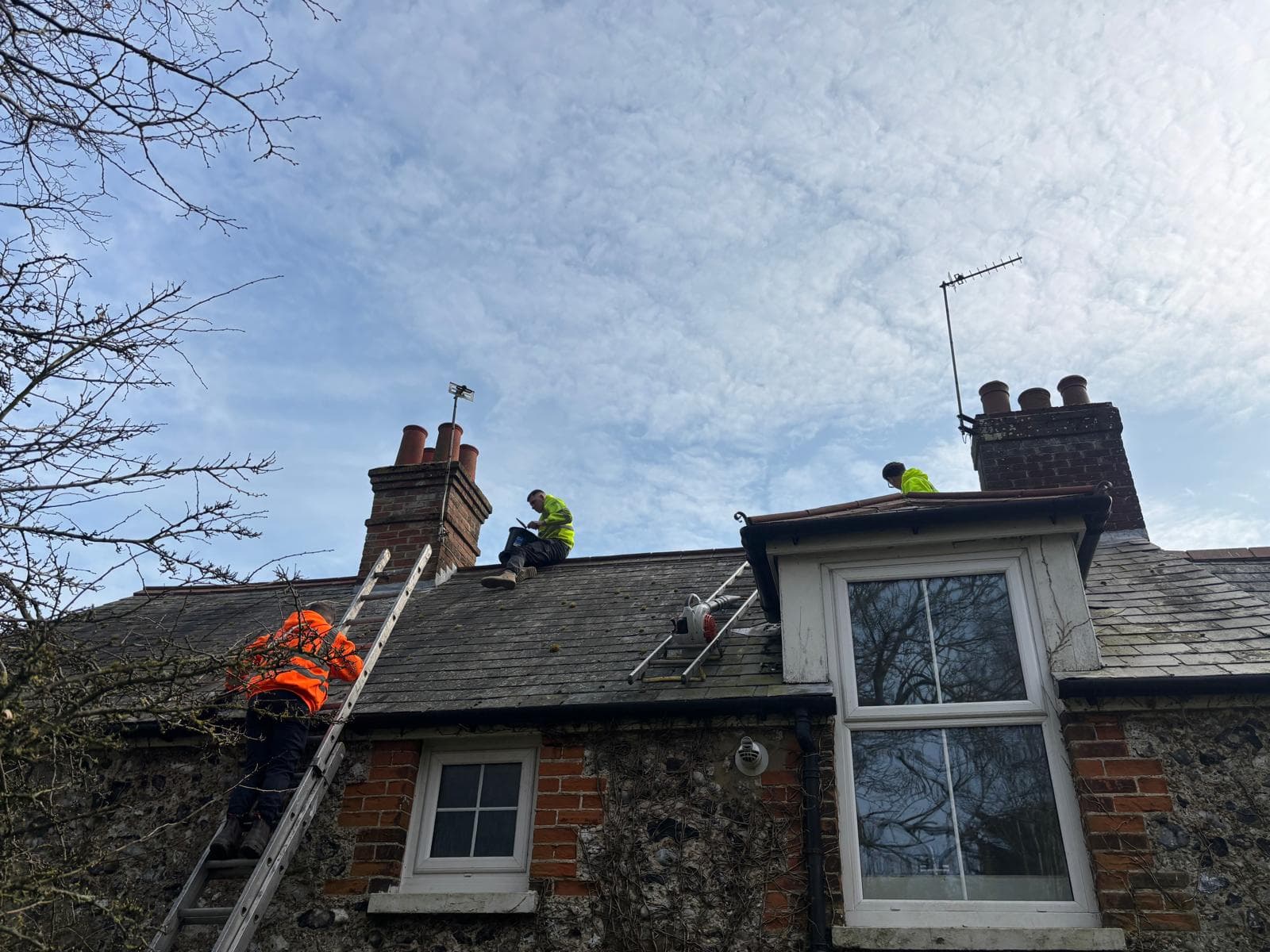
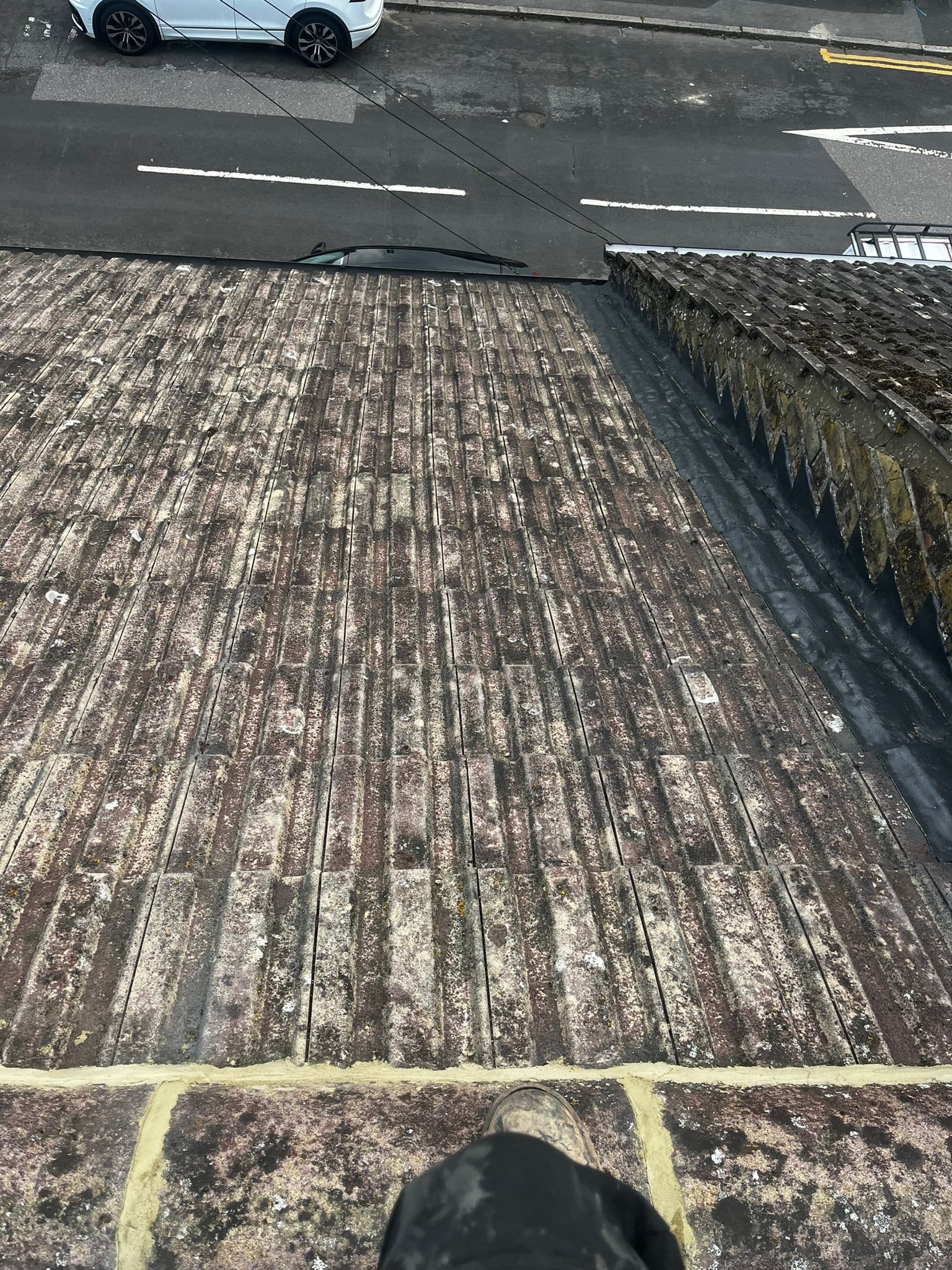
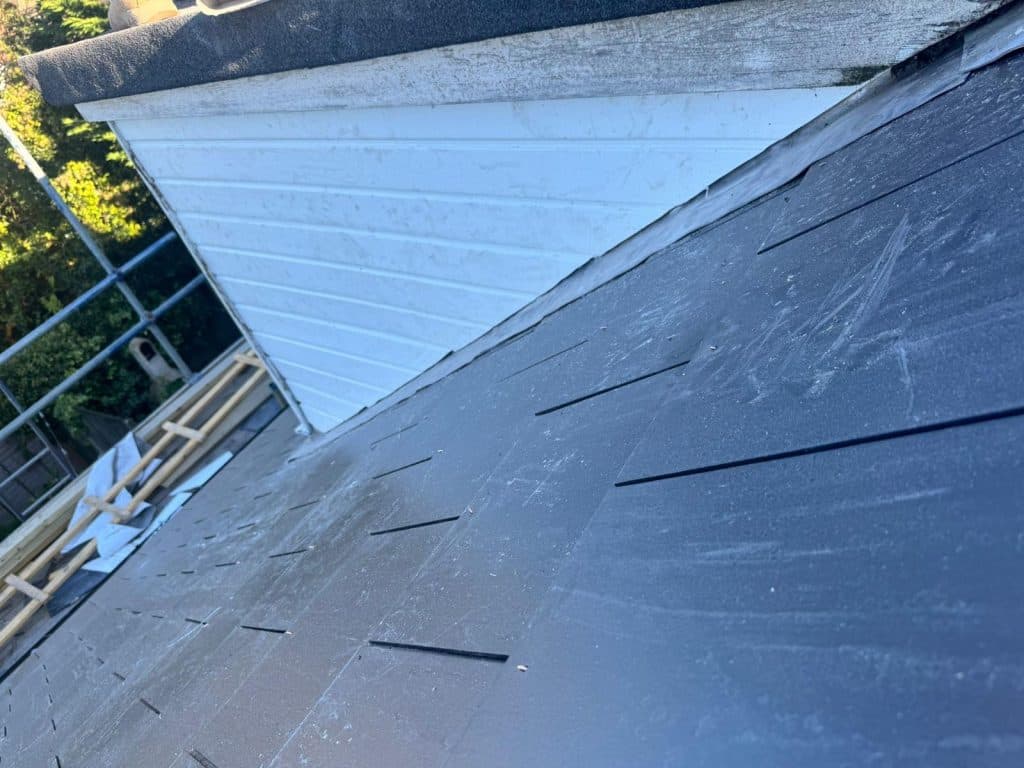
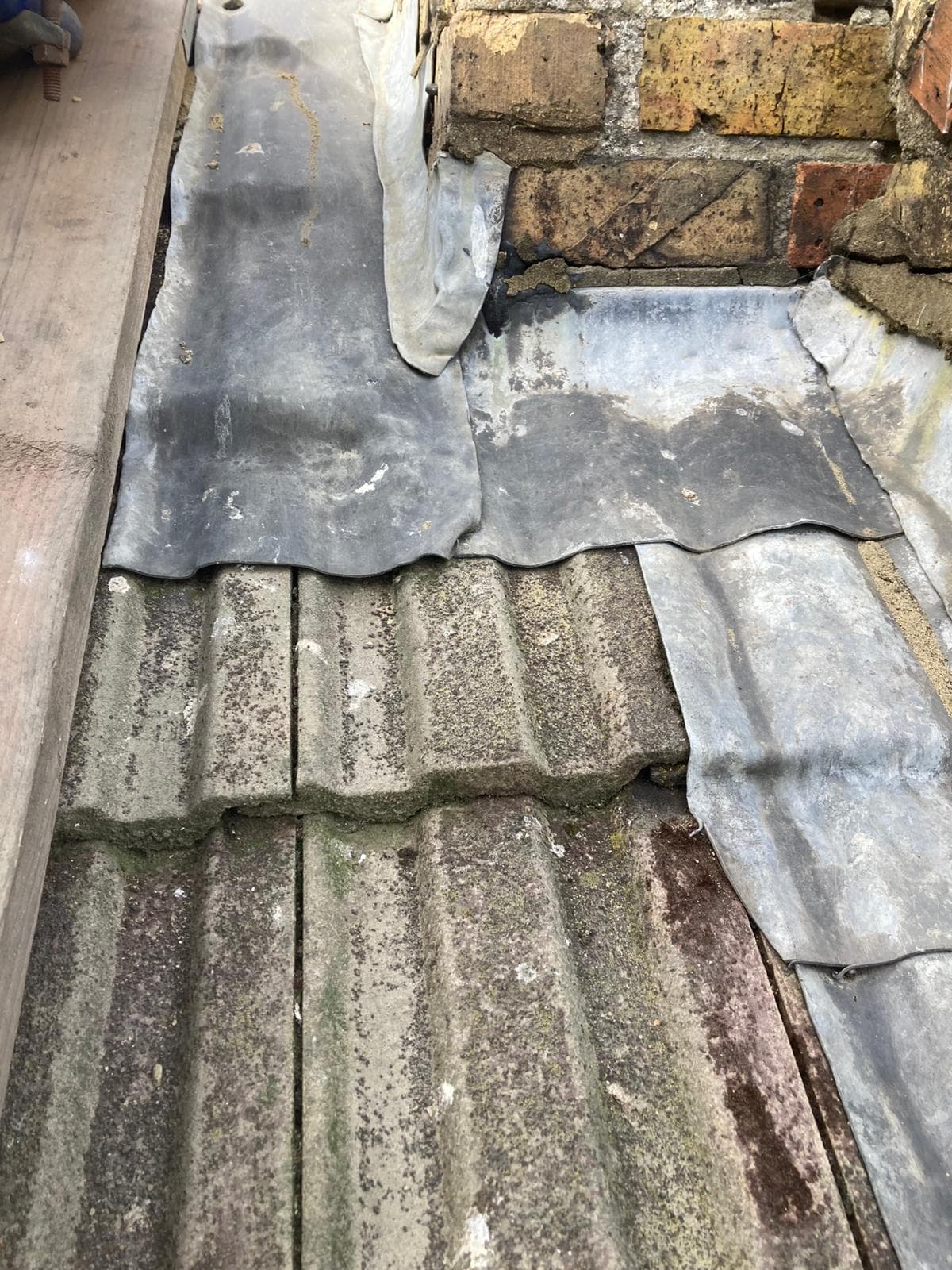
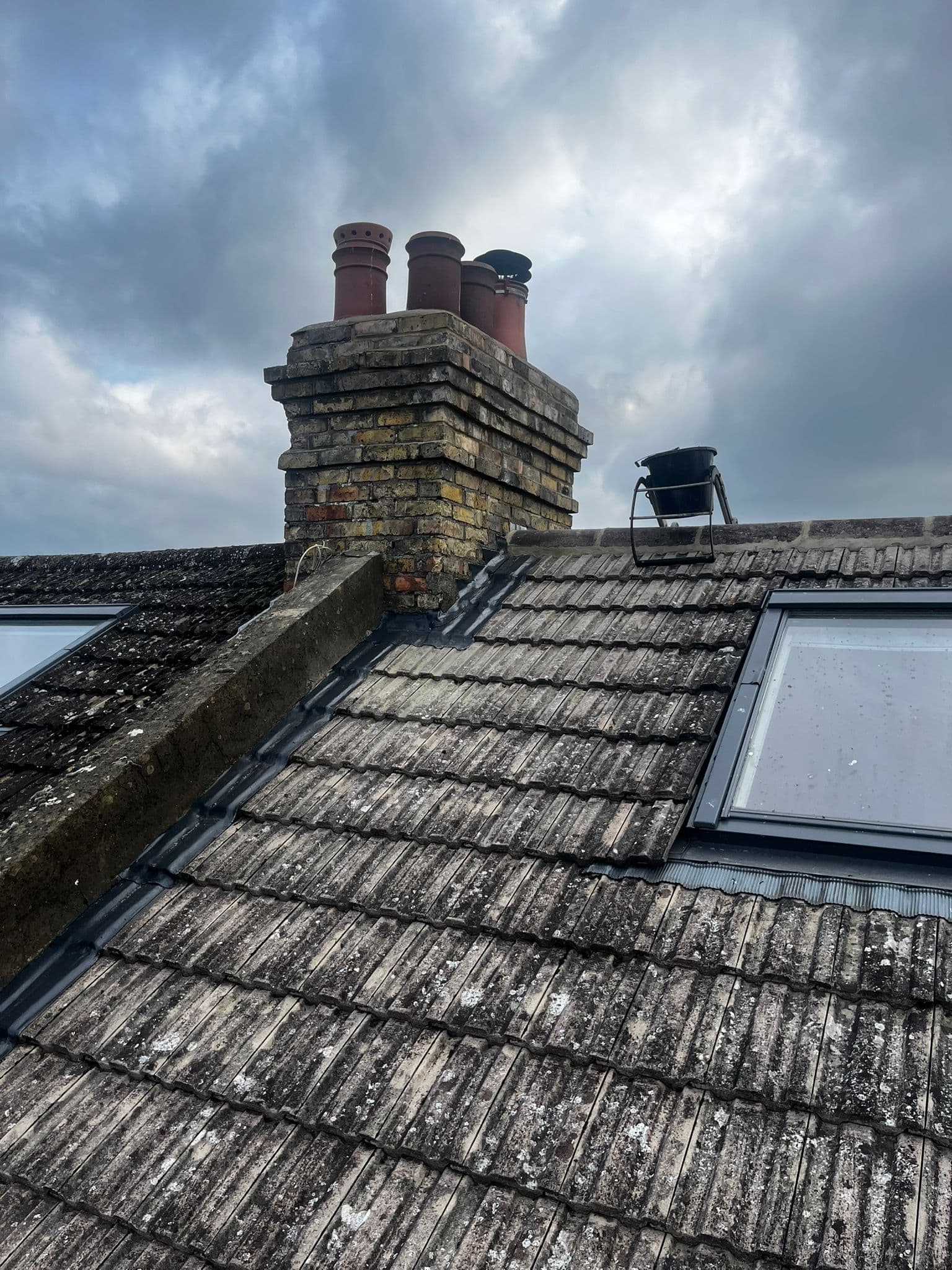
The joint between a chimney and the roof covering is sealed with flashings, usually lead. There is an apron flashing across the front of the stack on the downhill side, stepped flashings running up each side, and on slate and plain tile roofs small lead soakers tucked under the tiles beneath the steps. The top edge of each flashing is folded into a mortar joint in the brickwork, wedged, and pointed over.
Those lead flashings fail in a handful of predictable ways. The pointing that holds the lead in the joint cracks and falls out, so the lead lifts away from the brick and rain runs in behind it. Old lead splits where it has been worked too hard or fitted in lengths too long to cope with expansion and contraction. And on many older roofs there is no lead at all, only a sloping fillet of sand and cement, which cracks away from the brick as the stack and the roof move independently.
A flashing fault usually shows in the loft as water running down the face of the stack or along the rafters beside it, and indoors as a stain on the ceiling next to the chimney breast rather than on the breast itself.
In our experience, re-dressing or renewing the leadwork works better than sealing over it because sealant cannot move with the lead. Lead expands and contracts with every change in temperature, so a bead of mastic along the top of a flashing tends to crack away as the seasons turn, and the water simply follows the same path it did before. Where the lead itself is sound, refixing it and repointing the joint is a small job. Where it has split or was never there, new leadwork is the proper answer.
The Back Gutter Behind the Stack
On the uphill side of every chimney that sits partway down a slope, there is a back gutter. It is a small lead tray that catches all the water running down the roof above the stack and turns it round the sides. It also catches leaves, moss and anything that blows along the roof, and when it silts up the water rises over its upstand and runs straight into the roof.
We've found that the back gutter is the part of a chimney most often missed, because it cannot be seen from the street or the garden. A homeowner can look up at a stack that appears to be in good order while the one part causing the leak is hidden behind it. A back gutter leak typically shows as water arriving in the loft on the uphill side of the stack during heavy rain, and it often gets worse in autumn when the leaves come down.
Cracked Flaunching and Open Pots
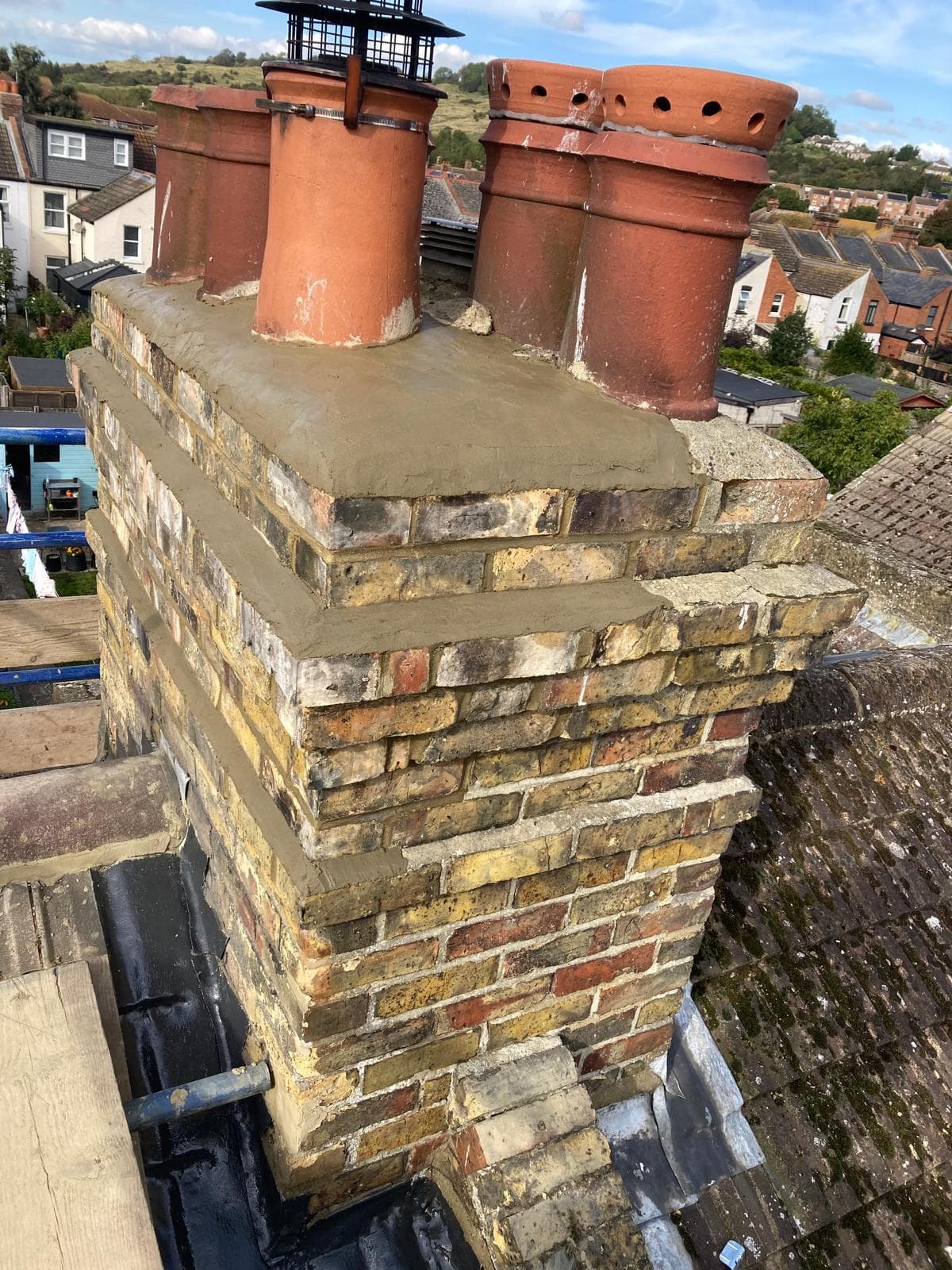
The flaunching is the sloping bed of mortar on top of the stack that holds the pots in place and throws rain off the top. It sits fully exposed to sun, frost and rain, and in time it cracks. Once it does, water runs through the cracks into the core of the stack and down inside it. Loose flaunching also leaves pots unsecured, which is a danger in its own right when the wind gets up.
An open pot on a flue that is no longer used lets rain fall straight down the chimney. The fix is a cap, but it needs to be the right kind. A flue sealed tight at the top and bottom cannot dry out, so the moisture already in it condenses and shows as damp on the chimney breast. From working with clients who have had a disused flue sealed off completely, we know that this swaps a rain problem for a condensation one. A ventilated cap at the top that keeps the rain out but lets air move, with a vent left at the fireplace end, keeps the flue dry.
Porous Brickwork and Worn Pointing
Chimney bricks and mortar take more weather than any other brickwork on the house. Over decades the mortar joints erode back from the face of the brick, soft old bricks begin to crumble or shed their faces, and the stack starts soaking up driven rain like a sponge. Because Britain's prevailing wind is south-westerly, the side of the stack facing the weather usually goes first, and the damp inside tends to show on that side of the chimney breast in wet, windy spells.
The repair is to rake out the failed joints and repoint, in a mortar suited to the brick, and to replace any bricks that have lost their faces. On older soft brick that usually means a lime mortar, because a hard cement mortar forces moisture out through the brick instead of the joint and speeds up its decay. Where a stack has eroded badly or started to lean, taking it down to a sound course and rebuilding it is the lasting answer. Chimney repairs and rebuilds are part of our general building work as well as our roofing, because a stack is brickwork and roof at the same time.
Clear water-repellent treatments are sometimes sold as the whole cure for a leaking chimney. They can help on sound brickwork, but they do nothing for an open joint, a cracked flaunching or a lifted flashing, which between them account for most of the chimney leaks we are called to.
When It Is Not a Leak at All
Not every damp chimney breast has rain coming in. Decades of coal and wood fires leave salts in the flue and the plaster around it, and those salts draw moisture out of the air. The result is a damp, sometimes brown, patch on the chimney breast that appears in humid or muggy weather whether it has rained or not. Condensation inside a cold, unvented flue can produce much the same effect.
This matters because no amount of roof work will cure it. If the stain tracks humidity rather than rain, the answer lies inside the house, in venting the flue and dealing with the contaminated plaster, and it is worth ruling out before anyone spends money on the roof.
How We Find the Real Source
Because water rarely lands where it gets in, we look at a leaking chimney from both ends. A drone survey shows the top of the stack, the flaunching, the pots and the back gutter in close detail without anyone setting foot on the roof, and an inspection in the loft shows where the water is actually arriving and how far it has travelled. A drone cannot see through a roof and a loft cannot see the outside, so the two together tell the story that neither tells alone.
On the terraced streets of Hythe and Folkestone, a chimney stack often straddles the party wall and serves both houses. When that is the case, the fault may be on your neighbour's side of the stack, and the access and the repair will usually involve them too. It is worth talking to them early.
If water is coming in quickly, pooling in the loft or reaching a ceiling light fitting, treat it as urgent. Our 24 hour emergency callout can make the stack safe and watertight until a permanent repair can be done.
Please Do Not Climb Up to Look
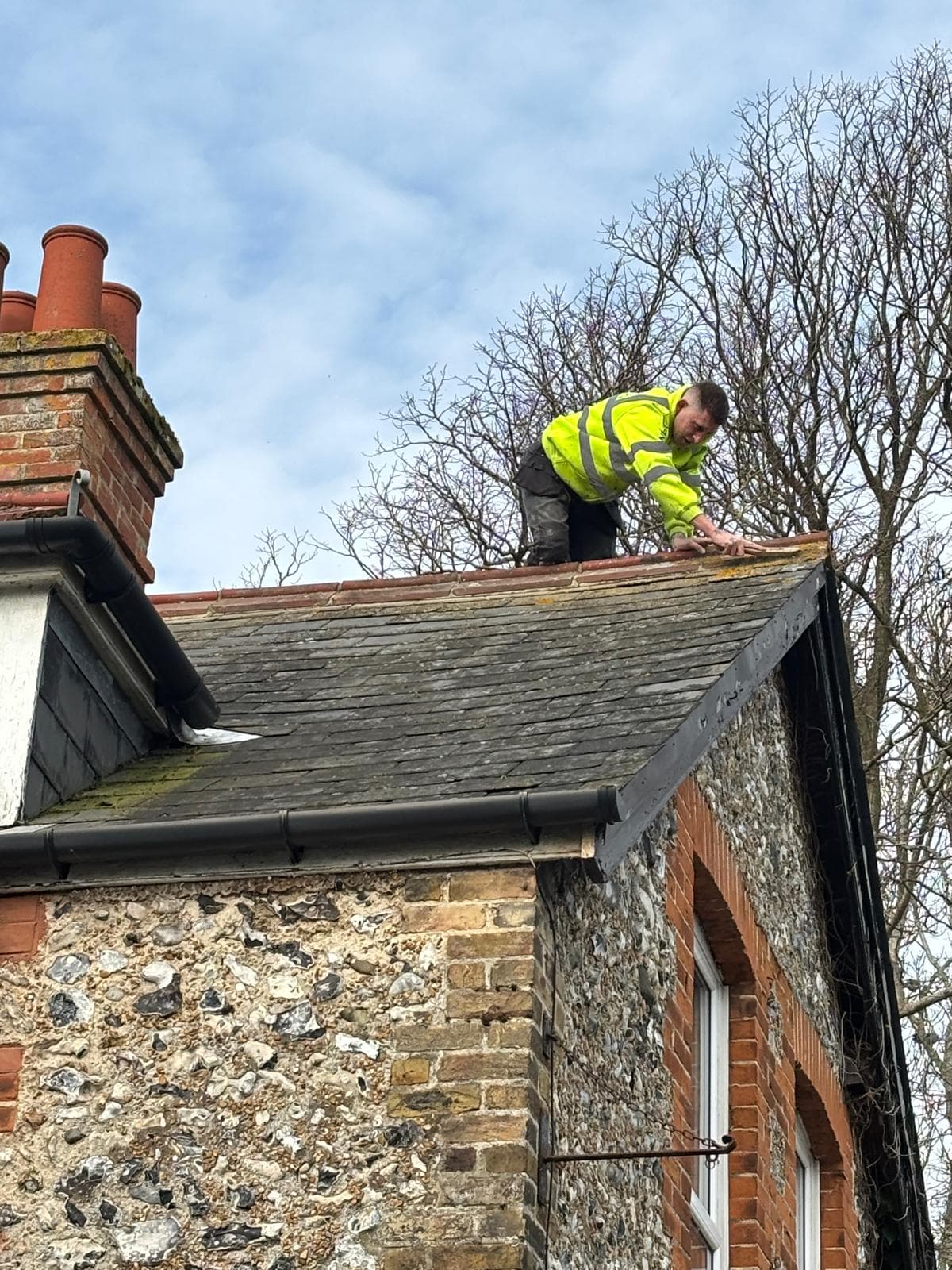
Chimneys are the hardest part of a roof to reach safely, and falls from height remain one of the biggest causes of death and serious injury at work, according to the Health and Safety Executive. A homeowner on a ladder at the eaves with no edge protection is taking a far bigger risk than any roofer would accept. You can learn a great deal without leaving the ground. Look at the stack through binoculars for lifted lead, missing pointing or cracked mortar on top, and look in the loft with a torch during or just after heavy rain, noting where the water appears and which way the wind was blowing.
Getting a Leaking Chimney Fixed Properly
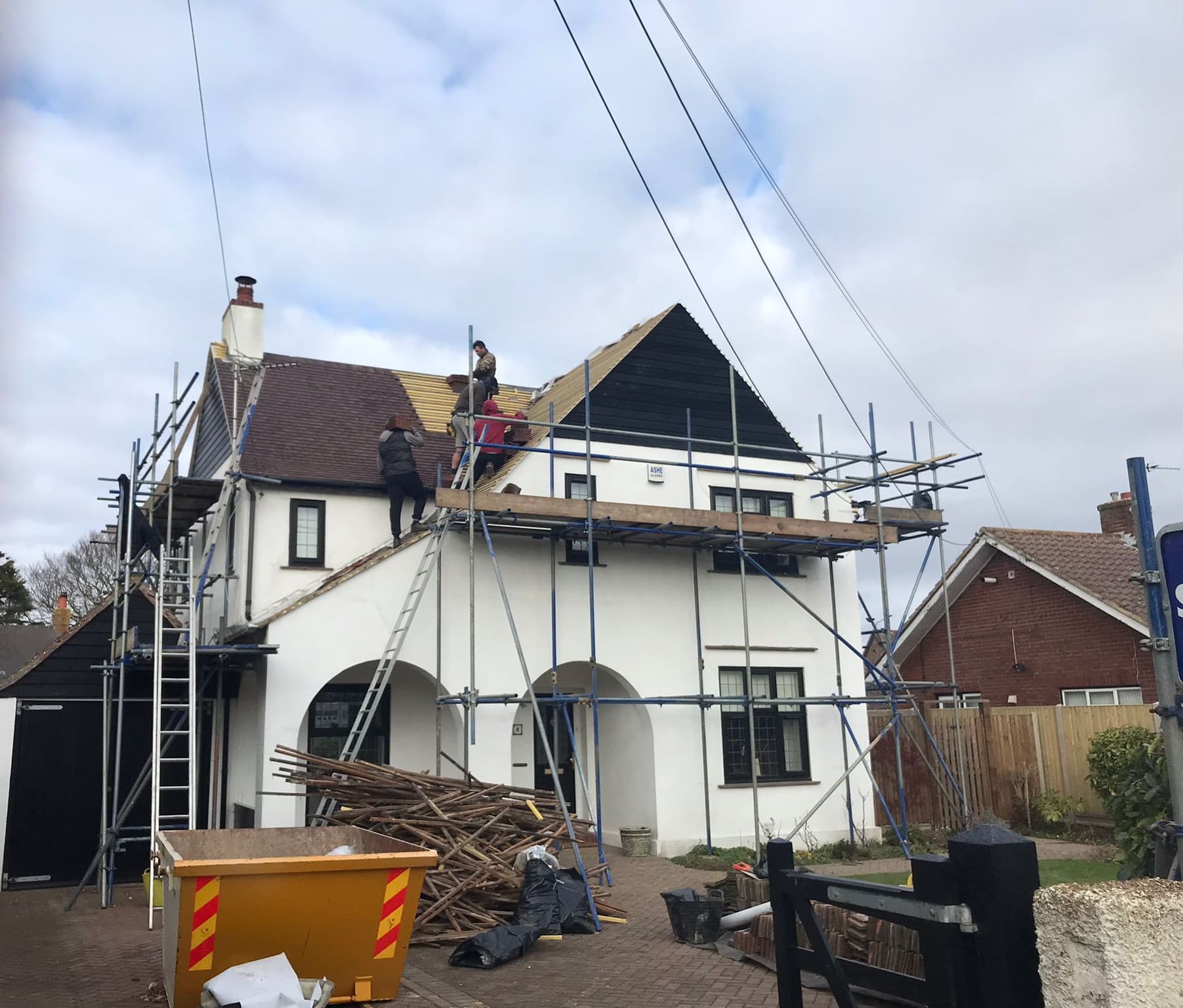
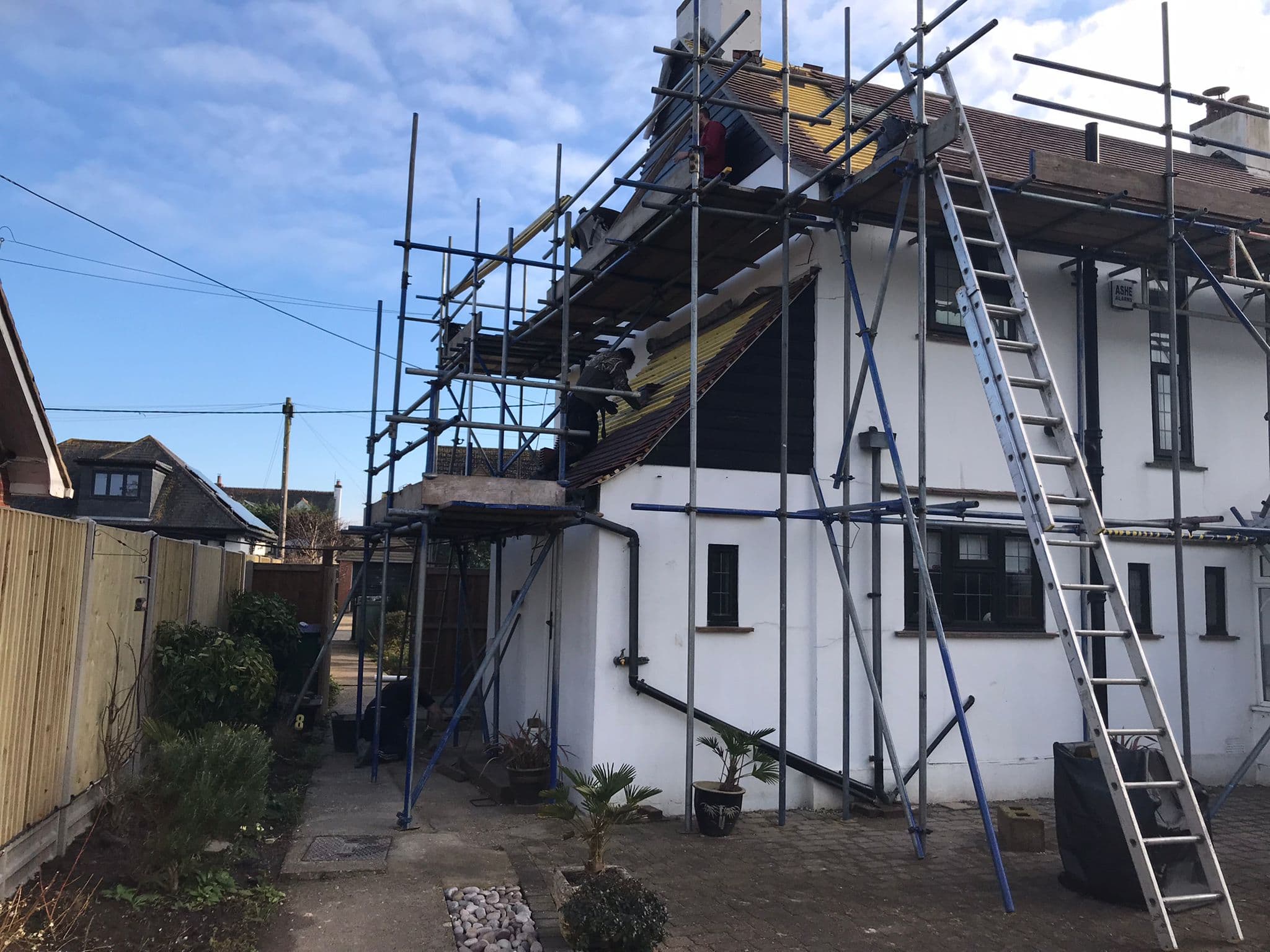
A lasting chimney repair nearly always needs safe access, which usually means a scaffold or a platform rather than a ladder, and it means fixing the cause rather than the symptom. That might be new leadwork chased properly into the brickwork, a cleared or relined back gutter, new flaunching, a ventilated cap on a dead flue, or repointing the stack from the roofline up. Often it is two or three of these together, because the parts of a chimney tend to age at the same rate.
If your chimney is leaking when it rains, get in touch and tell us when the water appears and where. We will look at the stack from above and the roof space from below, tell you honestly what is causing it, and quote for the repair that fixes it rather than the one that simply buys time.
Tell us what the roof is doing
Tell us the address and what you are seeing, and we will come and look. Hythe, Folkestone and across east Kent.
126-128 High Street, Hythe, Kent, CT21 5LE
Emergency work is covered 24 hours a day, right across Kent.