


Why Is My Roof Valley Leaking?
26 October 2026By Richard Wood
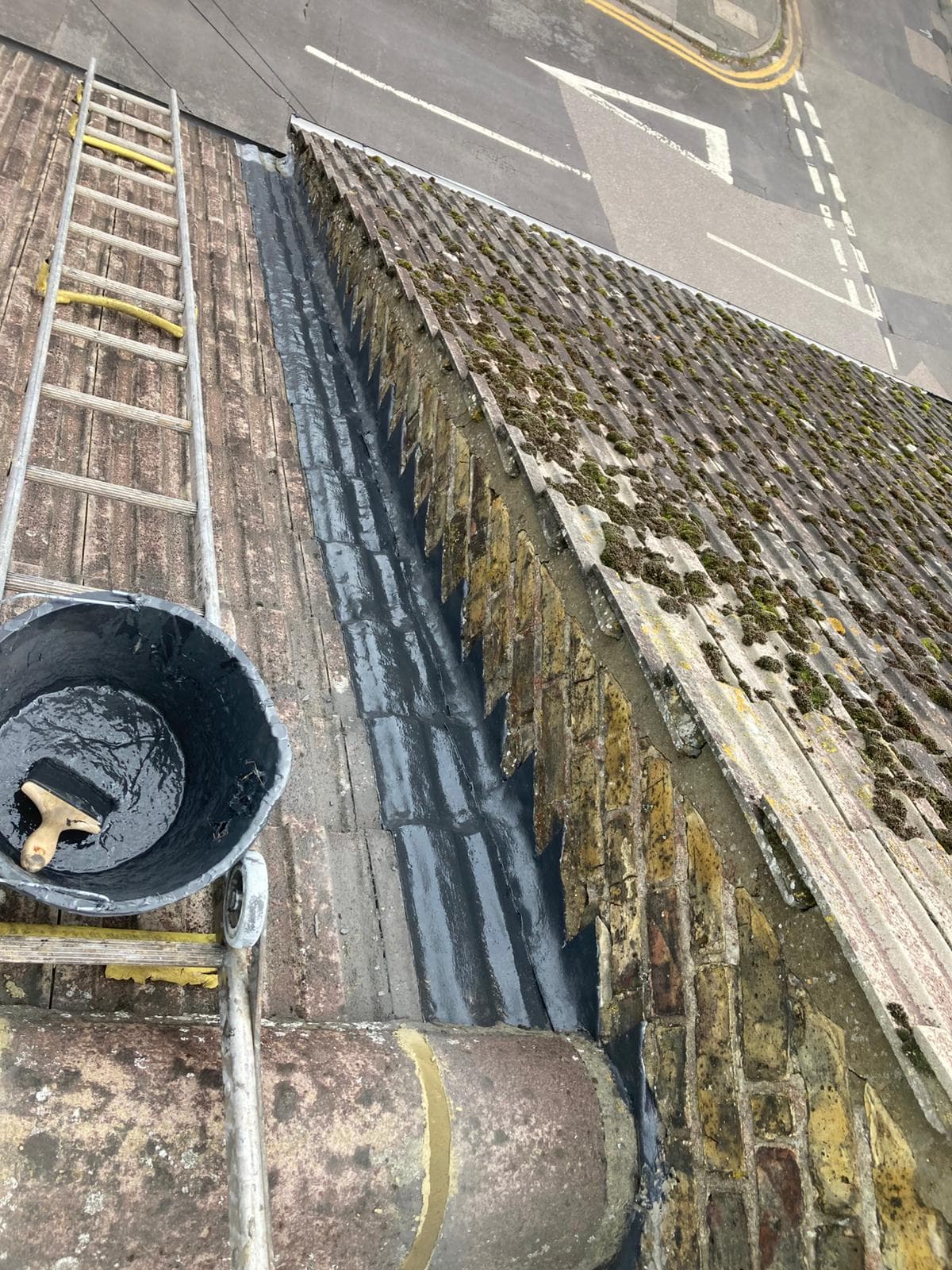
A roof valley leaks for one of four reasons. The channel is blocked, so water backs up and spills over its edges under the tiles. The lining has split or worn through, which on an older roof usually means the lead. The tiles or slates along either side have slipped, or the mortar they were bedded on has cracked and washed into the channel. Or the valley was built too narrow for the water it carries. Autumn is when most of these show up, because falling leaves and moss washed off the slopes above are exactly what blocks a valley.
Where and when the water appears tells you a lot. A leak that follows the line of the valley in the loft, or a stain on the ceiling below an internal corner of the roof, points to the valley itself. Water that only arrives in heavy downpours, or after a spell of leaf fall, suggests a blockage or an overflow at the bottom. Water that comes in during wind-driven rain, whatever the season, points more to the tiles along the edges or to joints in the lining that are too short.
Why the Valley Is the Weakest Part of a Roof
A valley is the internal corner where two roof slopes meet, and it carries all the water from both of them down to the gutter. LABC Warranty's technical manual for roofs calls the valley "the most vulnerable area of a pitched roof" for exactly that reason.
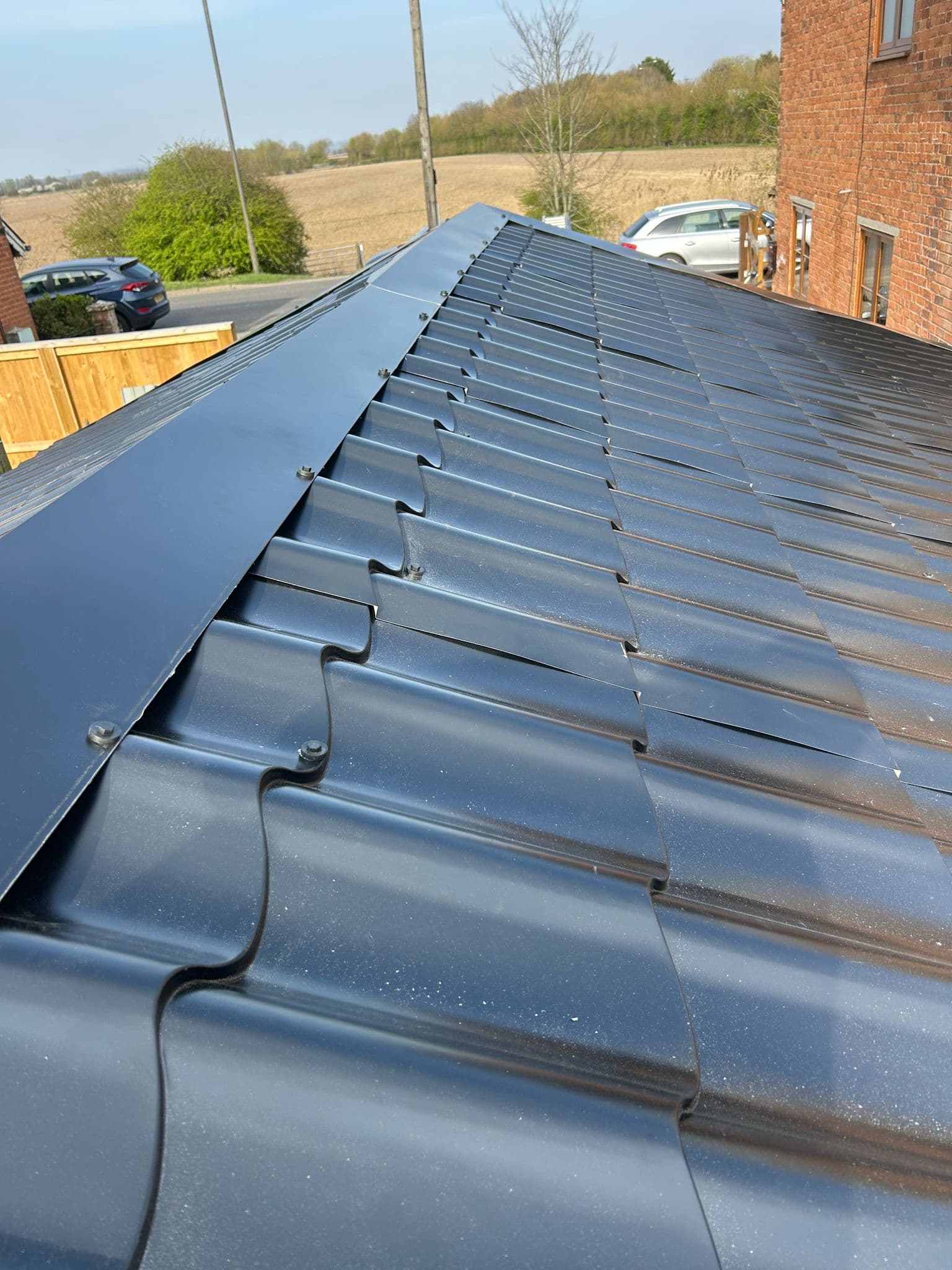
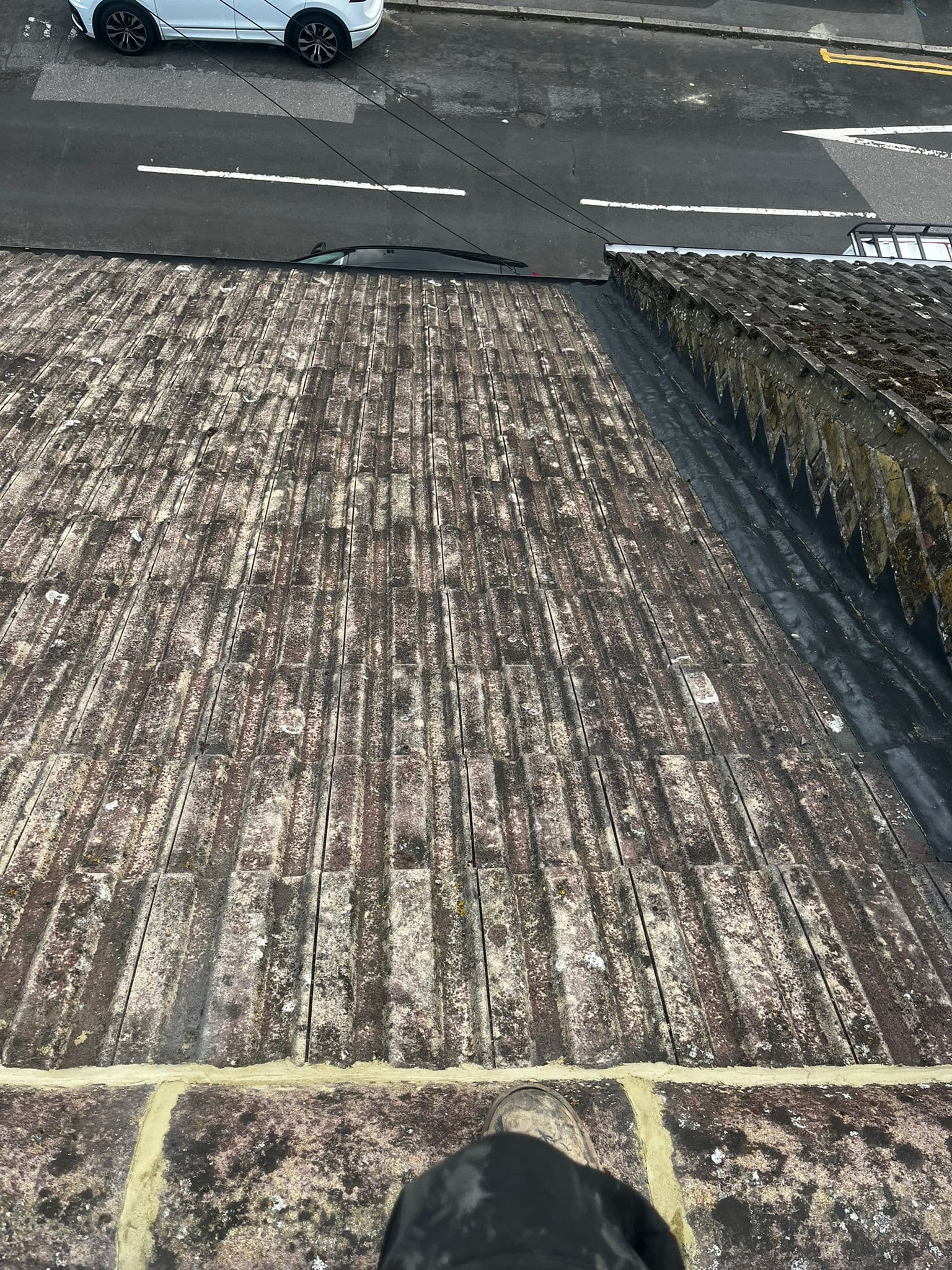
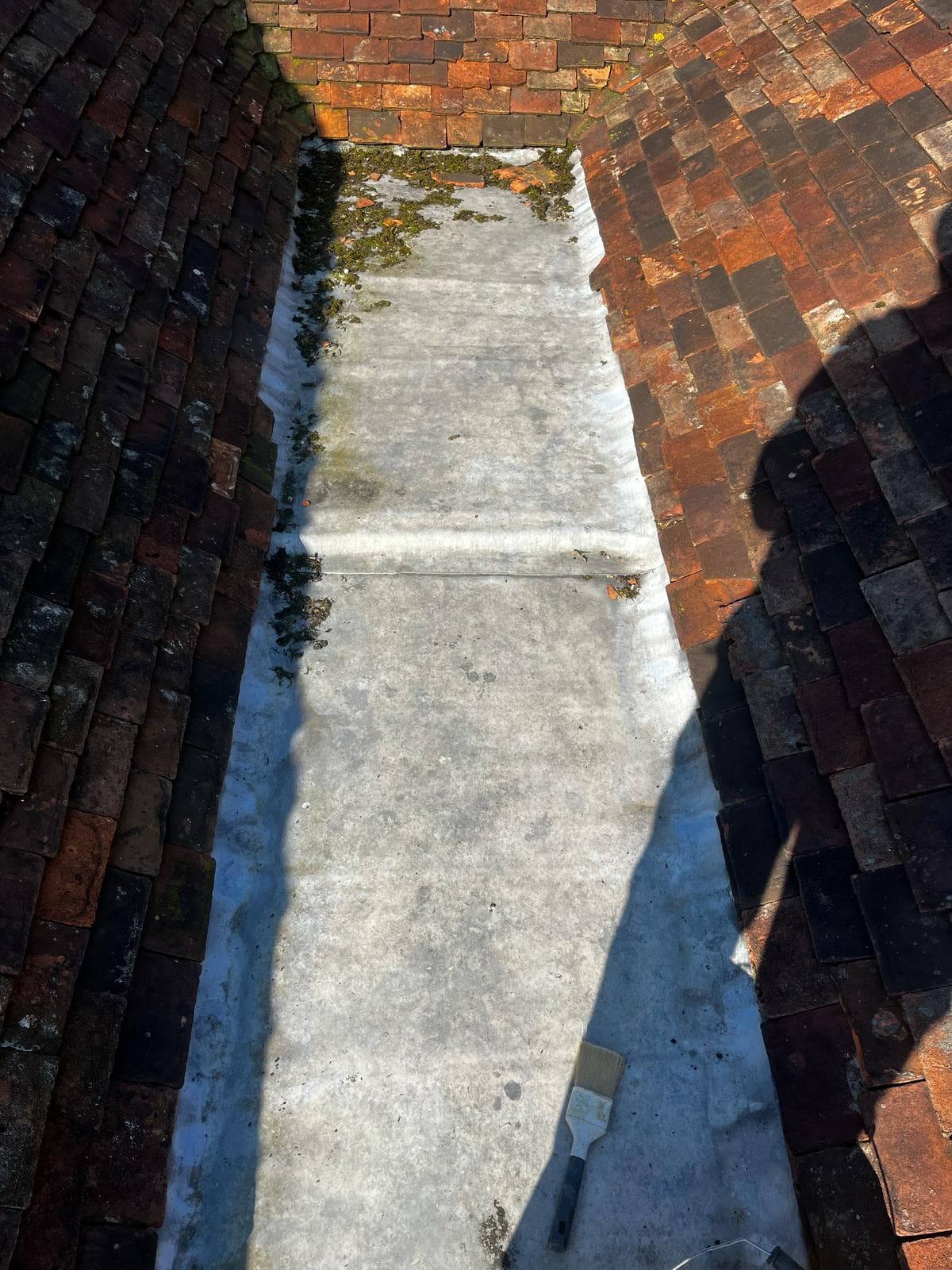
Valleys are built in several ways. Many older roofs have an open valley lined with lead, with the tiles or slates cut along each side so that a clear channel of lead shows down the middle. Newer roofs often use a preformed glass fibre trough in the same position. Plain tile roofs can instead have purpose-made valley tiles that carry the courses round the corner with no open channel at all, and some slate roofs have mitred valleys, where the slates meet over metal soakers. Each one fails in its own way, so the first job is knowing which you have.
Leaves, Moss and Silt Blocking the Channel
In autumn a blockage is the first thing to rule out, and the easiest to put right. Leaves blow into the valley and lodge there, moss loosened from the slopes either side washes down into it, and grit from weathering tiles settles in the bottom. Once enough has built up it acts as a dam. Water running down the valley meets it, rises, and spills sideways over the edge of the lining and under the tiles, where there is nothing to stop it reaching the timbers.
Moss does more than block. The Building Conservation Directory's guide to common defects in lead gutters notes that water running off moss and lichen is mildly acidic and corrodes lead where it touches it. A lead valley left mossy for years can be thinned as well as blocked.
The bottom of the valley matters as much as the top. A valley empties into the eaves gutter at a single point, so the gutter at that corner takes a far heavier flow than anywhere else along its length. If it is blocked, undersized or sagging, water backs up into the foot of the valley and overflows into the eaves, which is where a neglected gutter does its real damage. Clearing the valley without clearing the gutter below it only moves the problem down a metre.
Split, Cracked or Worn Lead
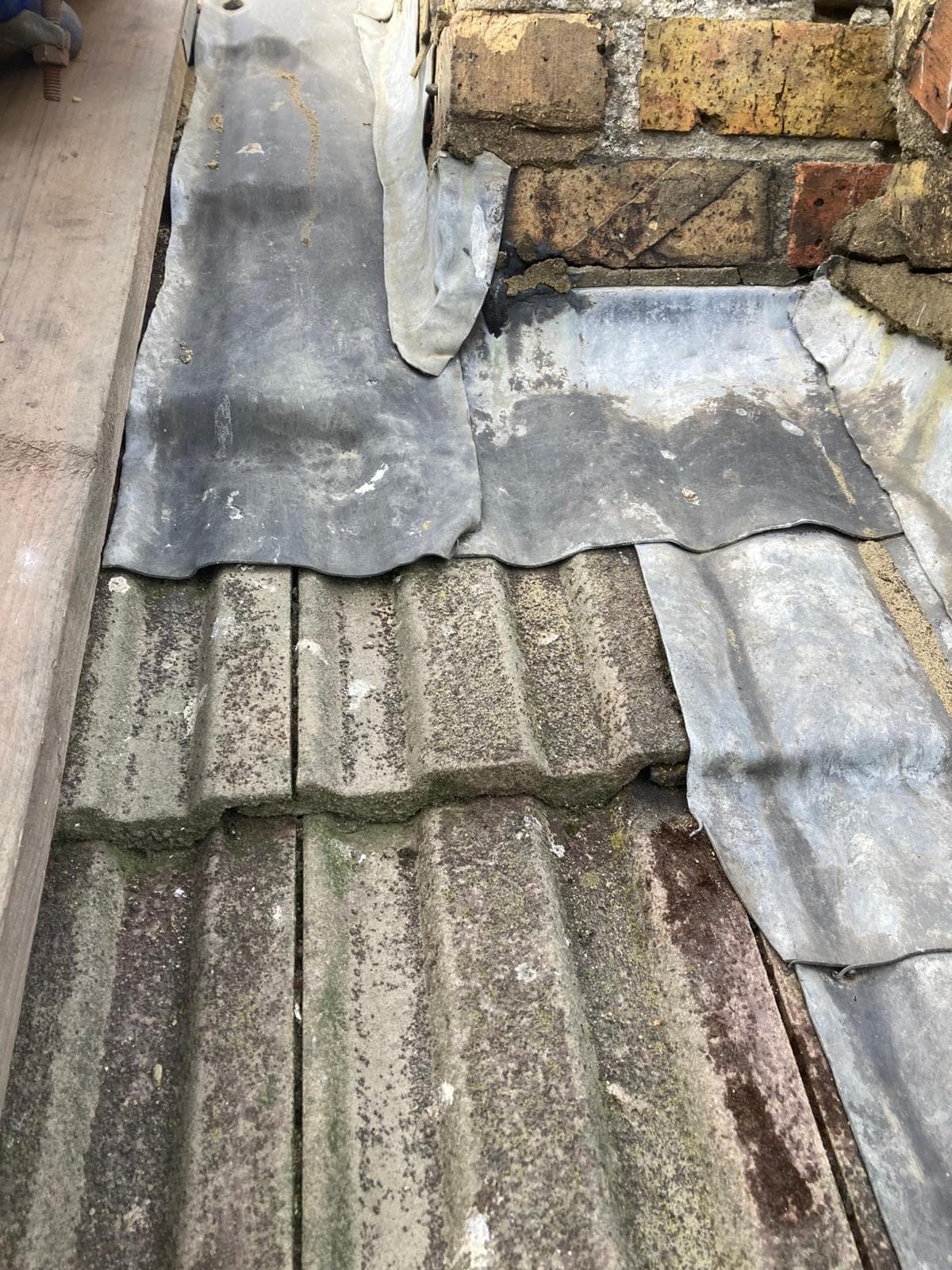
Lead is the traditional lining for a valley because it can be dressed to any shape, and the same Building Conservation Directory guide puts its proven lifespan at more than 100 years. So when a lead valley fails long before that, the cause is usually how it was laid rather than the lead wearing out.
Lead expands in the warmth of the day and contracts at night, and it has to be free to move. A valley lined in lengths that are too long, or fixed so tightly that it cannot slide, is stressed every time it moves until it cracks. The joints between lengths matter as well. Each piece should overlap the one below it far enough that water cannot be blown back up and over the top, and a lap made too short lets wind-driven rain track underneath. A valley that only leaks in storms from one direction can have exactly that fault.
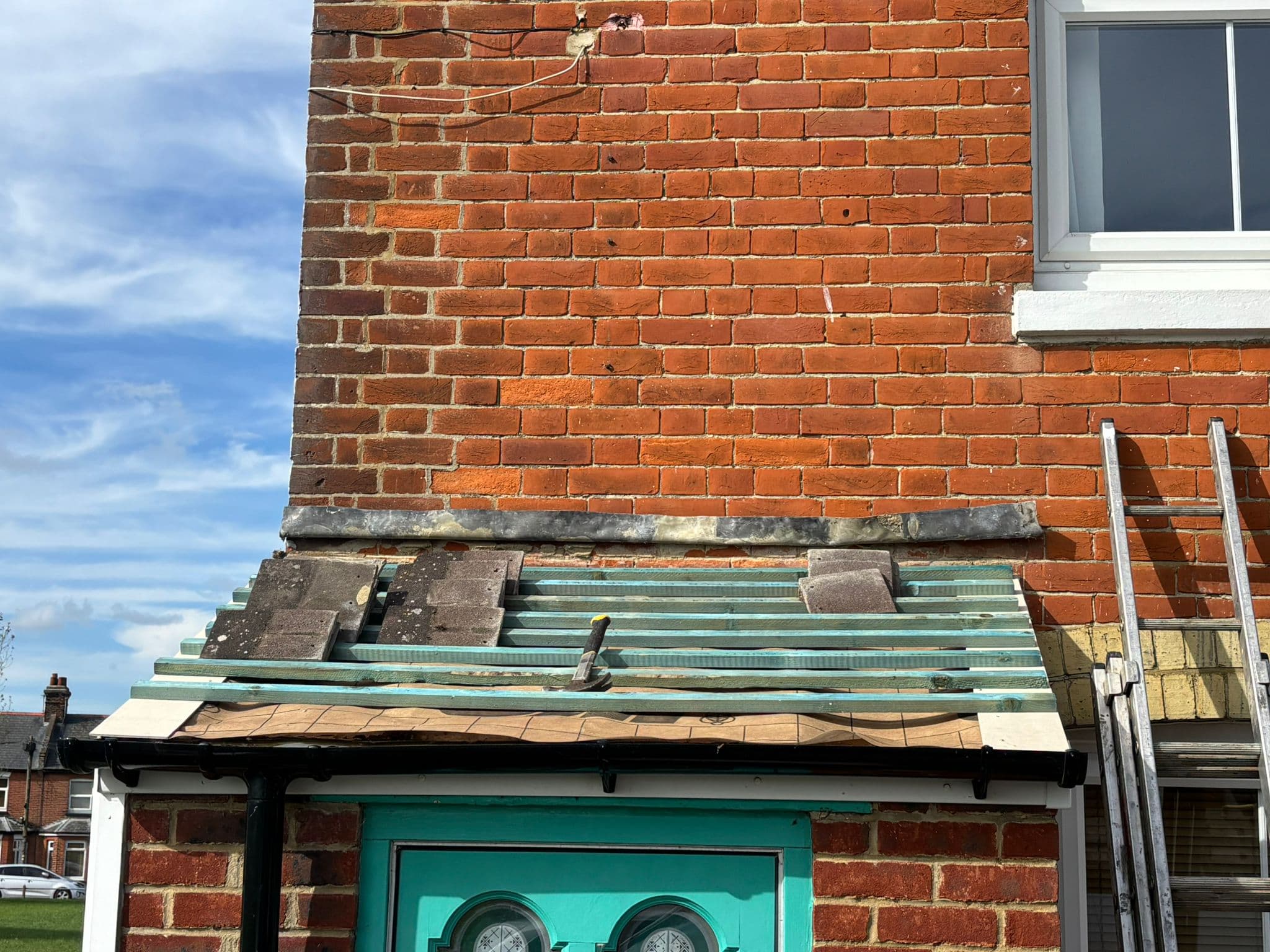
Quick repairs rarely last. A split in a lead valley is sometimes covered with bitumen, a strip of self-adhesive flashing tape or a smear of sealant. That can stop a drip for a season, but it does nothing about the movement that split the lead in the first place, so the patch cracks along with it. Where the lead has split from movement, the lasting answer is to reline the valley in lead laid in shorter lengths with proper laps, which is the kind of leadwork we do on chimneys, valleys and gutters.
The Tiles and Mortar Along the Edges
In an open valley the tiles or slates are cut along each side to follow its line, and many of those cut pieces end up small. On older roofs the cut edges were often bedded on a strip of mortar laid along the valley to hold them and close the gap. As that mortar ages it cracks and shrinks away, and pieces fall into the channel and block it. The small cut tiles it was holding are then barely fixed at all, and they slip, leaving gaps beside the lining where water can get in.
Current guidance is clear on both points. LABC Warranty's manual says every tile next to a valley should be mechanically fixed, that mortar should not be allowed to block the laps between tiles because it dams the water, and that mortar should be kept out of direct contact with lead. Under BS 5534, the code of practice for slating and tiling, valleys count as roof perimeters, and Sandtoft's guide to the BS 5534 fixing requirements says edge tiles at perimeters must have at least two fixings, with clips or adhesive for small cut pieces at hips and valleys. It is the same change in the standard that ended mortar alone holding ridge tiles in place.
For an older roof, that means re-bedding the edge tiles in fresh mortar simply repeats the original weakness. A better repair fixes the cut tiles mechanically and keeps mortar out of the channel, or replaces the valley with one designed to work without it.
When the Valley Was Built Wrong
Some valleys leak because they were never big enough for the job. The width of an open valley should be worked out from the pitch of the roof, the area of roof draining into it and the rainfall it has to cope with, and the LABC manual gives a range of 100 to 250 millimetres of open channel depending on those figures. A valley that is too narrow overflows in a downpour however clean it is.
Secret valleys are a particular problem. Here the tiles on each side almost meet, which looks neat, but the narrow gap catches leaves and moss far more easily than an open channel and is hard to clear without disturbing the tiles. Trouble also appears where a valley empties onto a lower roof rather than into a gutter. LABC Warranty's guidance is to avoid that wherever possible and, where it cannot be avoided, to protect the roof below with a lead saddle, so the full flow of the valley does not land on tiles that were never meant to take it.
Glass Fibre Troughs and Valley Tiles
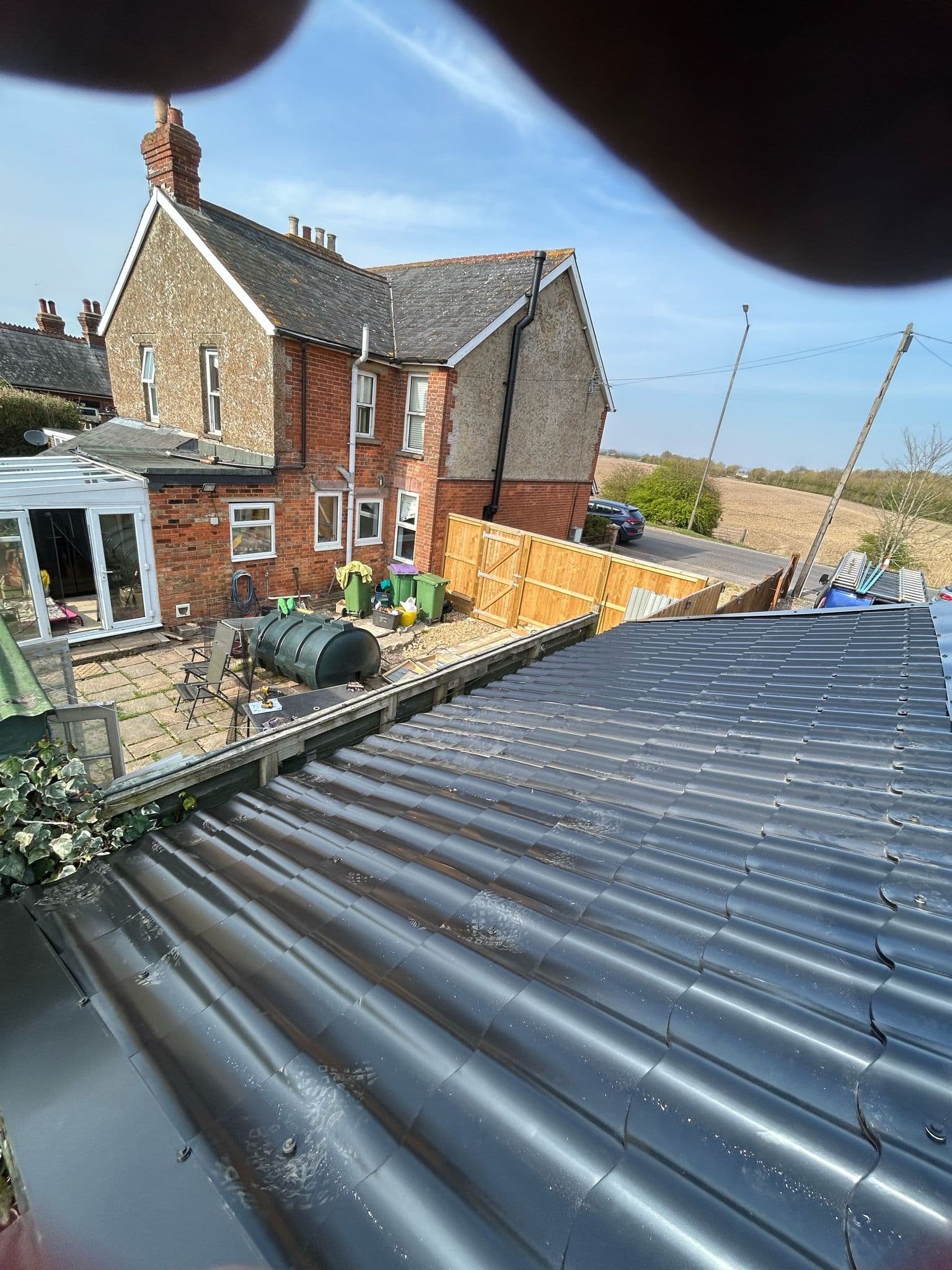
Lead is not the only choice when a valley is rebuilt. Preformed glass fibre troughs are widely used on concrete and clay tile roofs, and dry valley systems such as Marley's GRP dry valley are laid without mortar, with the tiles held mechanically beside the trough. A trough depends on continuous support along its length and on laps made as the manufacturer specifies, and LABC Warranty only accepts glass fibre valleys that carry third party product approval.
On a listed building or in a conservation area the council may expect lead to stay, so check before changing it, as with any change of roofing material in a conservation area.
Shared Valleys on Terraced Houses
On terraced streets a valley is often shared, draining two houses at once, as on many of the older terraces of Folkestone and Dover. A failure in it can let water into either house. Relining only one half leaves a joint in the middle of the channel, exactly where the water runs, so it is worth agreeing at quote stage whose valley it is and settling the work with your neighbour before any scaffold goes up.
Telling a Valley Leak From Something Else
Water travels before it drips, so a stain on a ceiling is not always below the fault. With a torch in the loft after rain, look along the underside of the valley itself. Damp or dark staining on the boards and rafters along its line, especially towards the lower end where the most water collects, points to the valley. Damp around a chimney, at a junction with a wall or around a roof window points elsewhere, to the flashings or to a leaking chimney. Droplets on the underside of the felt across the whole roof on cold mornings, with no link to rain, are condensation rather than a leak.
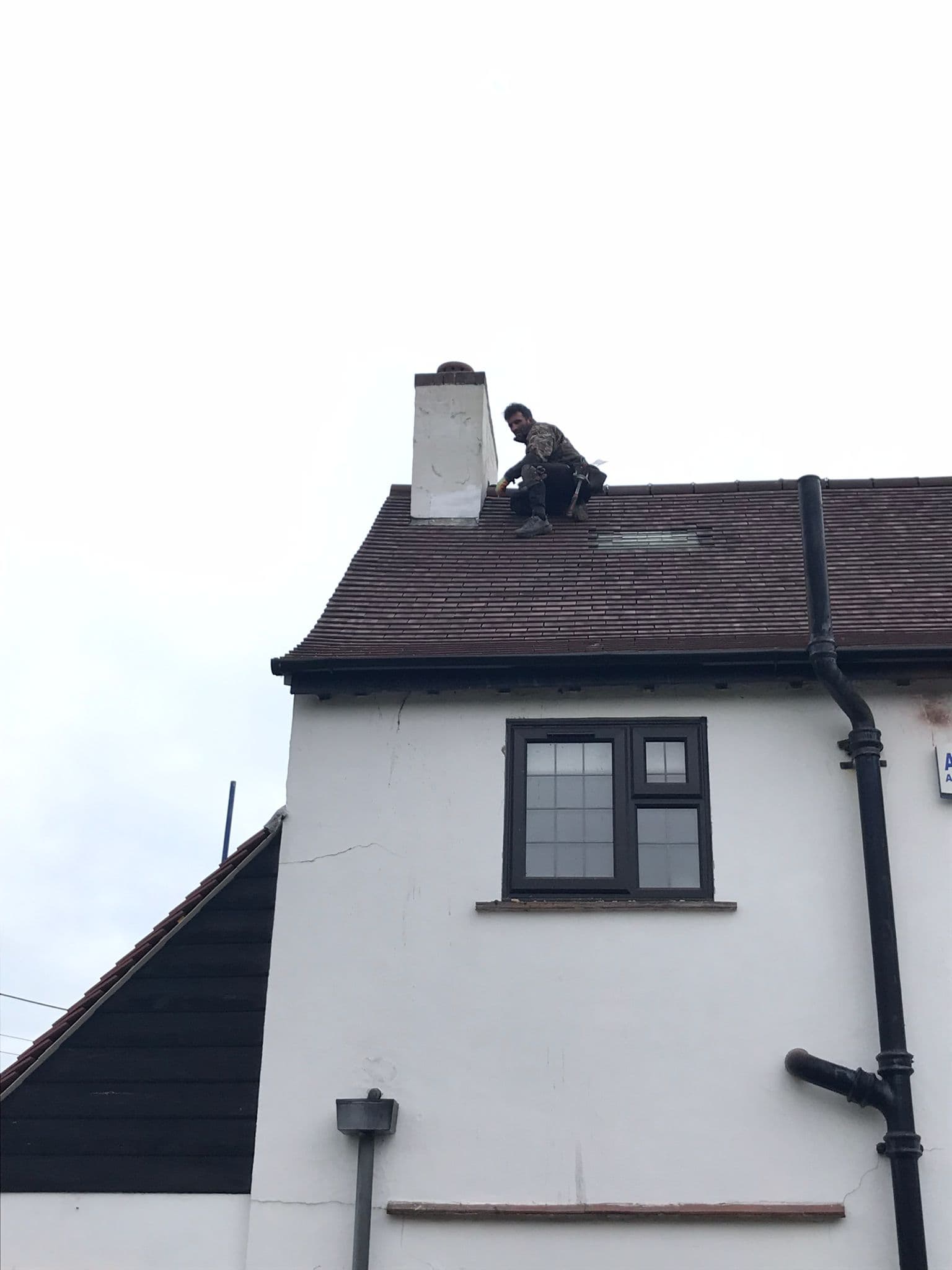
Please do not go up onto the roof to look. Valleys are reached across the slopes on either side, and falls from a height remain the most common kind of fatal accident at work in Great Britain, according to the Health and Safety Executive's latest figures. Those are people who work at height for a living.
How We Find and Fix a Leaking Valley
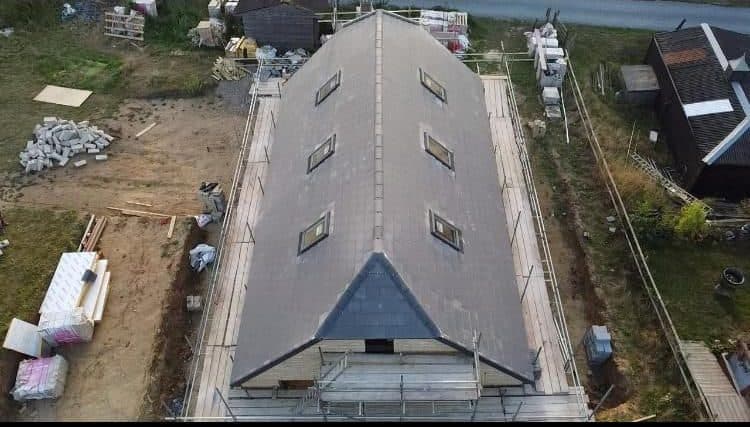
We look at a valley from both sides. A drone survey shows the whole length of the channel, what is lying in it, the state of the lining and the tiles along each edge, without anyone walking on the roof. A look in the loft shows what a drone cannot see, which is the boards and timbers under the valley, the underlay beside it and where the water is actually arriving.
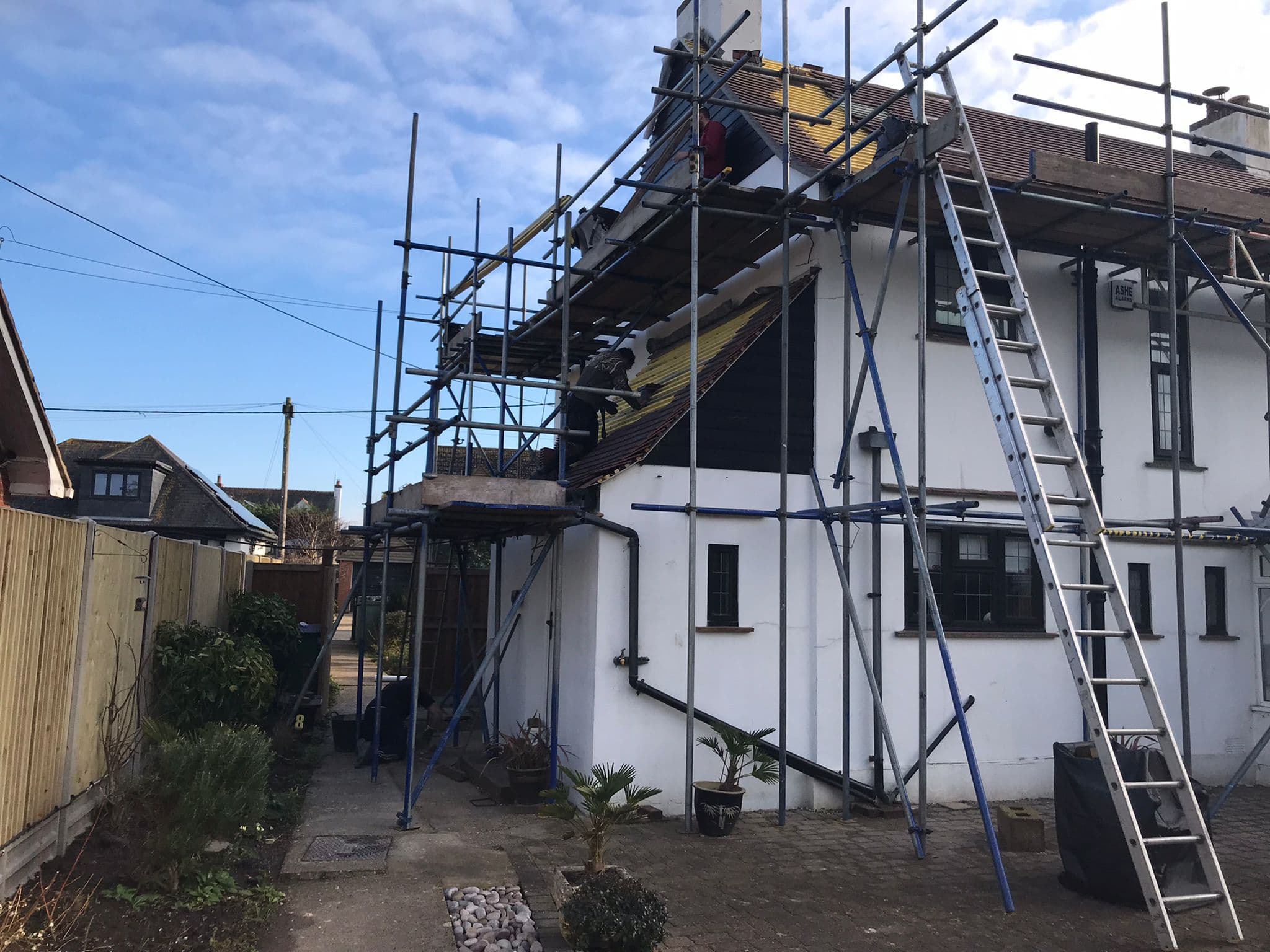
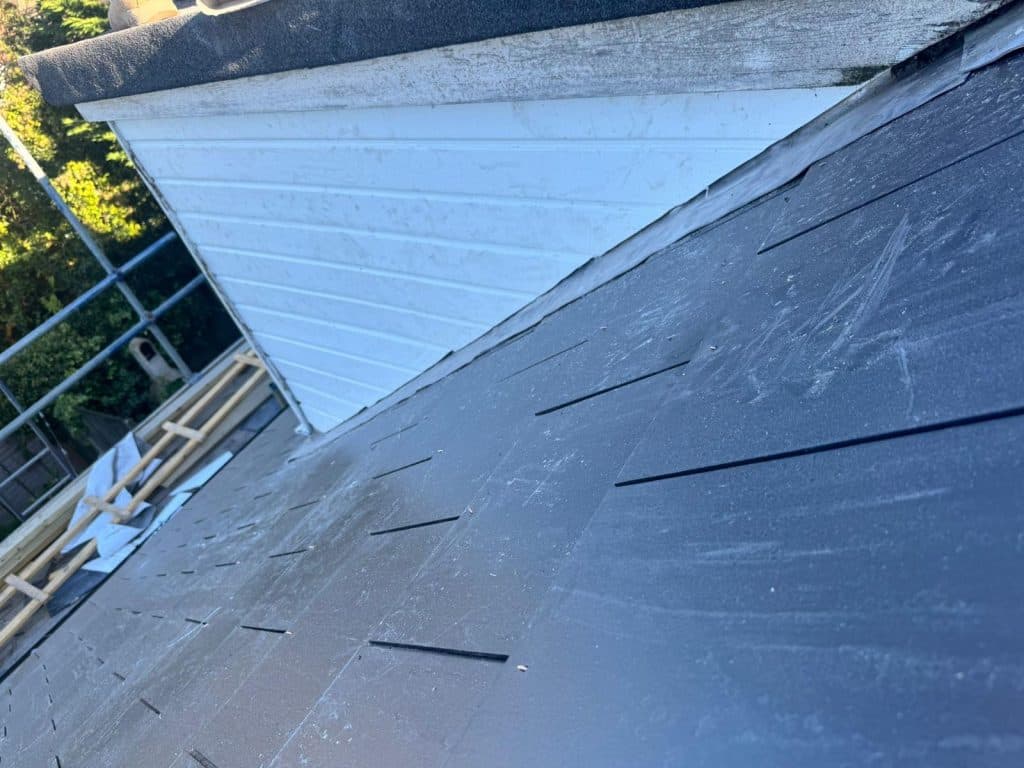
If the valley is simply blocked and the lining is sound, clearing it and the gutter below may be all it needs, and we will say so. Where cut tiles have slipped, a proper roof repair refixes them mechanically and keeps mortar out of the channel. Where the lining itself has split or worn through, the tiles either side come off, the valley boards are checked and renewed where they have rotted, and the valley is relined in lead or with a glass fibre trough before the tiles go back. If the survey shows the rest of the roof is failing too, with perished underlay or rusted fixings across every slope, a new valley in an old roof only buys time, and we will tell you honestly that a new roof is the better use of the money.
Get a Leaking Valley Looked At Before Winter
A dripping valley rarely improves on its own once the leaves start falling. If water is coming through now, our 24 hour emergency call out can make the roof weathertight until a proper repair is possible. Otherwise, contact us and tell us where the water appears and when. Hythe and Folkestone Roofers will find out whether it is the channel, the lining or the tiles along it, and fix the cause rather than the symptom.

Tell us what the roof is doing
Tell us the address and what you are seeing, and we will come and look. Hythe, Folkestone and across east Kent.
126-128 High Street, Hythe, Kent, CT21 5LE
Emergency work is covered 24 hours a day, right across Kent.