
Why Do Roof Tiles Blow Off in a Storm?
5 October 2026By Richard Wood
Roof tiles rarely blow off because the wind pushes them. They are pulled off. When a strong wind flows over a roof it creates suction, especially along the edges and on the slope facing away from the wind, and that suction lifts the tiles upwards. A properly fixed tile resists it. A tile that is held only by its own weight, by old mortar or by a nail that has rusted through does not, and once one tile goes the wind gets underneath the next.
So when tiles come off in a gale, the storm is the trigger but the fixings are the cause. The tiles that go first are almost always at the ridge, the hips, the verges and the eaves, and they are usually the ones bedded in mortar alone or fixed to an older standard than roofs are built to today. The rest of this article explains why those places fail, what changed in the way roofs are fixed, and what to do if your roof loses tiles this winter.
How Wind Actually Lifts a Roof
Air speeds up as it passes over and around a building, and faster-moving air exerts less pressure. The result is that during a gale much of a roof is under suction rather than pressure, with the strongest pull at the edges and corners, along the ridge and on the slope in the lee of the wind. At the same time, air getting in under the tiles through gaps at the eaves or through a torn underlay pushes upwards from beneath. A tile caught between the two has only its fixings holding it down.
That is why tiles tend to lift in a pattern rather than at random. A row missing along the verge, a run of ridge tiles gone or a cluster lifted near the eaves tells you where the uplift was greatest and where the fixings were weakest.
Why Ridge and Hip Tiles Go First
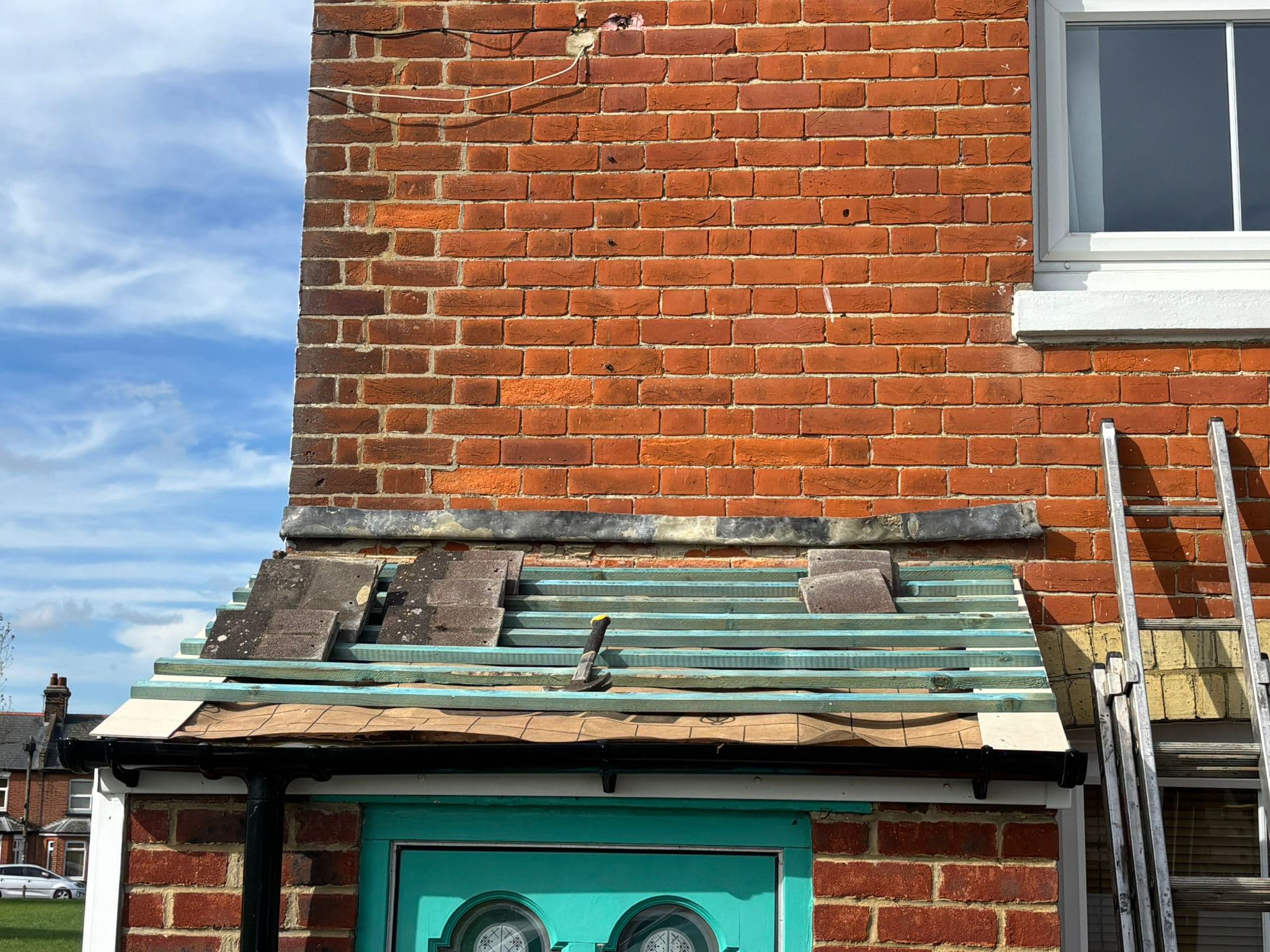
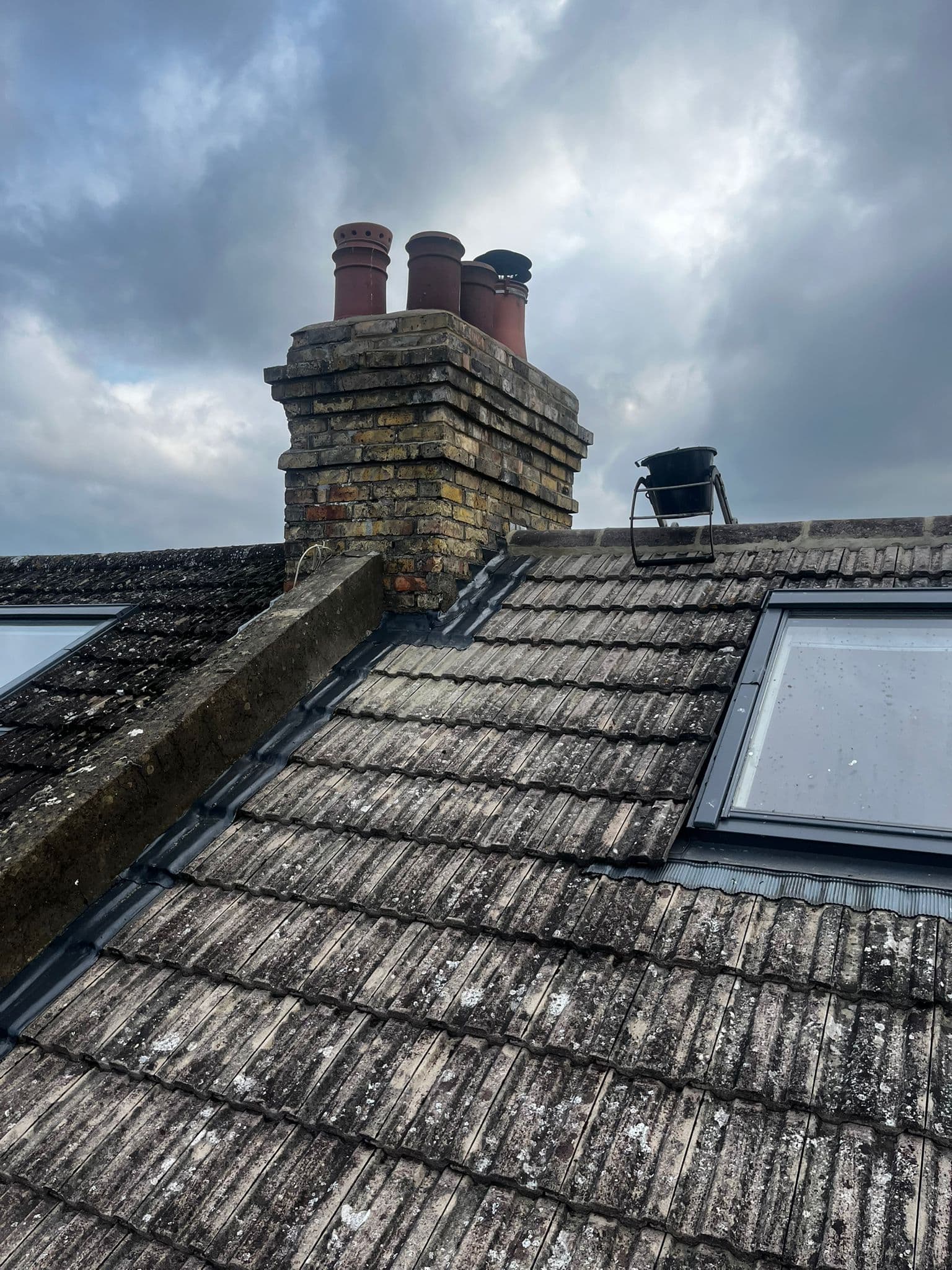
For generations ridge and hip tiles were bedded in sand and cement mortar and nothing else. The mortar held them in place for as long as it stayed sound. But mortar on a ridge sits in the most exposed position on the house, takes every frost and every summer, and slowly cracks and loses its grip on the tile. By the time a storm arrives, a ridge tile on old mortar may be resting in place rather than fixed there.
We've found that when a roof loses tiles in a gale, the ridge and the verges are nearly always where it starts, and on older roofs they are the parts held only by mortar. Once a ridge tile goes, the wind can get under the top course of tiles and work its way down the slope.
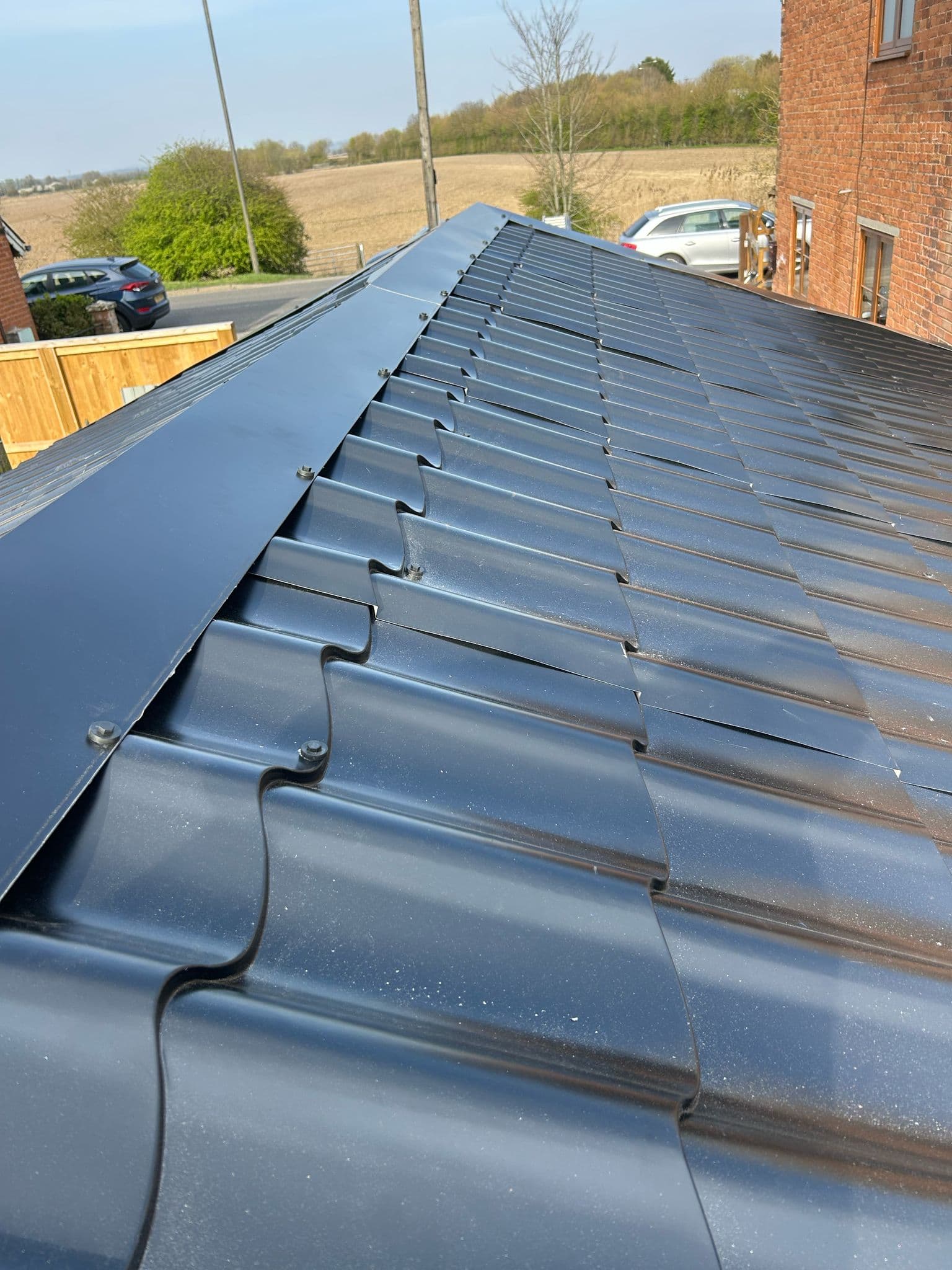
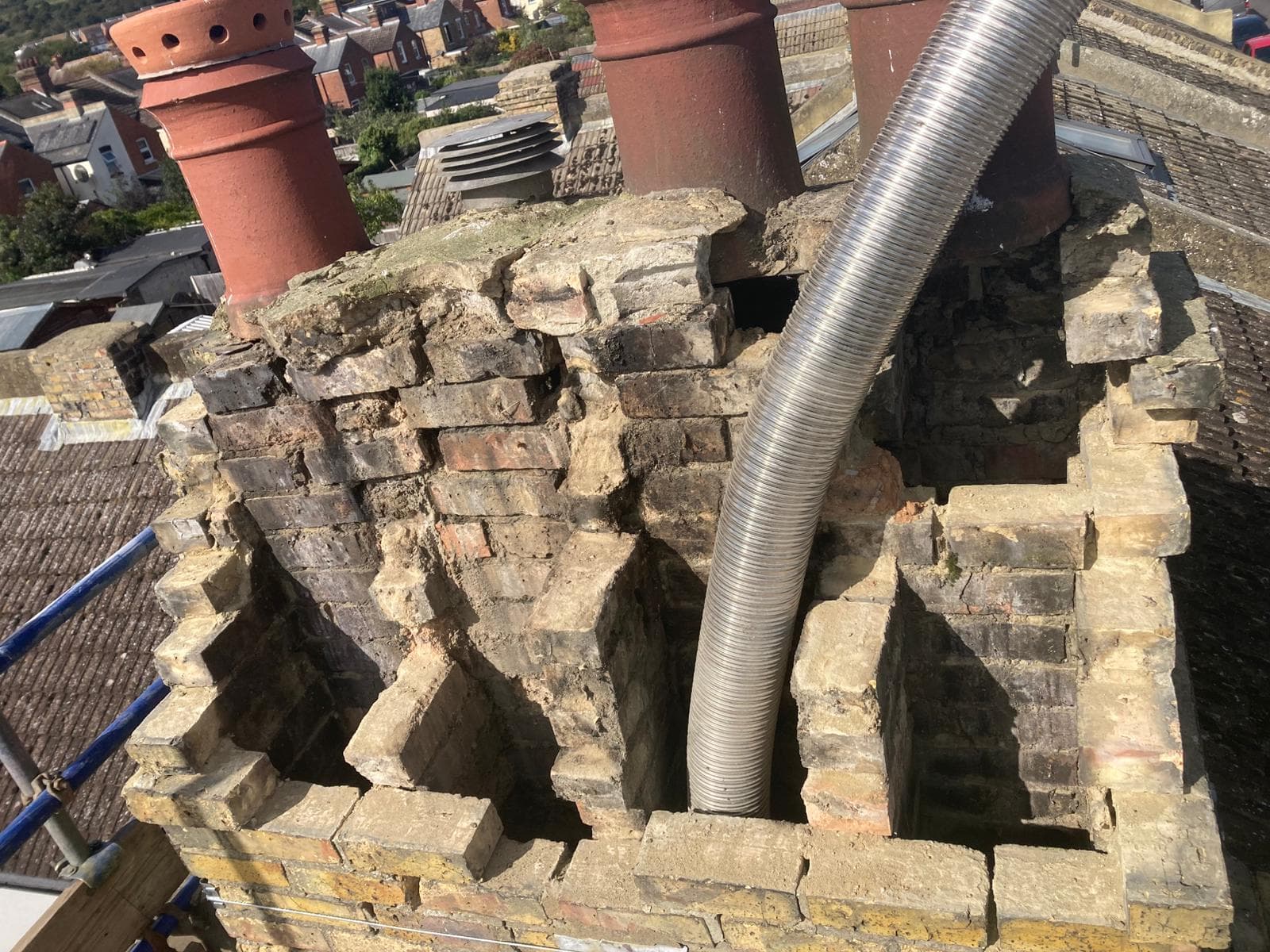
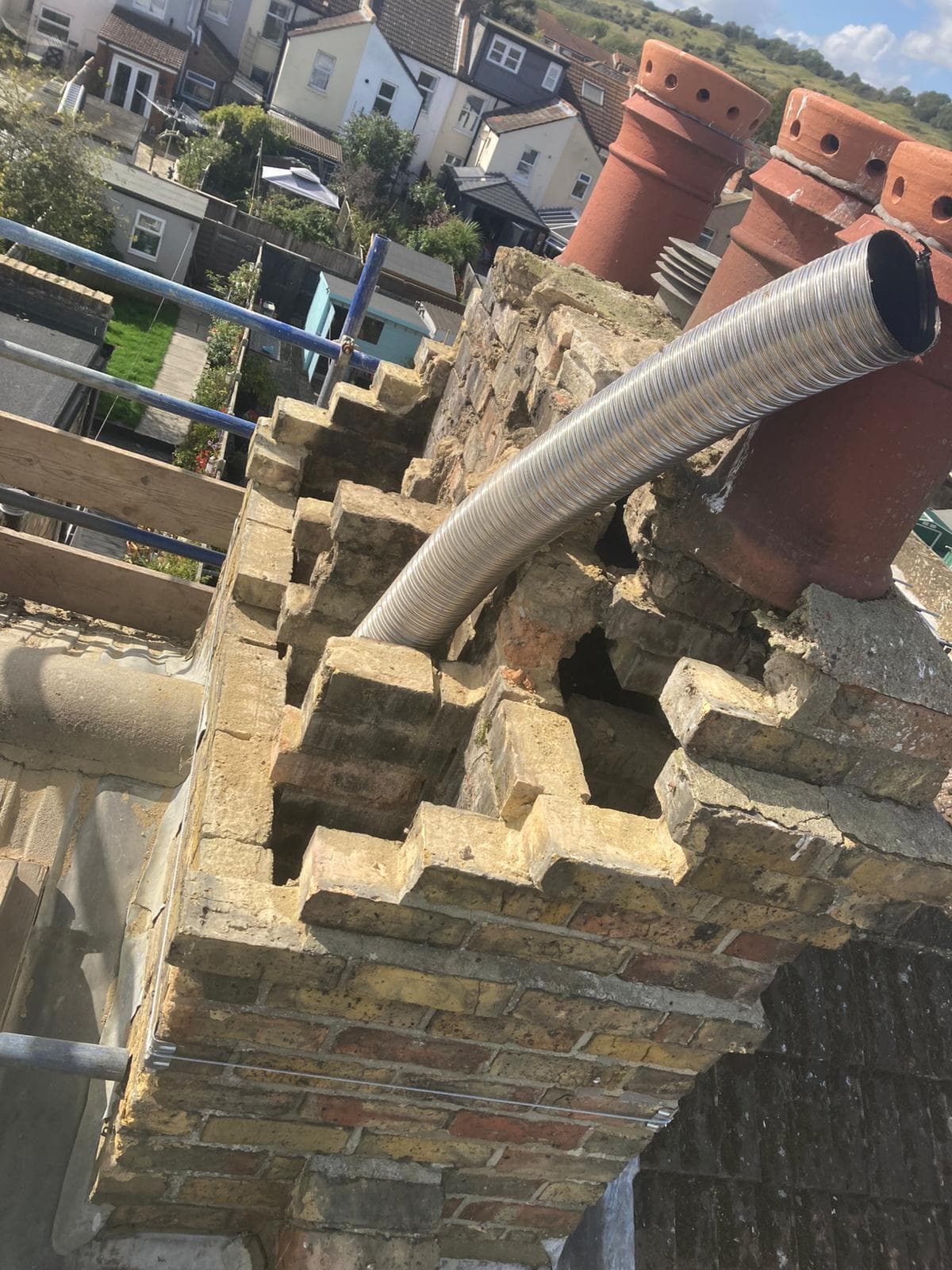
In our experience, a mechanically fixed ridge works better than re-bedding the old ridge tiles in fresh mortar because the mortar was never really what held them down. It held them in place until it cracked. Bedding them again in new mortar alone repeats the same failure a few winters later, whereas a dry or mechanically fixed ridge clips or screws each tile to the roof structure so it cannot lift, whatever happens to the bedding.
What Changed in the British Standard
The code of practice for slating and tiling in the UK is BS 5534. It was amended in 2015, and one of the most significant changes was that mortar could no longer be relied on as the only way of securing roof tiles. Ridge and hip tiles now have to be mechanically fixed whether or not mortar is also used, tiles at the edges of a roof need more fixings than those in the middle, and the underlays that sit beneath the tiles are tested and classified for how well they resist wind uplift.
It is worth being clear about what that means for an existing house. The standard governs new roofs and re-roofing work. An older roof built to the practice of its day is not suddenly illegal, and it does not have to be upgraded simply because the standard moved on. What the change does tell you is where older roofs are weakest, and it is the benchmark any repair to the ridge, hips or verges should meet.
Other Reasons Tiles Let Go
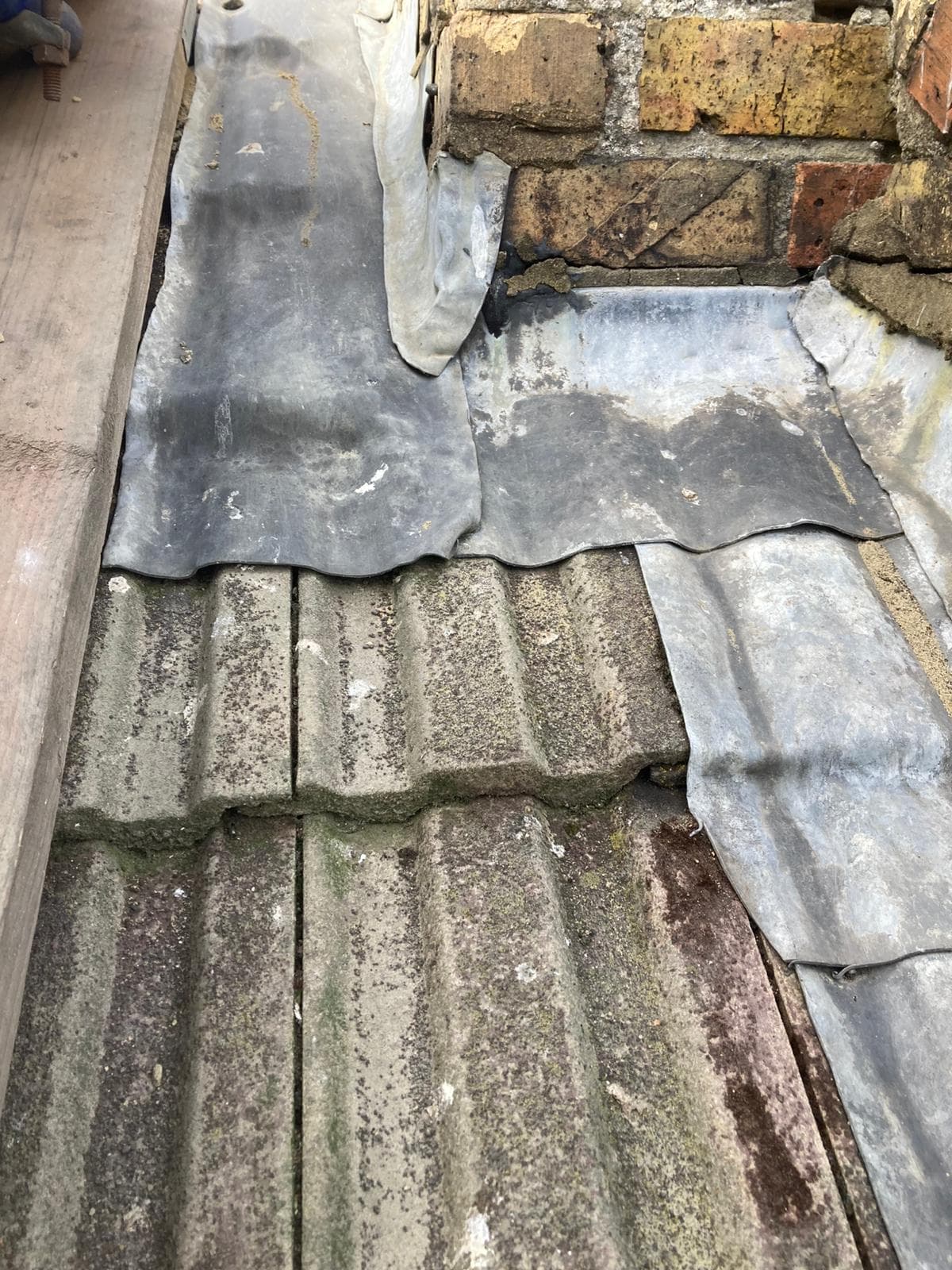
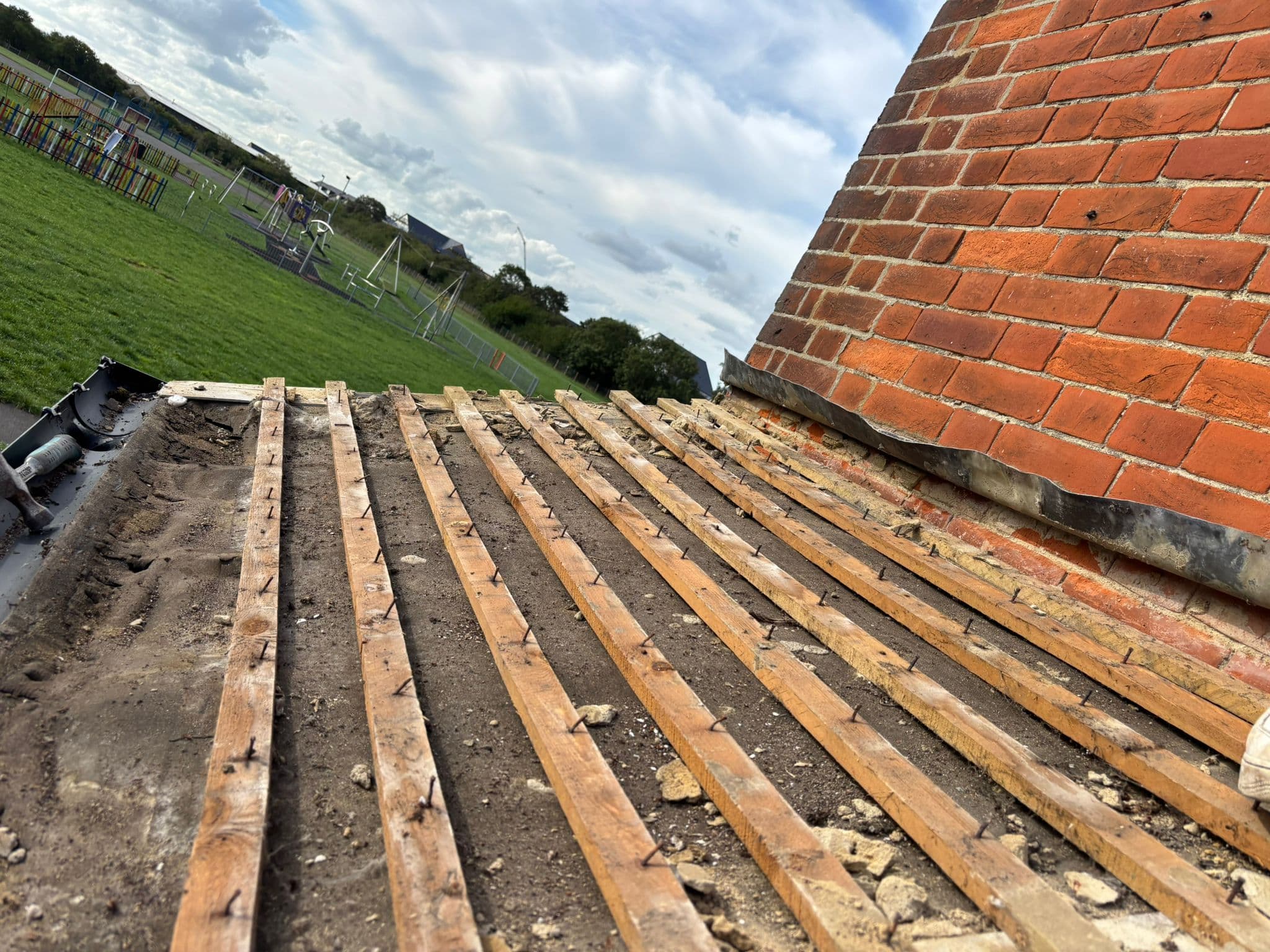
Fixings do not last forever, and tiled roofs in coastal areas have a particular problem with them, because salt air corrodes nails. A tile nailed with a steel nail that has rusted through is effectively unfixed. When tiles or slates start slipping in ones and twos across a whole roof rather than in one patch, it points to a fixing failure spread across the roof rather than a single piece of damage.
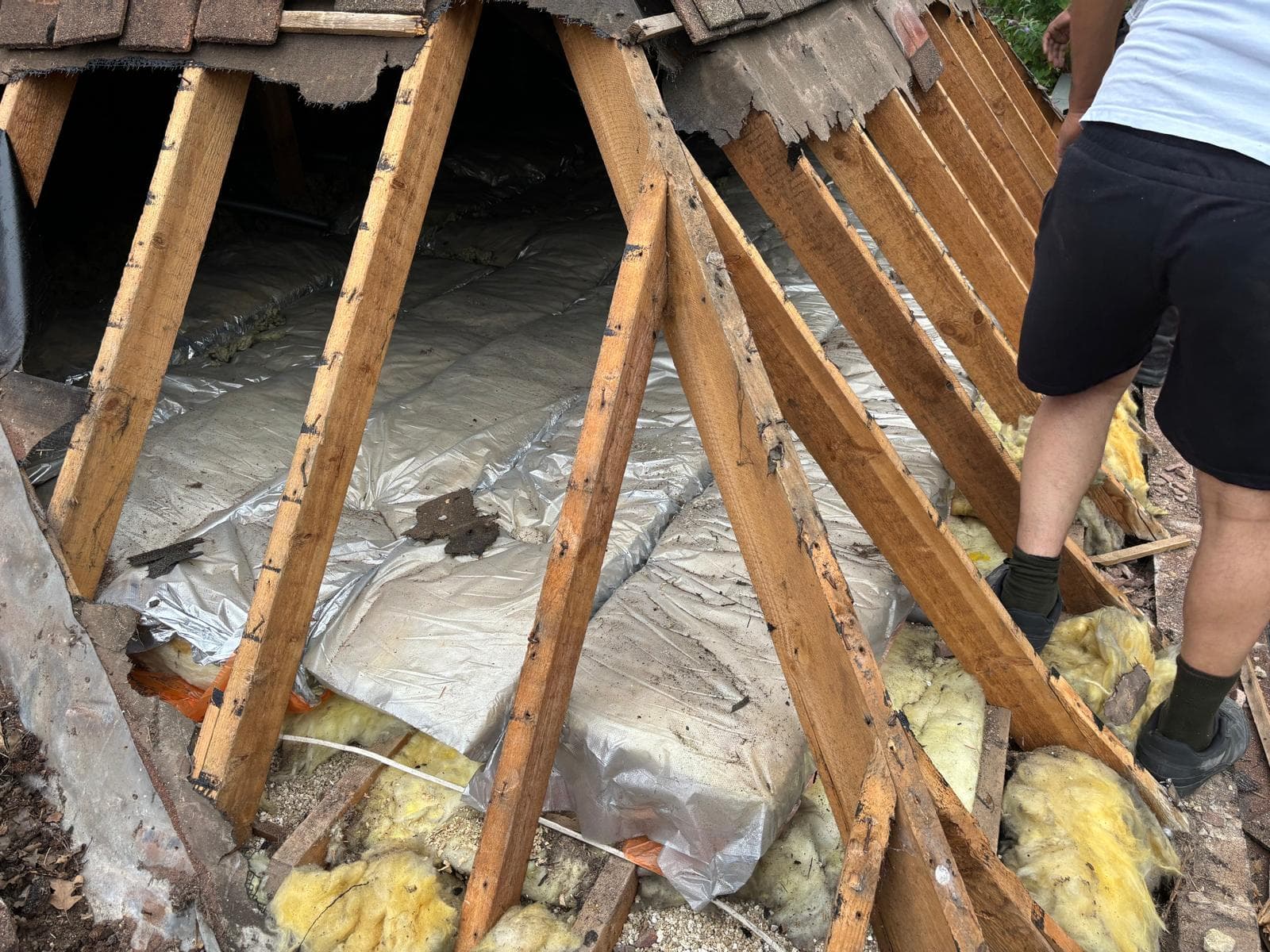
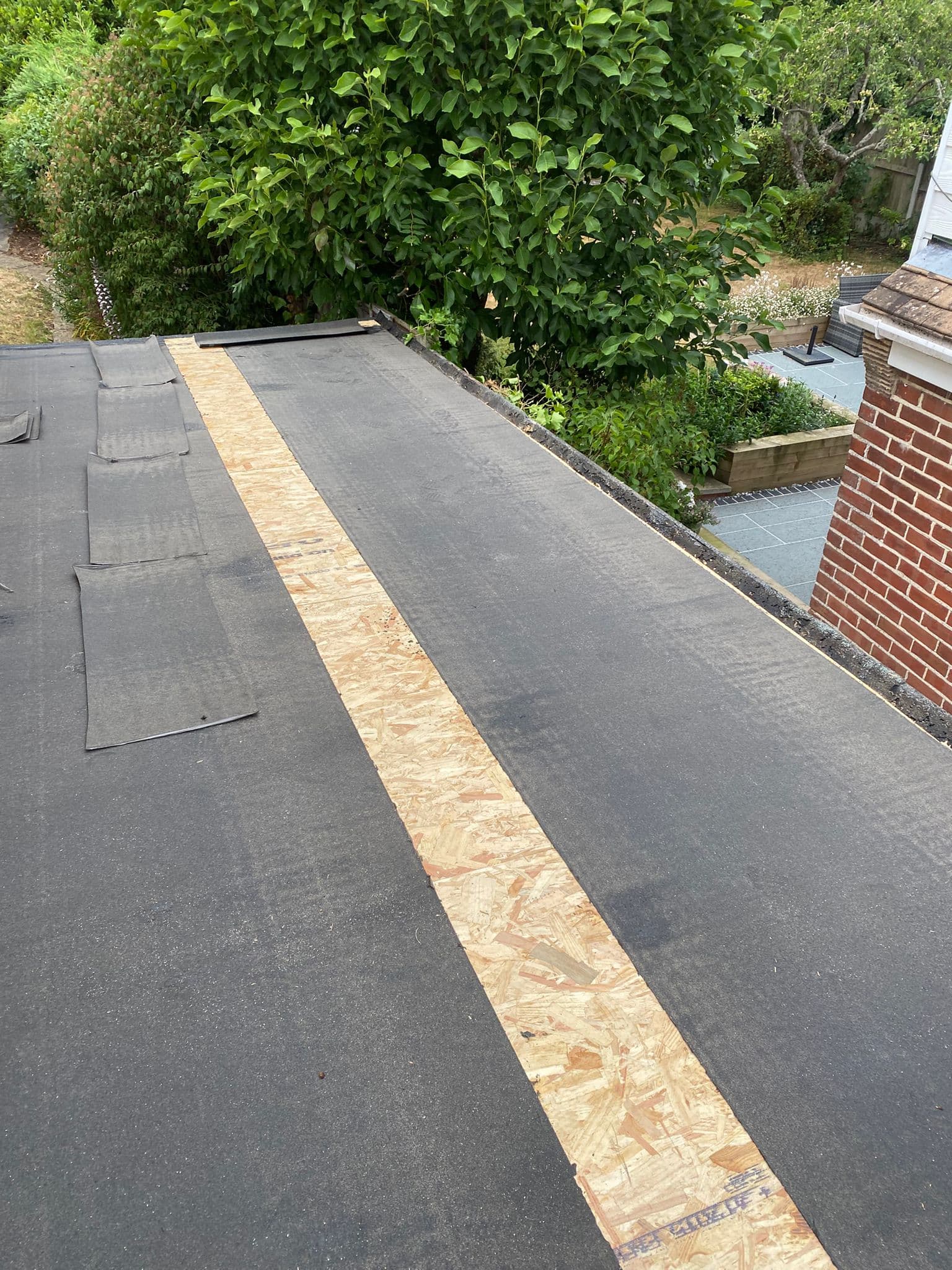
The underlay matters too. On many older roofs the felt beneath the tiles has perished and torn. In a strong wind a torn underlay can balloon upwards and push tiles off their battens from beneath, which is why a storm sometimes lifts tiles in the middle of a slope as well as at the edges. Neither a repair nor a restoration reaches the underlay and battens, so where they have failed, only a strip and re-roof puts them right.
Tile type makes a difference as well. Large single-lap interlocking tiles, common on post-war houses, present a big area to the wind, and modern fixing schedules for them often call for clips at the tail as well as nails at the head. Small double-lap plain tiles overlap two courses below them, but they still depend on being properly nailed, especially at the perimeter.
Exposure is the last piece. Britain's prevailing wind is south-westerly, so on the south coast the south-west facing slopes take the weather first and their mortar and fixings tend to age fastest. That is one reason we assess and quote exposed roofs slope by slope rather than as a single figure.
Kent Has Seen This Before
The south-east has a long memory for wind damage. In the Great Storm of October 1987, gusts of 70 knots or more were recorded continually for three or four hours across south-east England, and a Channel ferry was blown ashore near Folkestone, according to the Met Office's account of the storm. More recently, Storm Eunice in February 2022 brought the first red warning for wind ever issued for south-east England including London. The Port of Dover was temporarily closed to shipping, and roofs were torn off several buildings.
Storms like those are rare, but the ordinary autumn and winter gales that reach the coast most years are enough to find the weak points on a roof whose fixings are past their best. The effect of weather on a roof's lifespan is cumulative, and a storm is usually the day that decades of it show.
What to Do If Your Roof Loses Tiles
Stay off the roof and keep people away from the side of the house below the damage, because loose tiles can keep falling while the wind is still up. Falls from height are one of the biggest causes of death and serious injury at work, according to the Health and Safety Executive, and a wet, windy roof is the worst place for anyone without the right equipment.
From the ground, take photographs of the roof and of any tiles that have come down, note the date and which way the wind was blowing, and check the loft with a torch for daylight or water coming through. Most home insurance policies expect storm damage to be reported promptly and reasonable steps taken to stop it getting worse, so those photographs and notes are worth having before anything is moved or repaired.
From working with clients after storms, the most useful thing a homeowner can tell us is which slope lost tiles and where water is showing inside. It usually tells us straight away whether we are looking at failed ridge mortar, a perished underlay or fixings that have given up across the roof. If water is coming in, our 24 hour emergency callout can make the roof weathertight with a temporary cover until a proper repair is possible.
Putting It Right So It Does Not Happen Again
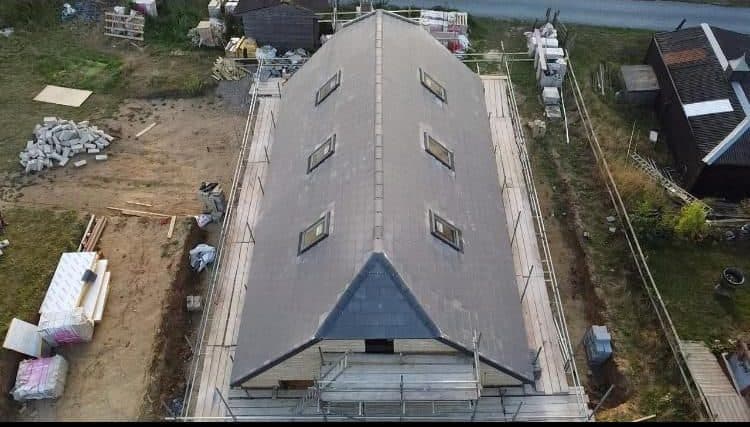
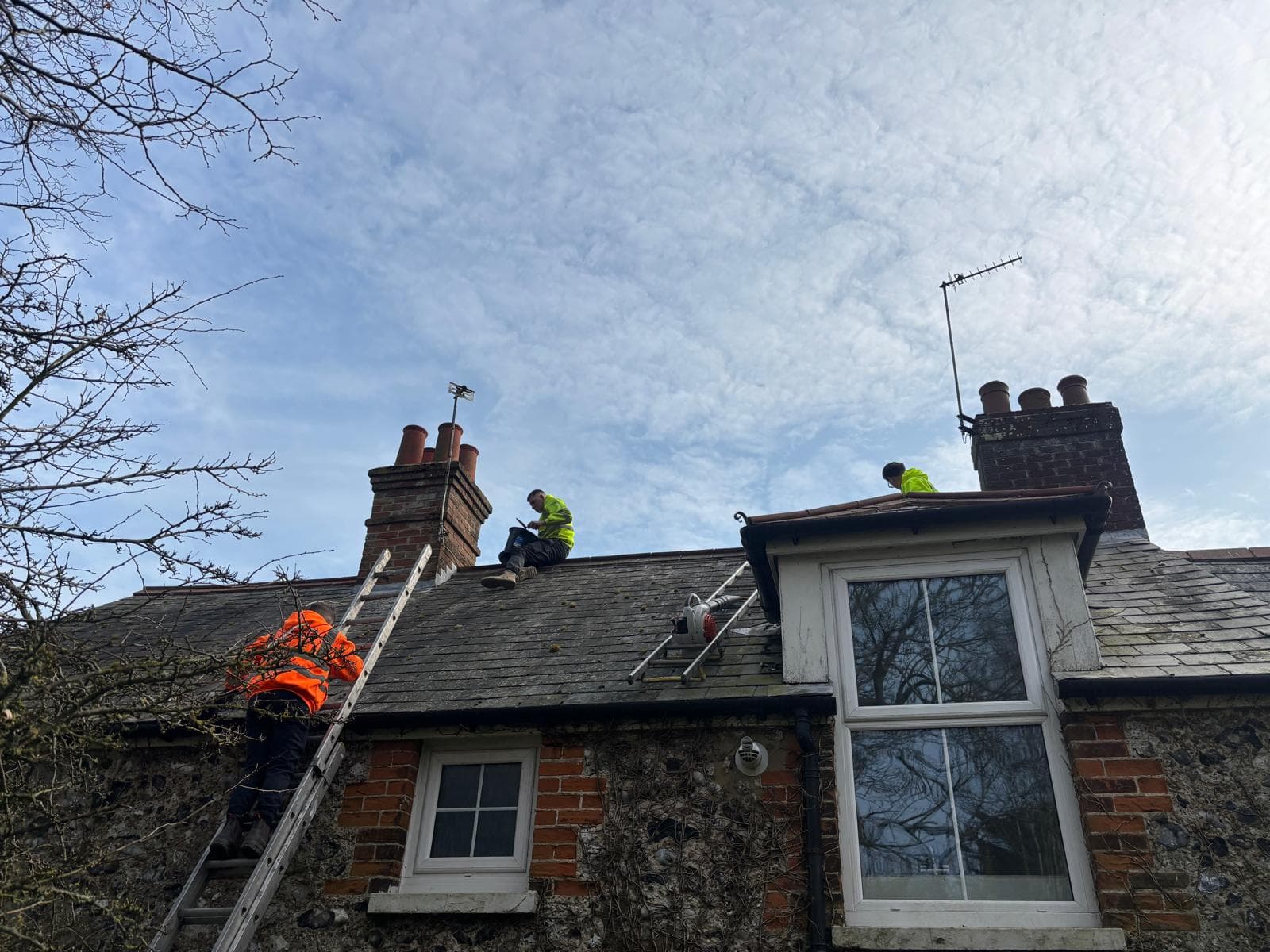
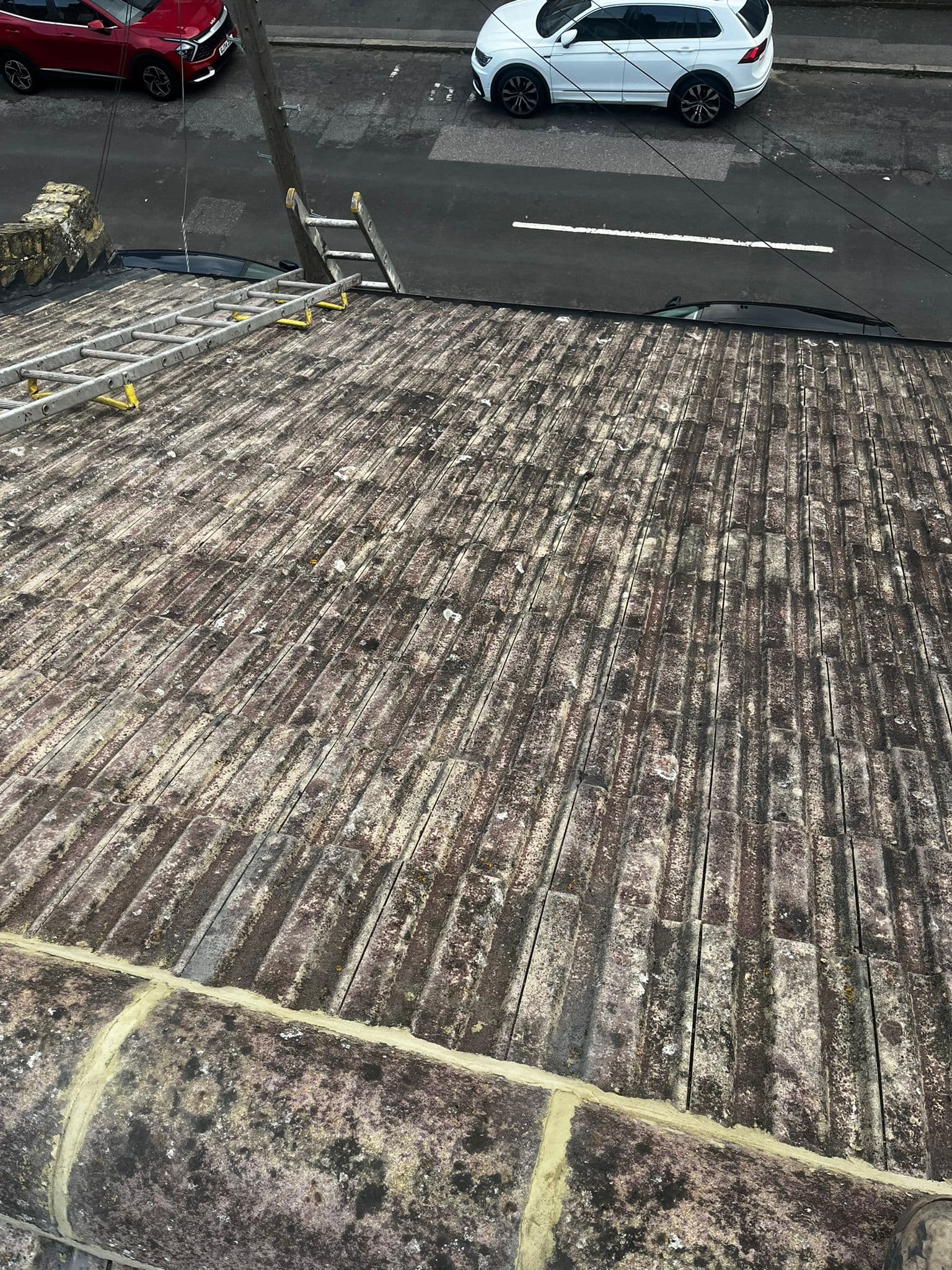
After a storm we survey the whole roof rather than just the obvious gap. A drone survey shows lifted, cracked and slipped tiles on every slope without anyone climbing on a roof that may already be unsafe, and a look in the loft shows the state of the underlay and battens beneath.
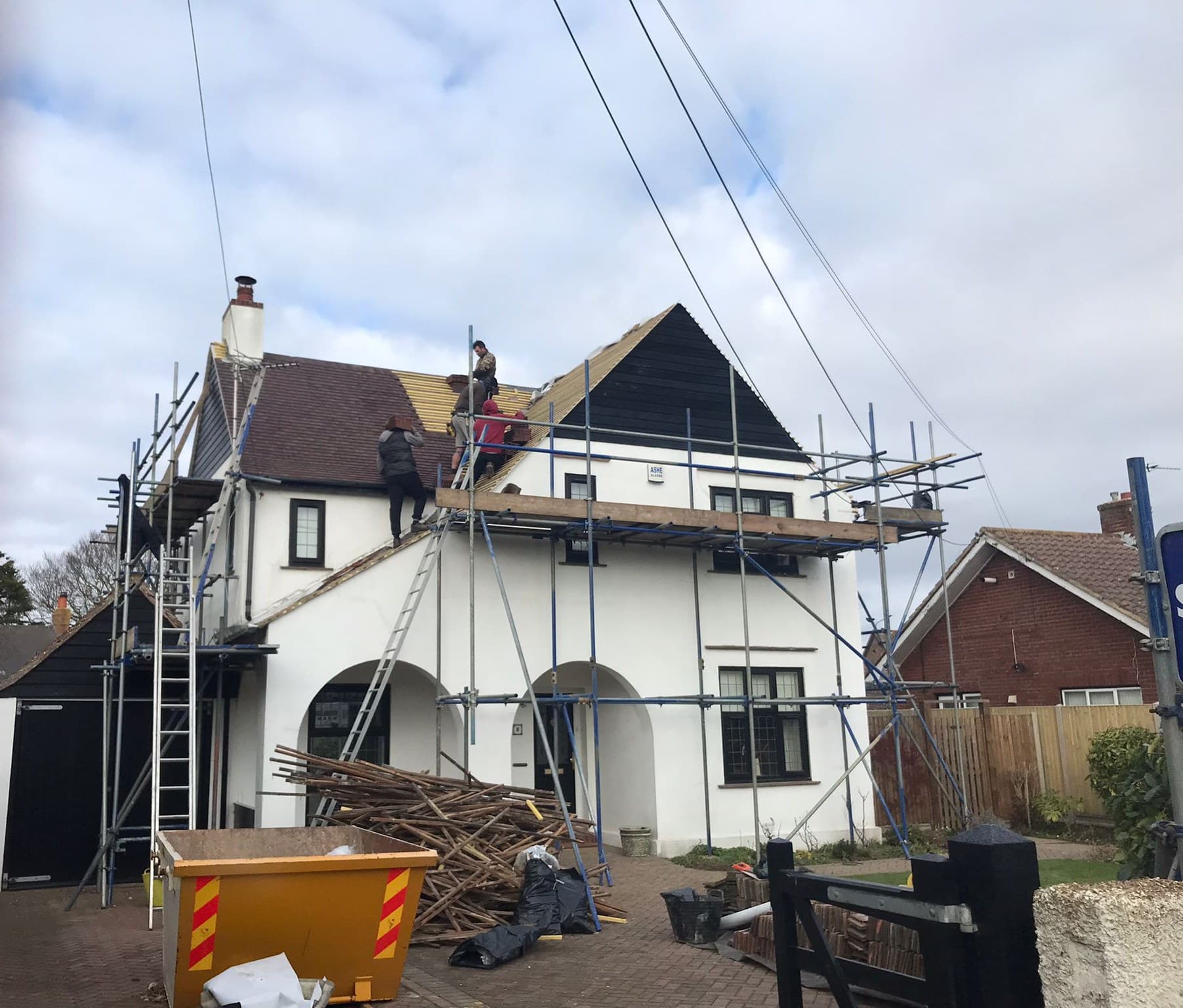
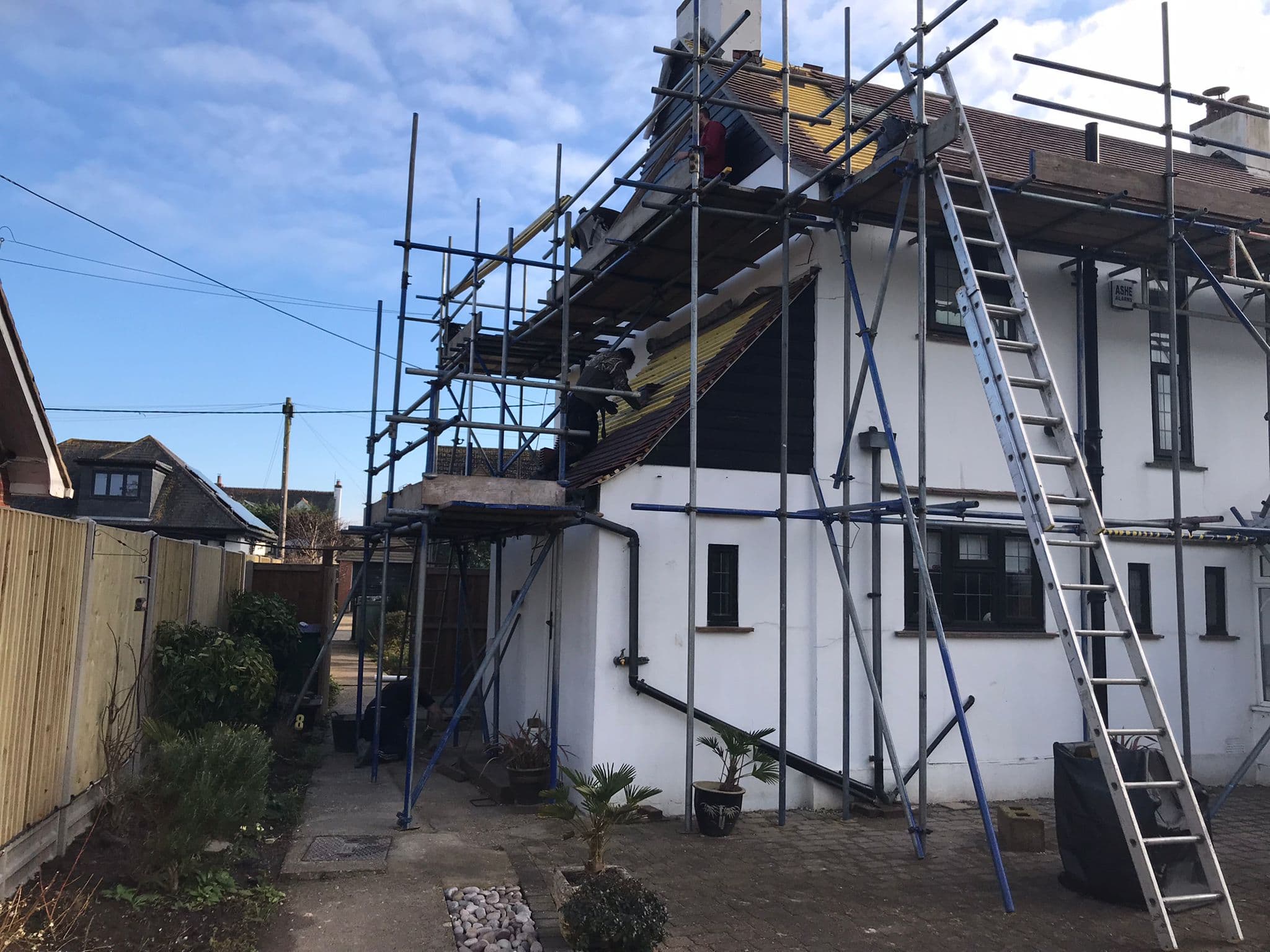
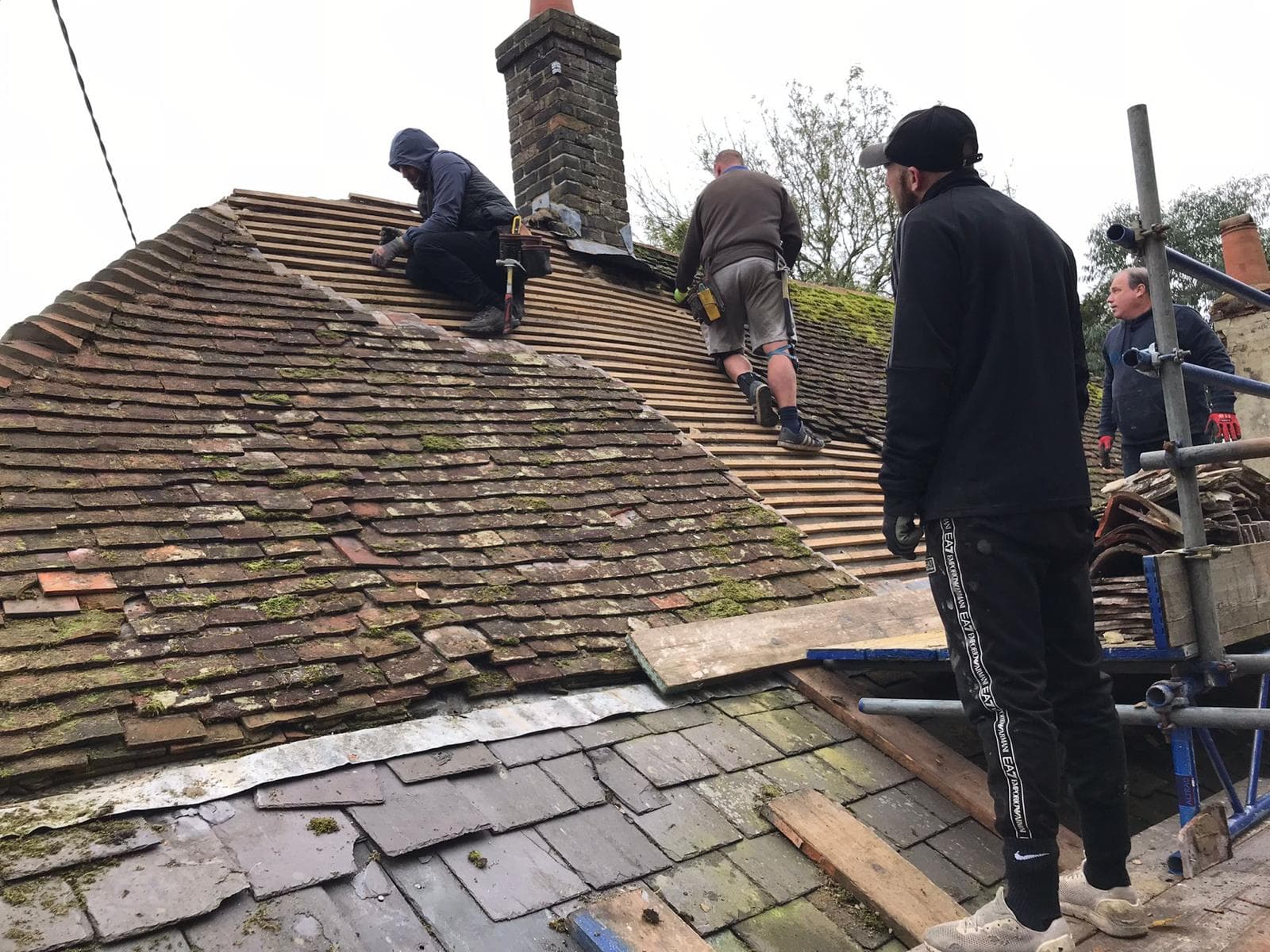
If the damage is local and the rest of the roof is sound, a proper roof repair means refixing the lost tiles to today's standard, mechanically fixing the ridge and hips and securing the verges, not simply slotting tiles back and re-bedding them in mortar. If the survey shows rusted fixings or a perished underlay across the whole roof, we will tell you honestly that repairing the gaps only buys time, and that a re-roof is what will stop the next storm doing the same thing.
If your roof has lost tiles, or you want to know how it will stand up to the winter, get in touch. We will look at every slope, tell you where it is weakest and what it needs, and fix it to the standard roofs are built to now.
Tell us what the roof is doing
Tell us the address and what you are seeing, and we will come and look. Hythe, Folkestone and across east Kent.
126-128 High Street, Hythe, Kent, CT21 5LE
Emergency work is covered 24 hours a day, right across Kent.