







Why Is My Velux Window Leaking?
19 October 2026By Richard Wood
When a Velux or any other roof window leaks, the fault is usually in how it was fitted into the roof rather than in the window itself. VELUX's own advice on a leaking window names the roofing material and the weathering around the frame as the most common cause. The flashing around the frame, the seal between the window and the underlay, the gutter that should sit above it and the tiles or slates around it are where most of the water gets in. The rest of the time it is not a leak at all, but condensation running down the glass, or a failed seal between the panes of the glazing.
Where and when the water appears is the best clue. Water at the top of the window lining during heavy rain points to the drainage above the window. Water at the bottom corners can be the flashing below the window, but it is just as often condensation that has run down the glass and pooled. Damp that appears on cold mornings rather than in rain is almost always condensation, and misting between the two panes means the sealed glazing unit has failed. The rest of this article works through each one.
Most Leaks Start Outside the Window
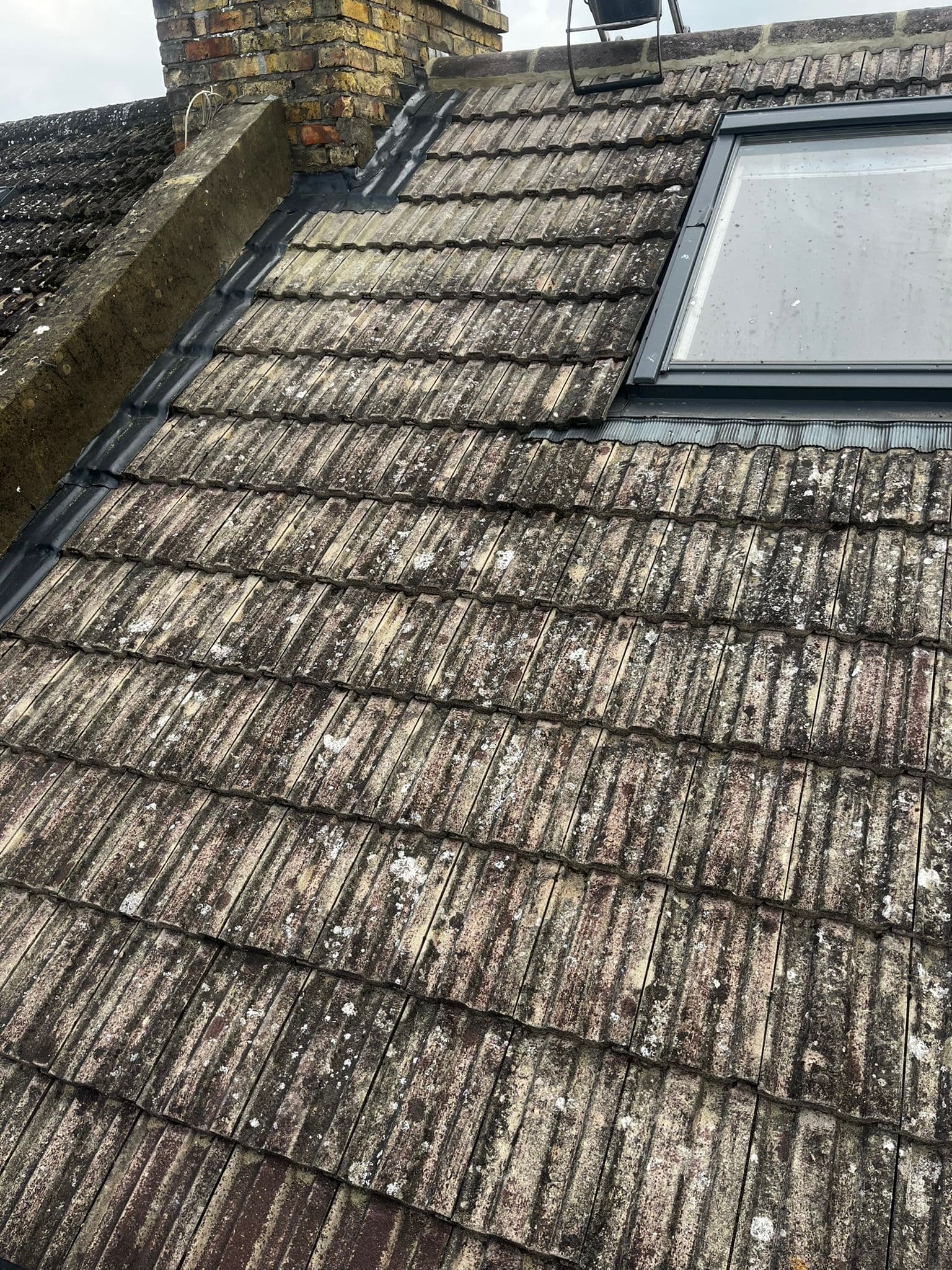
A roof window sits in a hole cut through the roof covering, and it is kept watertight by a flashing kit that joins the frame to the tiles or slates around it. Those kits are made for particular roof coverings. According to VELUX's own flashing range, there are different flashings for profiled tiles up to 120 millimetres deep and for flat materials such as slate up to 8 millimetres thick, because the two coverings meet the window in completely different ways. A flashing meant for flat slate fitted on a roof of deep profiled tiles leaves gaps the rain can drive straight through.
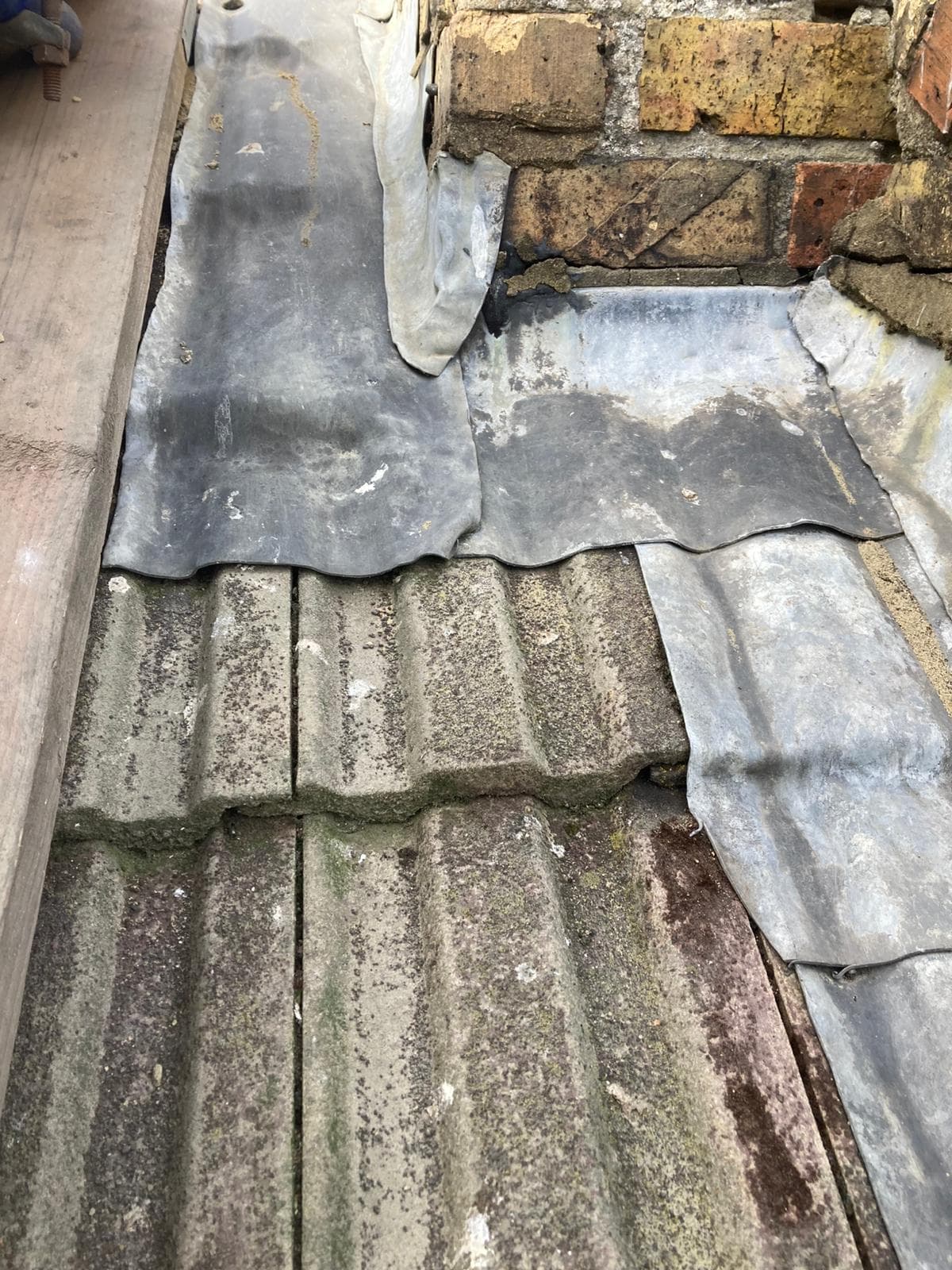
Even the right kit fails if the roof around it is not finished properly. Tiles cut too short at the sides, tiles sitting on the flashing instead of lapping it correctly, and lead or apron sections left unshaped all let water in. Like the flashing at any other junction on a roof, it only works if every piece laps the one below it in the direction the water runs.
The Seal and the Gutter Above the Window
Beneath the tiles, most roofs have an underlay that catches any water that gets past the covering and carries it down to the gutter. When a window is cut in, that underlay is interrupted. A properly fitted window has a pleated underfelt collar sealing the underlay to the frame, with a small drainage gutter above the head of the window to lead the water running down the underlay round the sides rather than onto the top of the frame.
On older roof window installations, and on any fitted without the manufacturer's full installation kit, that collar and gutter can be missing altogether. The window looks perfectly sound from outside and from the room, but every time rain gets under the tiles above it, the water runs down the underlay and straight onto the head of the frame, and appears as a stain along the top of the window lining.
Fitted Below the Pitch It Was Made For
Standard roof windows and their flashings are designed for roofs within a range of pitches, and shallower roofs need a window made for them. VELUX, for example, makes a separate low pitch roof window for roofs of 10 to 20 degrees. A standard window fitted into a roof below its range cannot clear water quickly enough, so rain backs up against the frame in heavy downpours and wind-driven rain is pushed in under the flashing. This is common on extensions and dormers with shallow roofs, where a window was chosen for the room it lights rather than the roof it sits in.
A window installed below its designed pitch will keep leaking whatever is done to the seals, and the lasting answer is to replace it with one made for that pitch.
Blocked Flashings, Moss and Debris
The top of a roof window catches everything that comes down the roof above it. Leaves, moss and grit collect against the head flashing and the tiles above it, and once that builds up it dams the water running down the roof and forces it sideways and under the flashing. On the coast, windblown debris and moss on older tile roofs make this one of the easier causes to find and one of the simplest to put right. It tends to show in autumn and winter, often at the top corners of the window.
Damaged Tiles or Slates Around It
The tiles and slates immediately around a roof window are cut to fit and often have fewer fixings than those in the open roof. They are also the ones most likely to be disturbed by anyone working on the window. A slipped, cracked or missing tile beside the frame lets water in next to the flashing, where it runs down behind it and appears at the window. After a storm it is worth having the tiles around every roof window checked as well as the rest of the roof.
When It Is Condensation, Not a Leak
Condensation is by far the most common reason people think a roof window is leaking. Warm, moist air rises to the ceiling, and the glass in a roof window is often the coldest surface in the room, so water forms on the inside of the pane and runs down to collect at the bottom of the frame. As VELUX's own guidance on condensation on roof windows puts it, the problem is usually the moisture in the room rather than the window itself.
The giveaways are water on the inside of the glass, damp that appears on cold mornings or after showers and cooking rather than during rain, and droplets on the frame when it has been dry outside for days. Bathrooms, kitchens and loft bedrooms suffer most. Keeping the ventilation flap on the window open, running extractor fans and airing the room usually improves it considerably. If condensation keeps coming back, it may point to a wider problem with ventilation in the roof rather than just the room.
Misting Between the Panes
If the glass looks misty or has droplets between the two panes, and you cannot wipe it away from either side, the seal around the double-glazed unit has failed and moist air has got into the gap. That is not a roof problem and no roofing work will cure it. If that is what we find, we will tell you so rather than sell you a roof repair. The glazing unit or the whole sash needs replacing, and until then the window will look cloudy and insulate less well, though it will not usually let rain into the room.
Why Sealant Is Not the Answer
The most common botched repair on a roof window is a bead of silicone run round the outside of the frame or along the edge of the flashing. It looks tidy and it may hold for a while. A roof window's flashing is designed both to shed water and to let any that gets under it drain away, and sealant blocks those drainage paths along with the gaps. Water that would have run out is trapped against the frame instead, and the leak comes back, often worse.
The repair that lasts is a proper re-flashing with the right kit, the collar and gutter fitted beneath the tiles, and the tiles around the window refitted correctly.
Finding the Cause From Both Sides
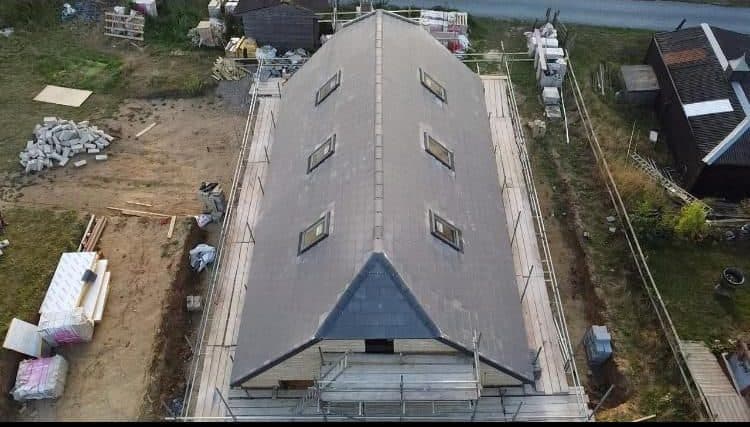
We look at a leaking roof window from both sides. Our drone survey shows the flashing, the tiles around the frame and any debris or moss at the head without anyone climbing onto the roof, and we check the window and lining from inside to see where the water is arriving and whether it is coming from outside at all. Please do not climb up to look yourself. Roof windows are usually on steep slopes, and a ladder resting against a gutter is not a safe way to reach one.
Getting a Leaking Roof Window Fixed Properly
Depending on the cause, a proper roof repair might mean clearing and resetting the tiles around the window, fitting the right flashing kit for the roof covering, or fitting the underfelt collar and drainage gutter that were missed first time. Where the window is old, damaged or wrong for the pitch of the roof, replacing it with the correct window and flashing is usually better value than repairing it again, and fitting and replacing roof windows is part of our roof installation work.
If your Velux window is leaking, contact us and tell us where the water appears and when. Hythe and Folkestone Roofers will find out whether it is the flashing, the fitting, condensation or the glazing, and deal with the cause rather than seal over it.

Tell us what the roof is doing
Tell us the address and what you are seeing, and we will come and look. Hythe, Folkestone and across east Kent.
126-128 High Street, Hythe, Kent, CT21 5LE
Emergency work is covered 24 hours a day, right across Kent.