How Long Does a Felt Flat Roof Last Compared With Rubber or GRP?
5.0 from 44 Google reviews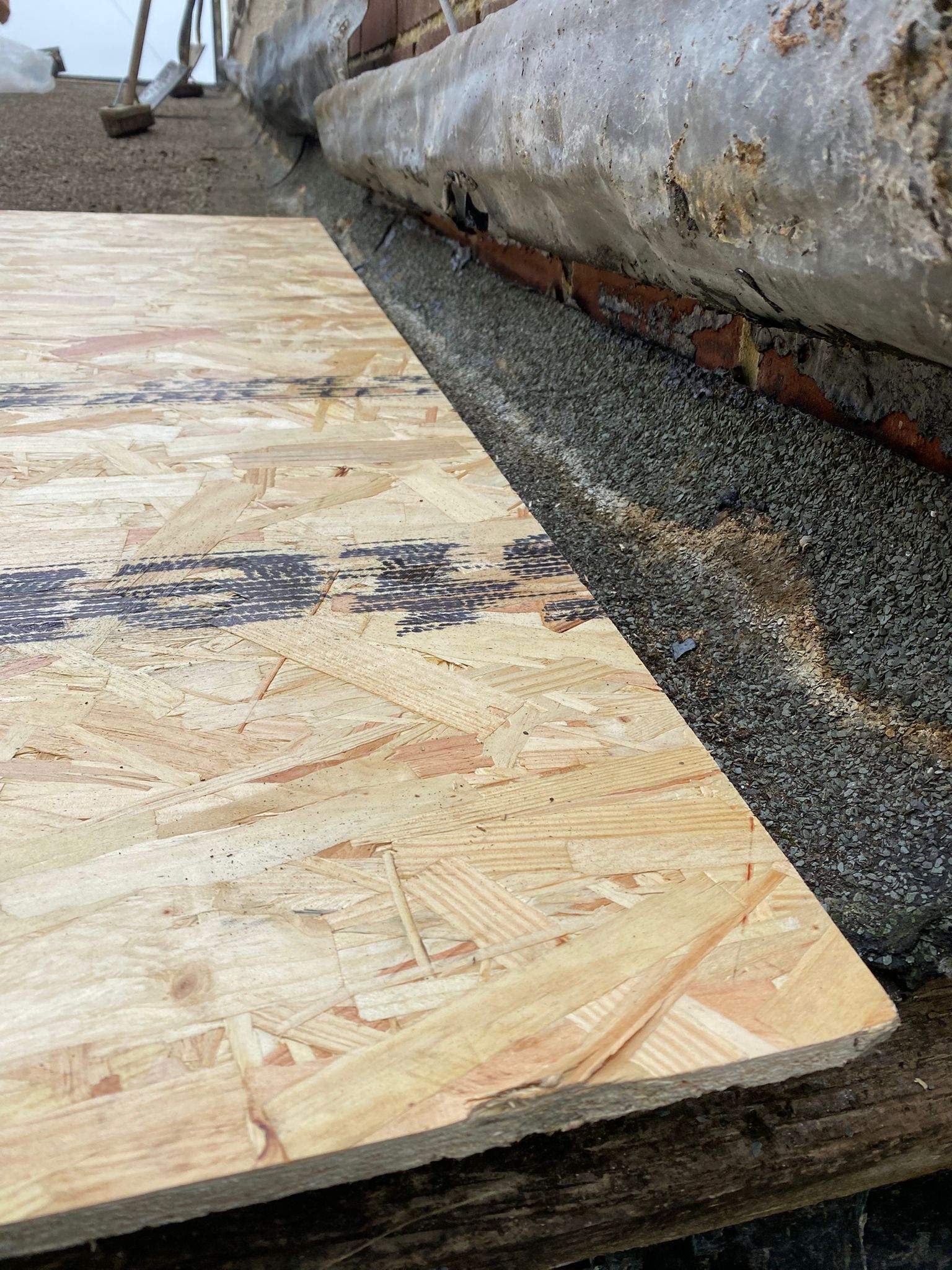
26 November 2026By Richard Wood
A modern felt flat roof lasts 25 years or more, and the best systems are rated for over 35 years. That puts it in the same range as GRP fibreglass, where one certified system is rated to last at least 25 years, while the maker of the RubberCover EPDM rubber membrane says studies put its life at more than 50 years. Old-style felt, the kind still found on many garages and older extensions, rarely gets anywhere near those figures, which is where felt's poor reputation comes from.
The bigger answer is that the material matters less than how the roof was built and looked after. Each of those figures assumes a roof laid properly to a proper fall, by a trained installer, and inspected regularly. A well laid felt roof can outlast a badly laid rubber or GRP one, and water standing on any of them, poor edges and upstands, and a deck that moves underneath will cut every one of those figures short. Below are the manufacturers' own numbers, what shortens a flat roof's life, how the three materials differ in use, and how to tell when a felt roof is near the end.
What the Manufacturers Say Each Material Lasts
The most reliable lifespan figures for a flat roof come from the manufacturers' own certified systems, because each one has been assessed for durability by the British Board of Agrément, the BBA. The roofing manufacturer IKO publishes the BBA statements for its reinforced bitumen systems, which is what modern felt is. Its standard system carries a service life of more than 25 years, and its premium system more than 35 years.
For GRP, the Liquid Roofing and Waterproofing Association's product register lists the Polyroof 185 system with a minimum life expectancy of at least 25 years, provided there is no abnormal movement in the roof and it is inspected and maintained regularly. It adds that a correctly installed laminate can be expected to keep its integrity for 30 years.
For EPDM rubber, Elevate, which makes the RubberCover membrane used on many house roofs, says in its RubberCover FAQ that recent studies show a life expectancy of more than 50 years, even exposed to sunlight. The same page gives a 10 year warranty on the material, which shows the difference between the two numbers. A warranty is what a manufacturer will stand behind, while a life expectancy is what it believes the product can do in good conditions.
These are each maker's figures for its own named product, laid to its own specification. They are not a promise about any particular roof, and a cheaper product from the same family will not necessarily match them.
Why Old Felt Roofs Earned a Bad Name
If you have lived with a felt roof that leaked after ten years, you are not imagining it. Much of the felt laid on garages, porches and extensions in past decades was a cheaper, stiffer product than today's, often in thin layers, often finished with loose chippings, and often laid on a deck with barely any fall. As it aged it hardened in the sun, cracked as the roof moved between hot days and cold nights, and split along its laps. Older felt roofs were always likely to need replacing sooner because the material itself broke down.
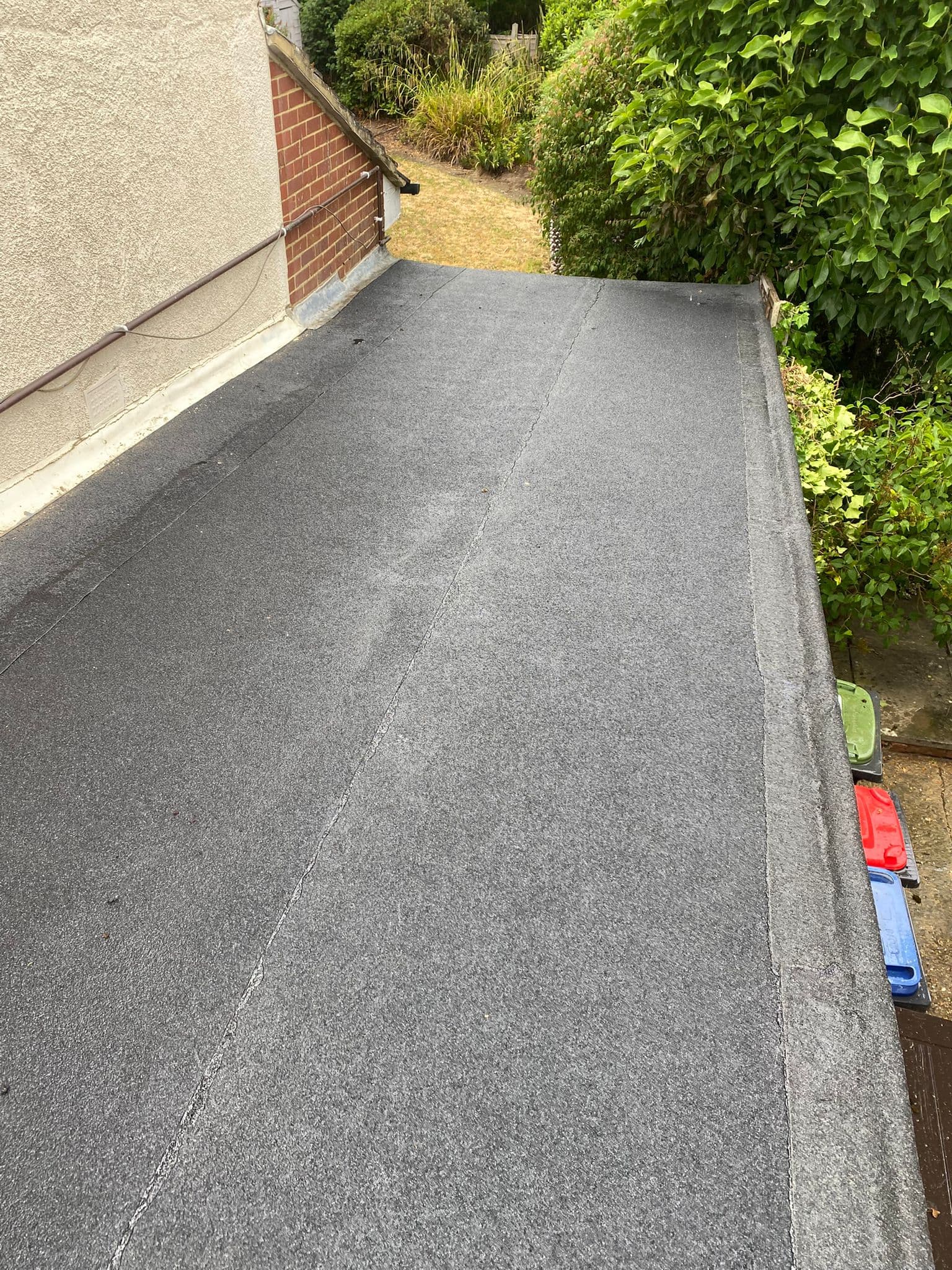
Modern felt is a different product. IKO describes its systems as built on polyester reinforcement with modified bitumen coatings, which stay flexible far longer, and they can be laid with a torch, bonded without any flame, or both. So the question to ask about a felt roof is not just whether it is felt, but what kind of felt and how it was laid.
What Shortens the Life of Any Flat Roof
Standing water is the biggest single enemy. A flat roof is not meant to be flat. It is laid to a fall so water runs off to an outlet or gutter, and the British Standard for flat roofs treats water left standing in a hollow as a fault, not as something flat roofs just do. Every material ages faster under a puddle that sits for days, and a new flat roof has to have its falls built in, whatever covering goes on top.
The edges come next. Wind gets under a trim or a badly fixed edge and lifts it, and driven rain gets in at the upstand where the roof meets a wall. On exposed roofs near the sea, as in Folkestone and Hythe, the perimeter is often where a flat roof fails first, long before the middle of the covering has worn out.
Movement in the deck shortens every material's life, which is why the GRP lifespan above is conditional on there being no abnormal movement. A deck of old chipboard that has got wet and started to sag will crack a new covering laid over it. Foot traffic matters too. Elevate says a rubber roof that is walked on regularly needs protecting with pavers. And neglect matters most of all. Elevate recommends a yearly inspection even for a membrane it rates at 50 years, and the LRWA figure assumes regular inspection and maintenance. Blocked outlets and gutters turn a sound roof into a pond.
Felt, Rubber and GRP in Everyday Use
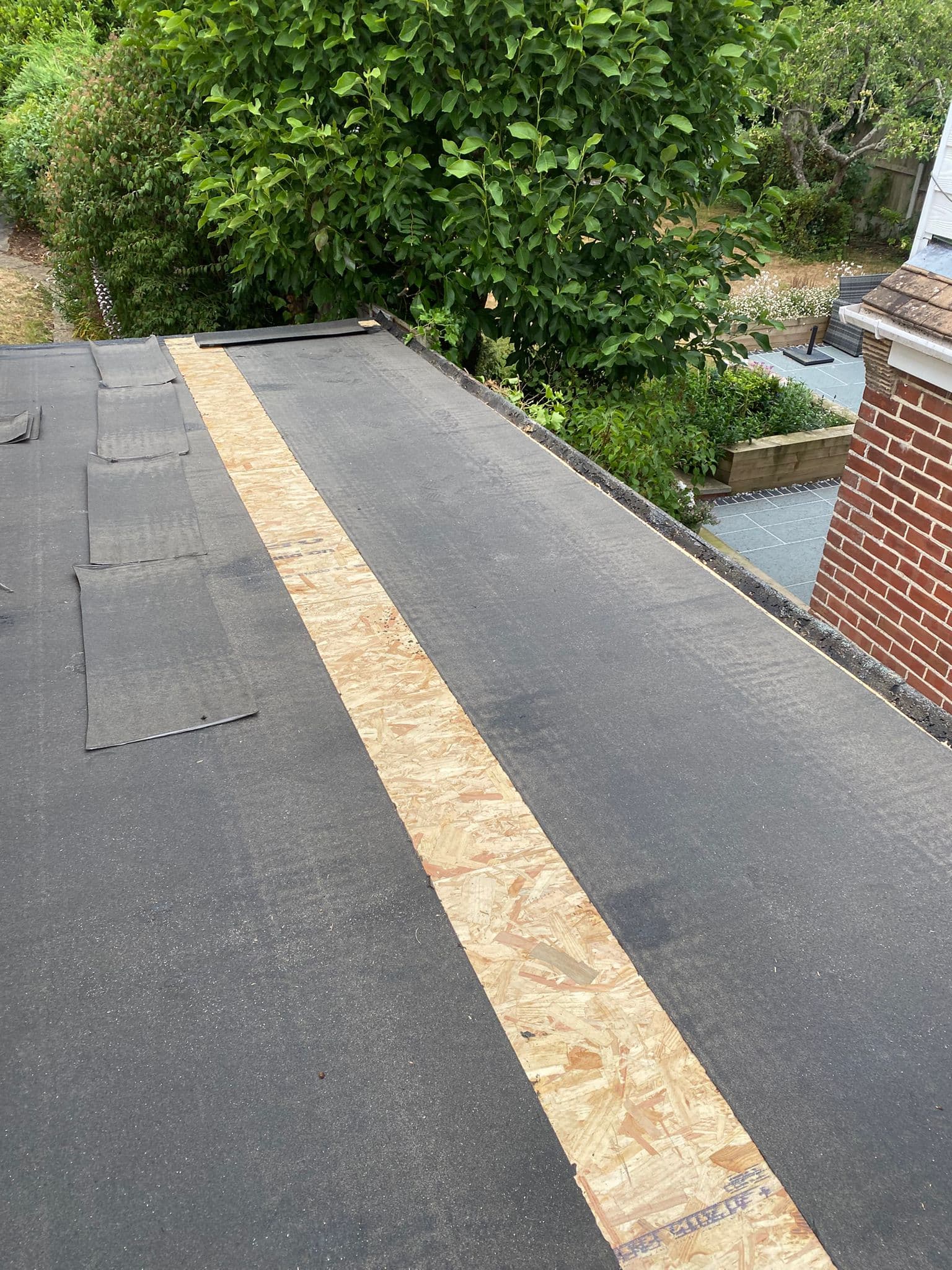
Most felt roofs are laid in two or three layers, each bonded to the one below with the joints staggered, so a fault in one layer is not automatically a leak. It is easy to repair with compatible material and suits awkward roofs with lots of upstands and outlets. Where it would be laid with a torch, the roofing trade's Safe2Torch guidance says a torch-free method should be the default wherever a fire risk next to the work cannot be ruled out, which is why torch-free felt systems exist.
EPDM rubber goes down as a single sheet, so a small house roof can have few or no joints at all. Elevate describes RubberCover as a system for residential flat roofs of up to 150 square metres. It must be kept away from fresh bitumen, oils and grease, which is why a rubber roof cannot be patched with the bitumen products used on felt and has to be repaired with the manufacturer's own materials.
GRP is laid as liquid resin and glass fibre matting that cures into one seamless, hard surface, with moulded trims at the edges. It handles foot traffic well and looks neat, but it is rigid, so it relies on a stable deck and good detailing at the edges and joints, and it has to be laid in dry conditions.
None of the three is the best answer for every roof. The right one depends on the size and shape of the roof, how many things pass through it, whether anyone will walk on it, how close it is to timber and windows, and how long you plan to stay in the house.
Signs a Felt Roof Is Near the End
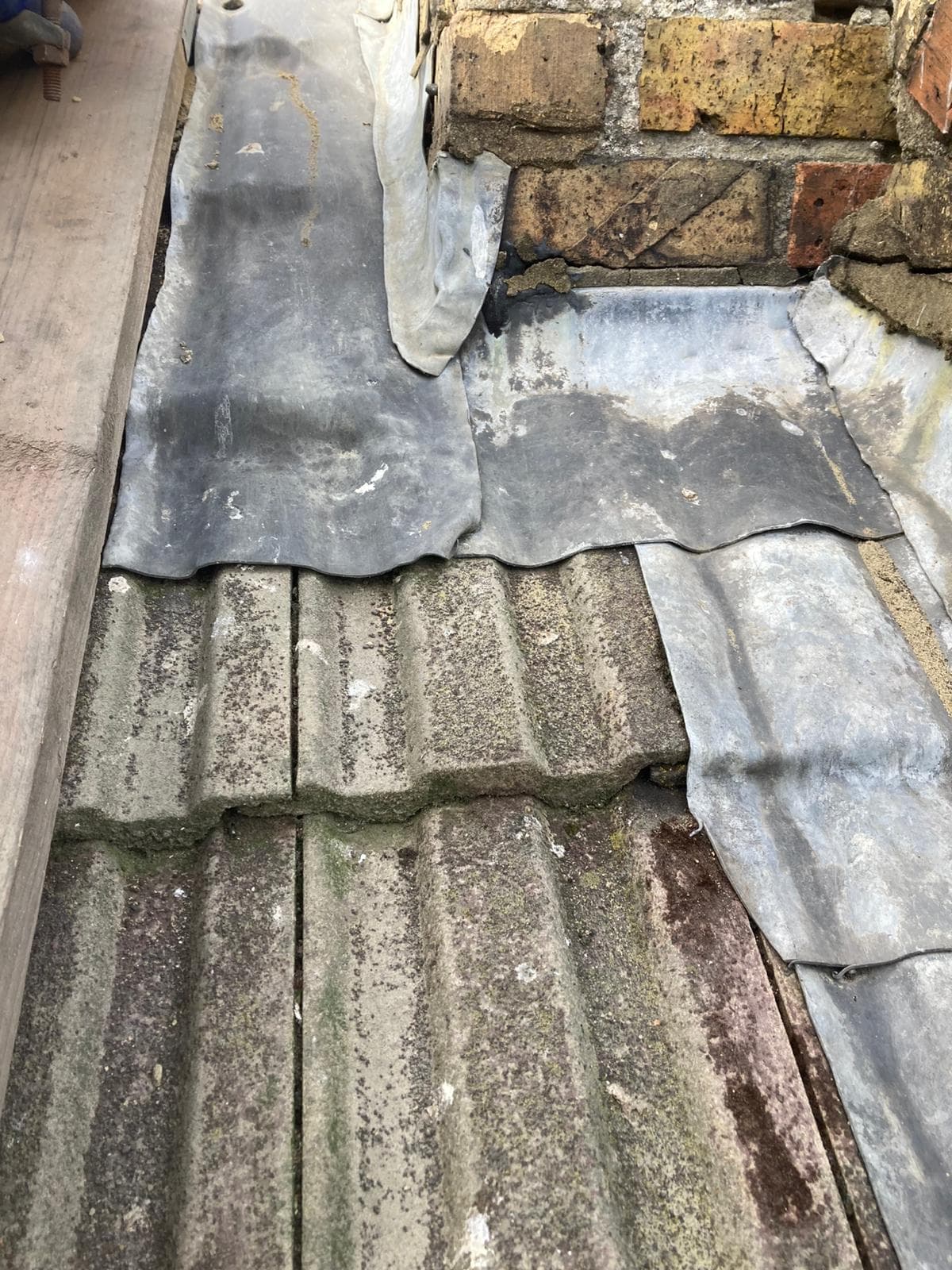
From a window that looks onto the roof, or from a safe spot on the ground, look for cracking or crazing across the surface, splits along the laps, blisters, bare patches where the mineral finish or chippings have gone, and puddles that are still there days after rain. Inside, look for stains on the ceiling below, especially near the walls, and any sag in the ceiling. A felt roof covered in old patches has often been repaired past the point where repairs make sense.
Please do not climb onto a flat roof to look. Flat roofs on extensions and garages often have no edge protection and may have fragile rooflights, and the Health and Safety Executive says that almost one in five deaths in construction work involve roof work.
Repair or Replace?
A single split, blister or lifted edge on a felt roof that is otherwise sound is a repair, and replacing a whole roof for one fault is money wasted. The common faults and repairs on flat roofs are mostly local, and a good repair on a sound roof can give it many more years. When the covering is cracking all over, the laps are opening across the roof, or the deck has softened, the roof needs replacing, and the cost of a flat roof replacement depends far more on what is found underneath than on the covering chosen.
Replacing the covering is building work in its own right. It has to be notified to building control unless the roofer belongs to a Competent Person Scheme, and it can bring insulation requirements with it, so the rules on new and replacement flat roofs apply whichever material you choose.
How We Look at a Flat Roof
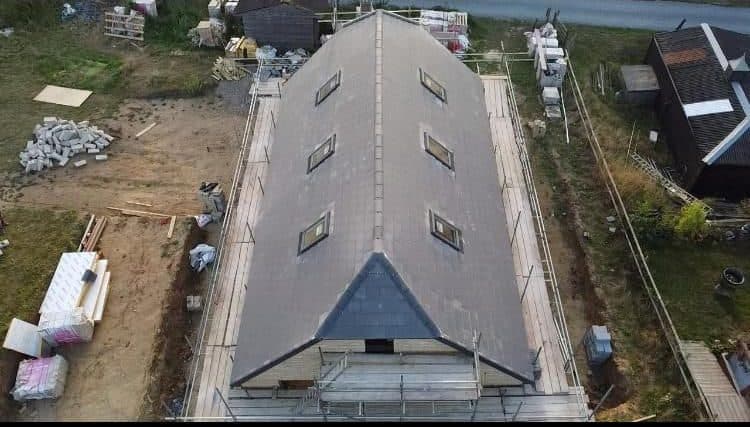
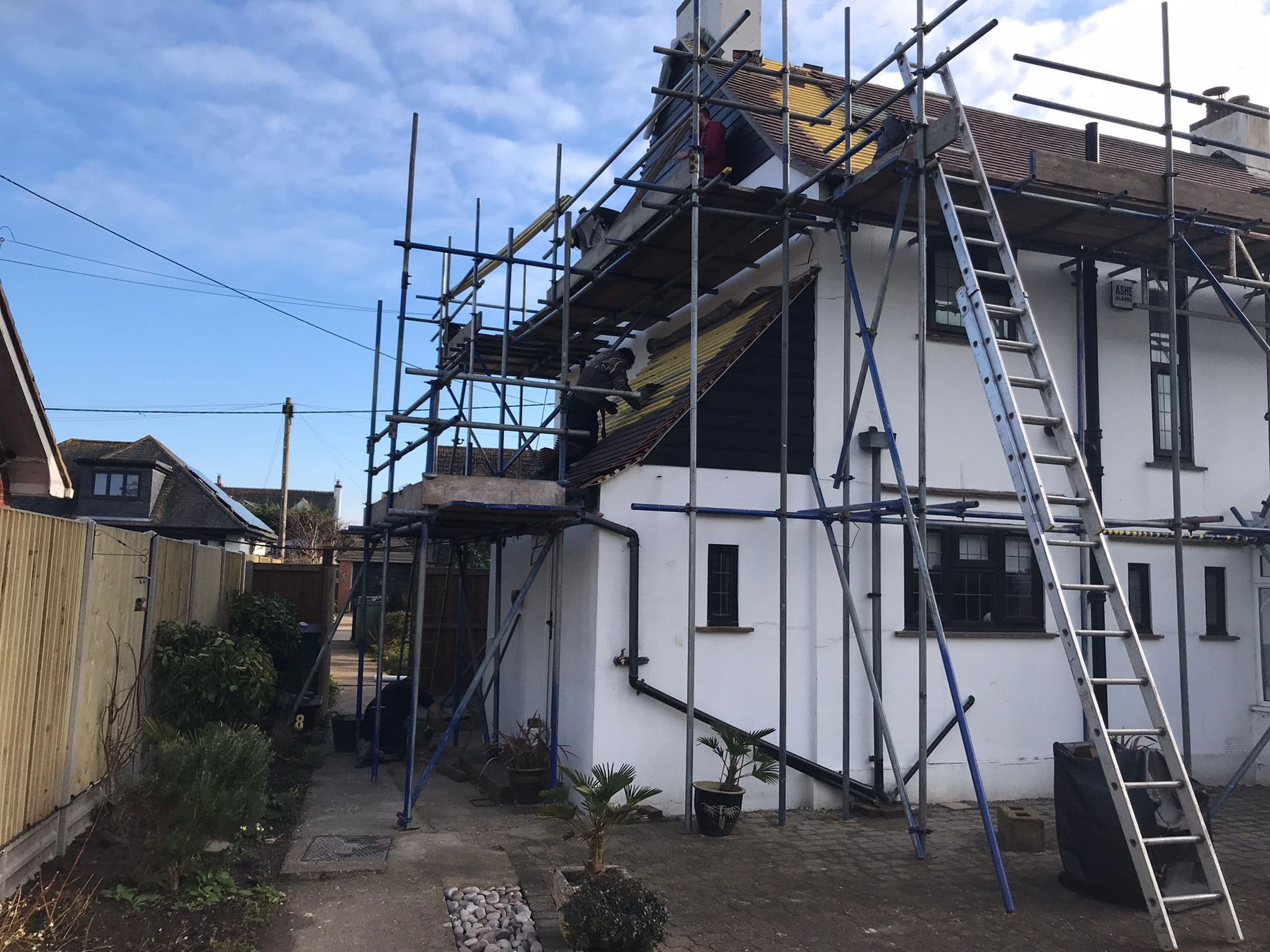
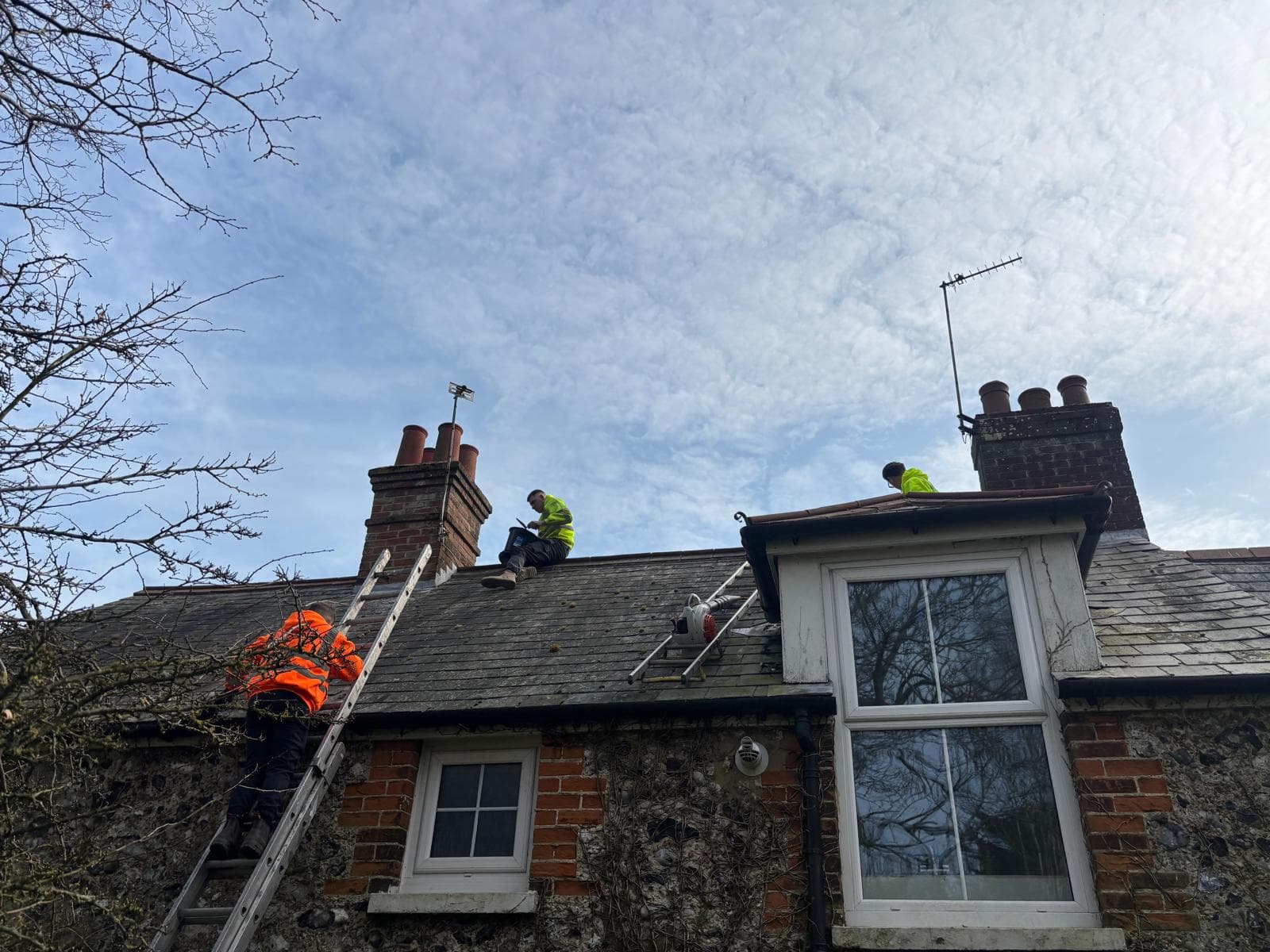
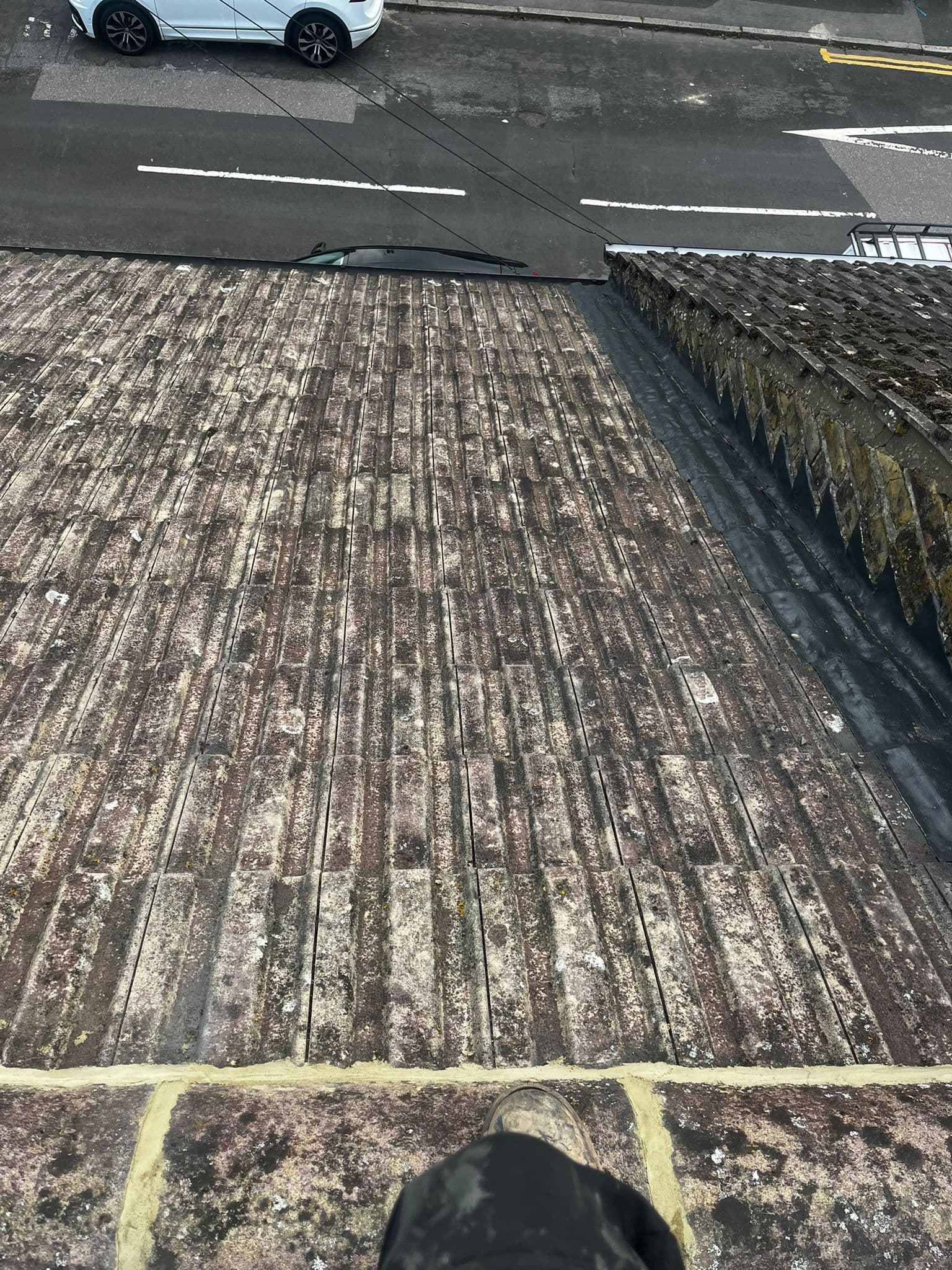
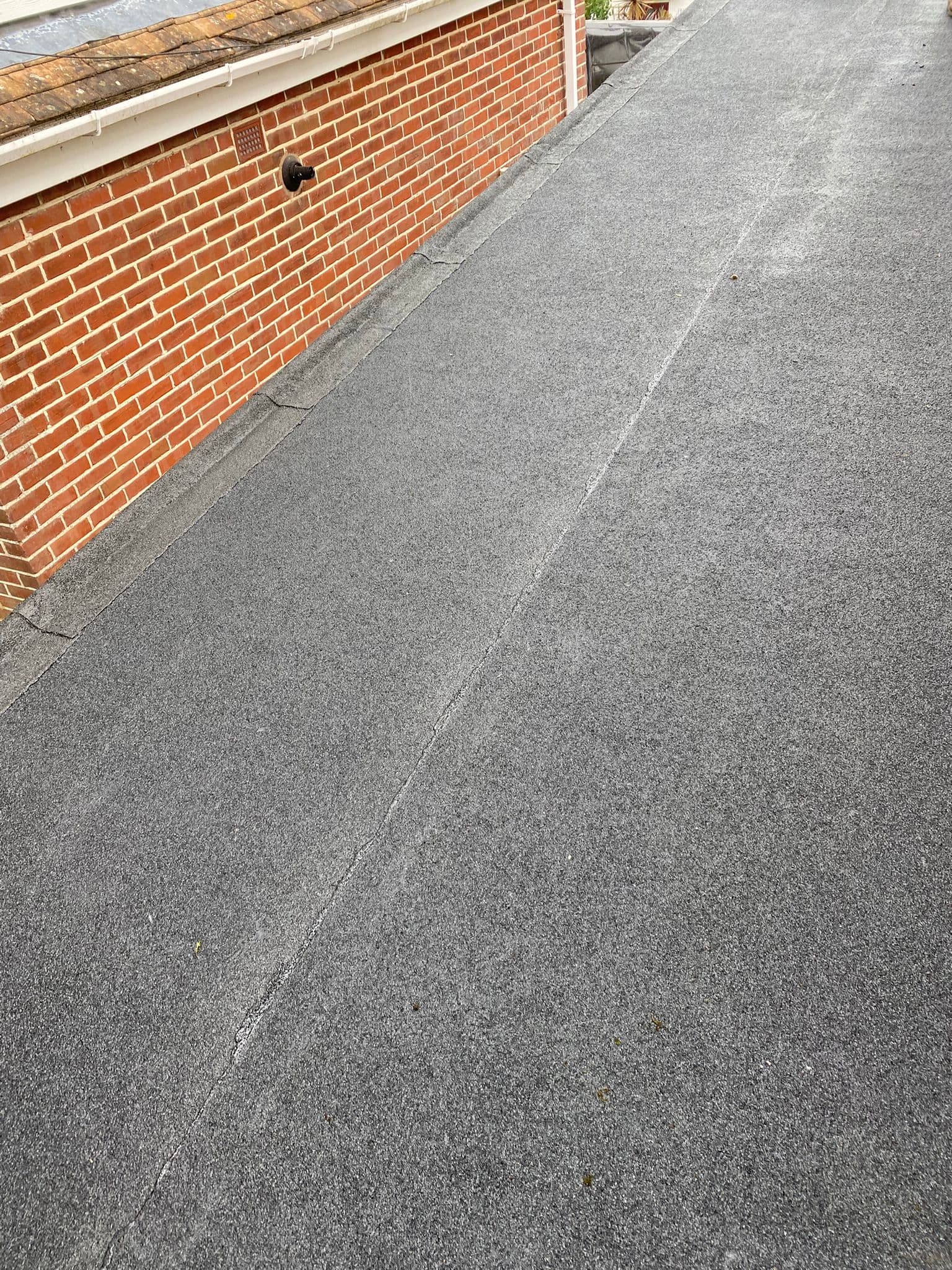
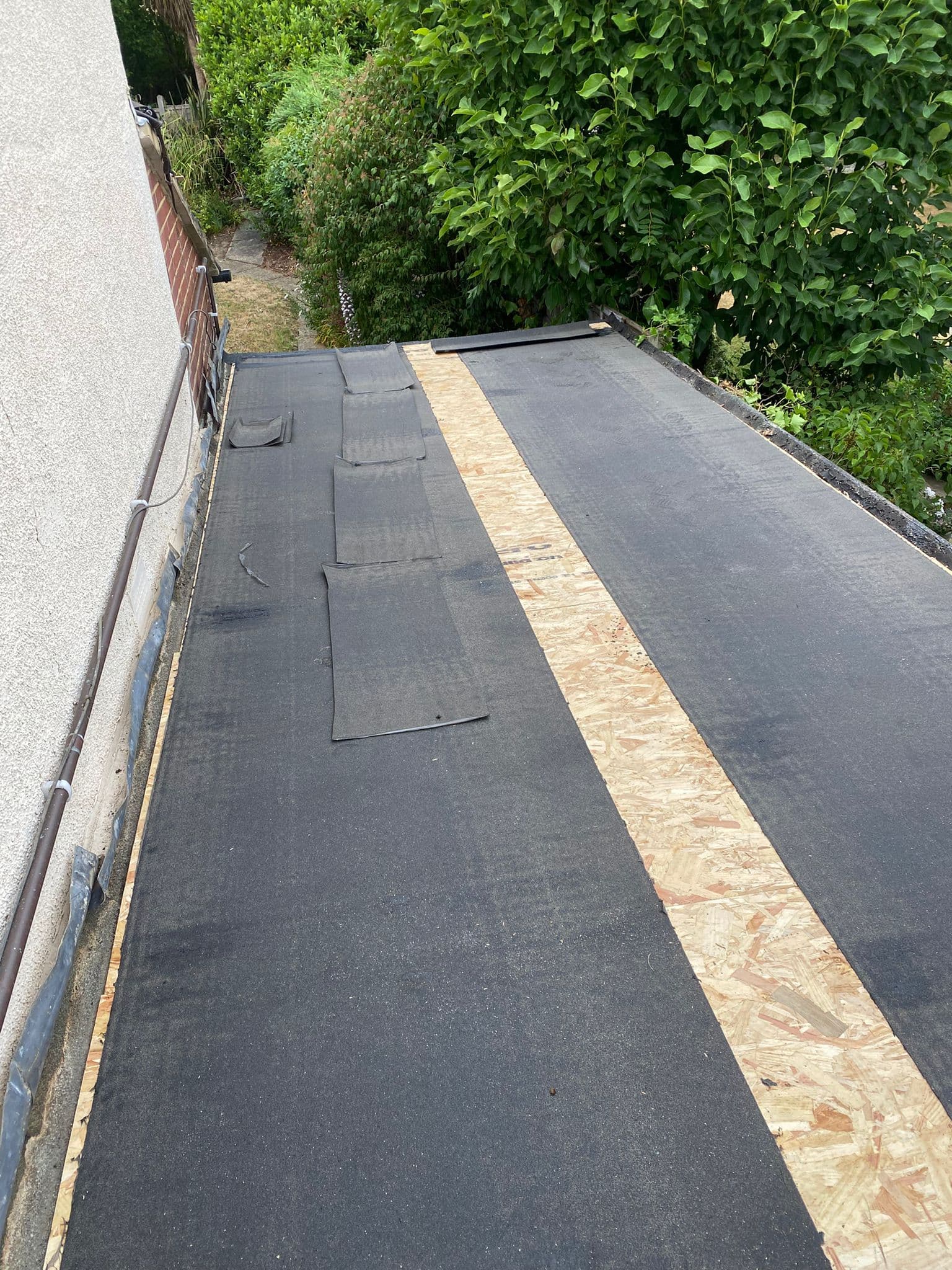
We start with the whole roof rather than the leak. A drone survey shows the full surface of a flat roof, where water is ponding, the state of the laps and the edges, and the upstands against the walls, without anyone walking on it. From inside, the ceilings below and any part of the deck we can see show whether water has been getting into the structure. That tells us whether the roof needs a repair, a new covering on a sound deck, or a full rebuild with new falls and insulation, and we will tell you plainly which. You can see some of the felt roofs we have finished in the gallery.
If your flat roof is getting old, or you are deciding between felt, rubber and GRP for a new one, get in touch. Hythe and Folkestone Roofers will look at the roof you have, tell you honestly how much life is left in it, and recommend the covering that suits it.
Tell us what the roof is doing
Tell us the address and what you are seeing, and we will come and look. Hythe, Folkestone and across east Kent.
126-128 High Street, Hythe, Kent, CT21 5LE
Emergency work is covered 24 hours a day, right across Kent.