
What Is Nail Sickness on a Roof, and Can It Be Repaired?
12 October 2026By Richard Wood
Nail sickness is what happens when the nails holding the slates on a roof corrode or wear through, so the slates start slipping out of place one or two at a time. The telling thing about it is that the slates themselves are often still in good condition. It is the fixings that have failed, and because every nail on the roof went in at the same time and has faced the same weather, the problem shows up across the whole roof rather than in one corner.
It can be repaired, up to a point. A few slipped slates can be put back individually using small metal clips called tingles, and on a roof where only a handful have gone that is a sensible, inexpensive repair. But once slates are slipping all over the roof, patching them one at a time only postpones the real fix, which is to strip the roof, reuse the sound slates and lay them back on new battens and underlay with new nails. The rest of this article explains how to tell which situation you are in.
Why the Nails Fail
A slate is held by one or two nails, usually hidden under the course of slates above it. For much of the nineteenth and twentieth centuries those nails were iron or plain steel, which rust, and a conservation guide to repairing slated roofs notes that corrosion makes iron fixings fail far more rapidly than the slate itself. Rust eats the nail away from the inside of the hole, and in time the nail head snaps off or the shank thins until it no longer holds the slate's weight. The hole in the slate can also wear larger as the slate moves slightly in the wind, year after year, until it slides over the nail head.
Near the sea the process runs faster. Salt air is corrosive, and on the Kent coast the wind carries it onto every roof. That is why nail sickness is so common on the older slate roofs of Hythe and Folkestone, where the fixings have spent a century or more in salt-laden sea air.
It helps to know the history of these roofs. Folkestone's station opened in 1843 as the terminus of the South Eastern Railway's line from London, and much of the town's Victorian building came after it. The listing for one mid-Victorian terrace on the Leas, now the Hotel Ambassador, records a slate roof. Where a slate roof of that age has never been stripped and re-laid, most of its slates still hang on the nails they were first fixed with.
The Signs of Nail Sickness
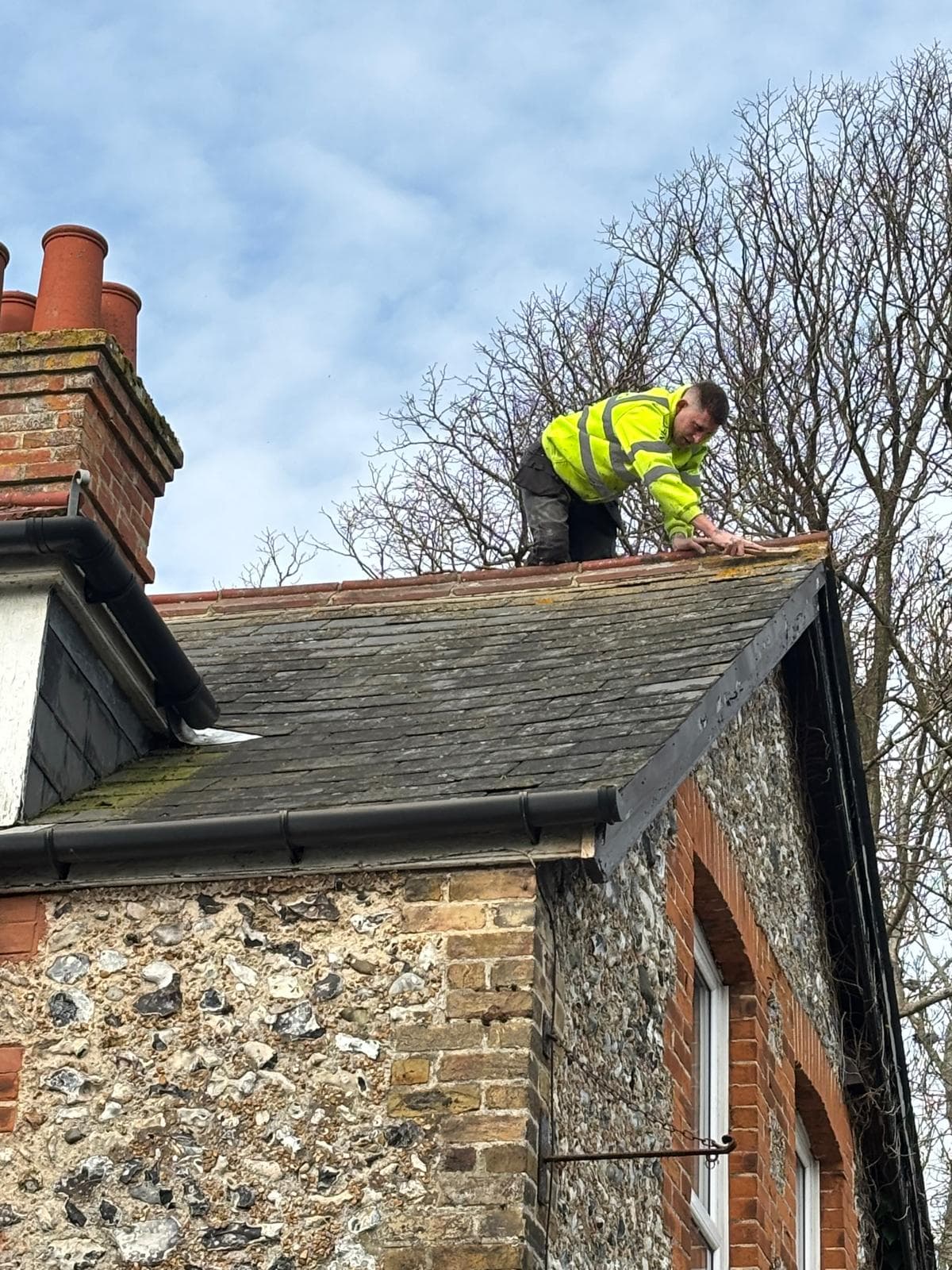
The clearest sign is slates that have slipped down out of line, leaving a gap in the course above them. On a roof with nail sickness they do not slip in one place. They go in ones and twos scattered across every slope. You may also find whole slates or pieces of slate in the gutter or on the ground after a windy night, or hear slates rattling when the wind gets up.
Look for tingles too. They are small strips of lead, copper or aluminium hooked under the tail of a slate, and each one marks a slate that has already slipped and been put back. A few tingles on a roof are nothing to worry about. Dozens of them, scattered across a slope, are the roof telling you that its fixings are failing everywhere.
From inside, a loft on an older roof may show daylight where a slate has moved, or damp staining on the rafters and battens below the gaps. On roofs with no felt beneath the slates, which is common on houses of this age, you can sometimes see the slipped slate itself from the loft.
Nail Sickness or a Local Problem
The most useful question to ask is where the damage is. Damage in one patch is a repair. Damage spread evenly across the roof is a fixing failure.
A cluster of broken or missing slates around a chimney, below a satellite dish or along one verge usually has a local cause, such as a storm, a fall of debris or someone walking on the roof. Fix that area properly and the rest of the roof may have years left in it. Slates slipping at random across every slope point to nails giving up everywhere, because they are all the same age and have all been in the same weather.
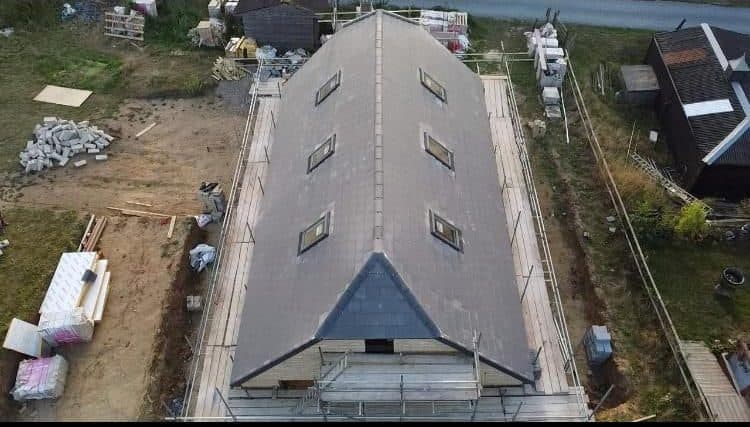
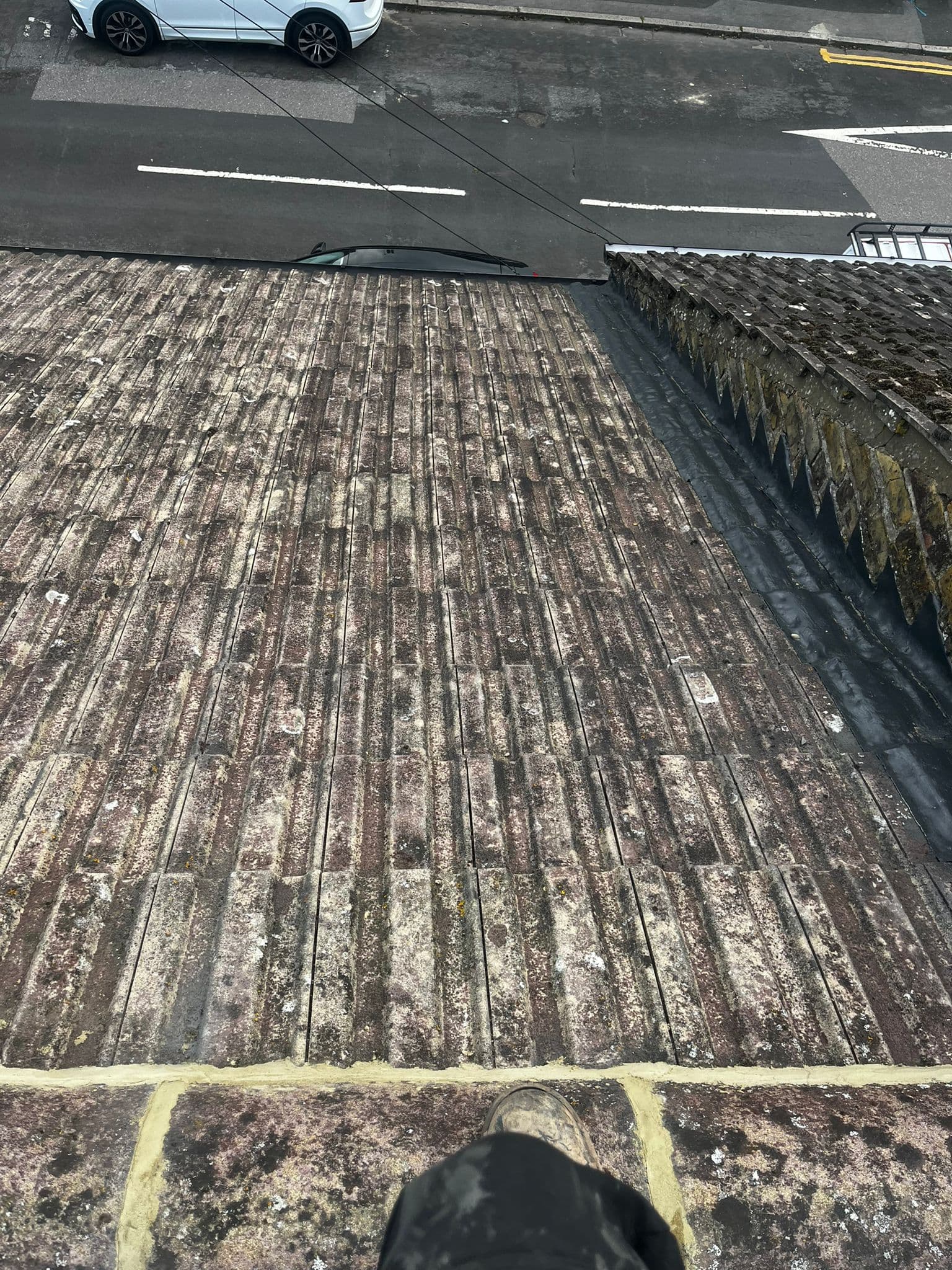
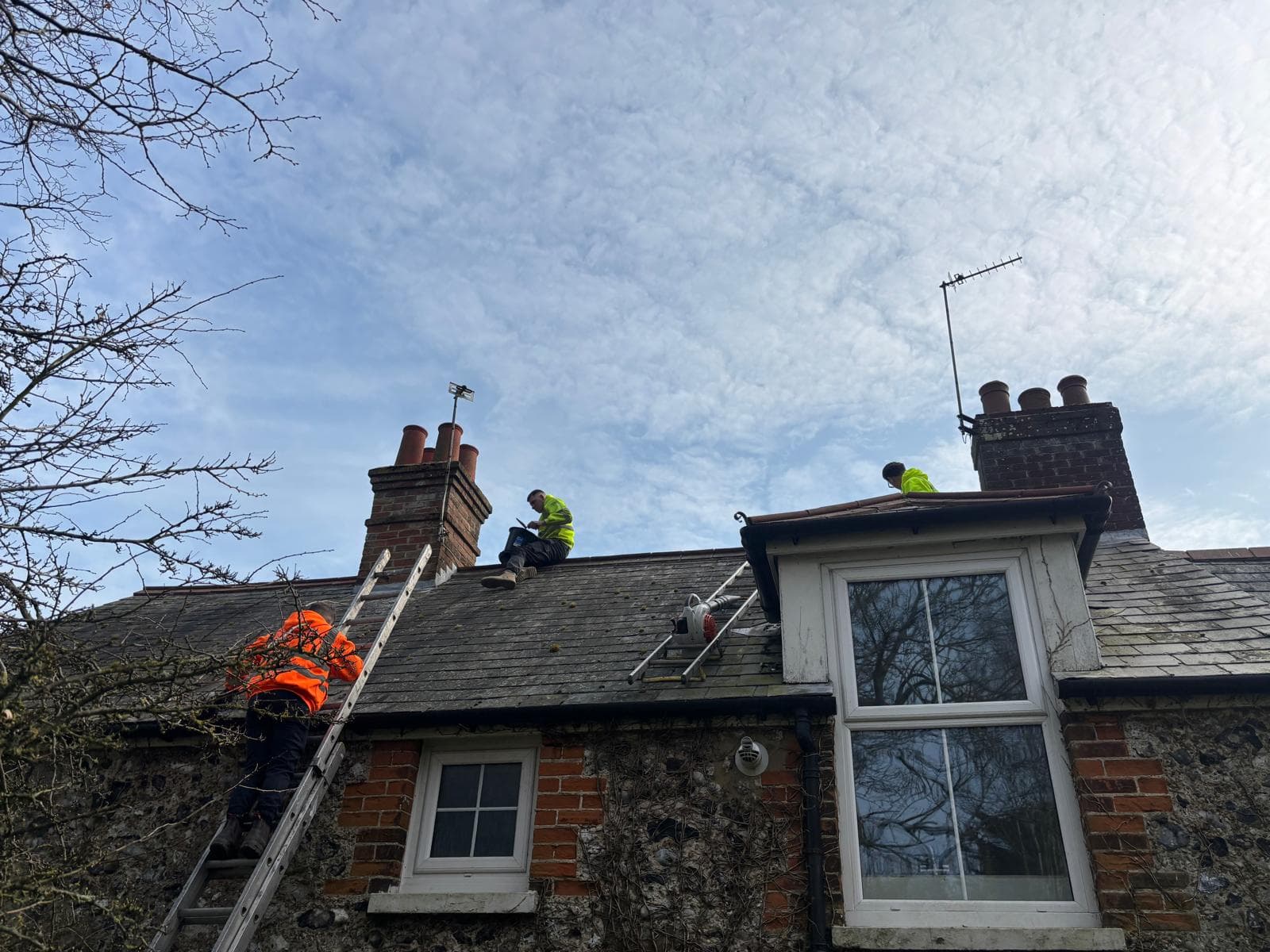
The pattern shows up best from above. Our drone survey photographs every slope in close detail, so it is easy to see whether the slipped slates are grouped in one place or scattered across the whole roof, and whether the roof is already covered in tingles. We pair it with a look in the loft, which shows the state of the battens, the underlay if there is one, and the undersides of the slates.
It Is Also Worth Checking the Slates Themselves
Nail sickness is a failure of the fixings, not the slates, and that is the good news, because sound slate can be reused. But it is worth checking the slates at the same time. Slates that are flaking, crumbling at the edges, softening or breaking when handled have reached the end of their own life, and on a roof like that the question is not how to refix them but what to replace them with. A roofer who knows slate can usually tell within a few minutes of handling a handful from the roof.
What a Repair Involves
Where only a few slates have slipped, the repair is to refit each one using a tingle. The tingle is nailed to the batten through the narrow gap between the two slates in the course below, the slate is slid back up into position, and the end of the tingle is folded up over its tail to hold it. It is quick, it is cheap, and on a roof with a handful of problems it is the right thing to do. It is a routine part of roof repairs on a slate roof.
What you cannot do is simply re-nail the slipped slates where they sit. The nails that hold each slate are hidden beneath the course above it, so there is no way to reach them without lifting the slates over the top. That is why the only way to replace the fixings across a roof is to take the slates off.
When the Roof Needs Re-Slating
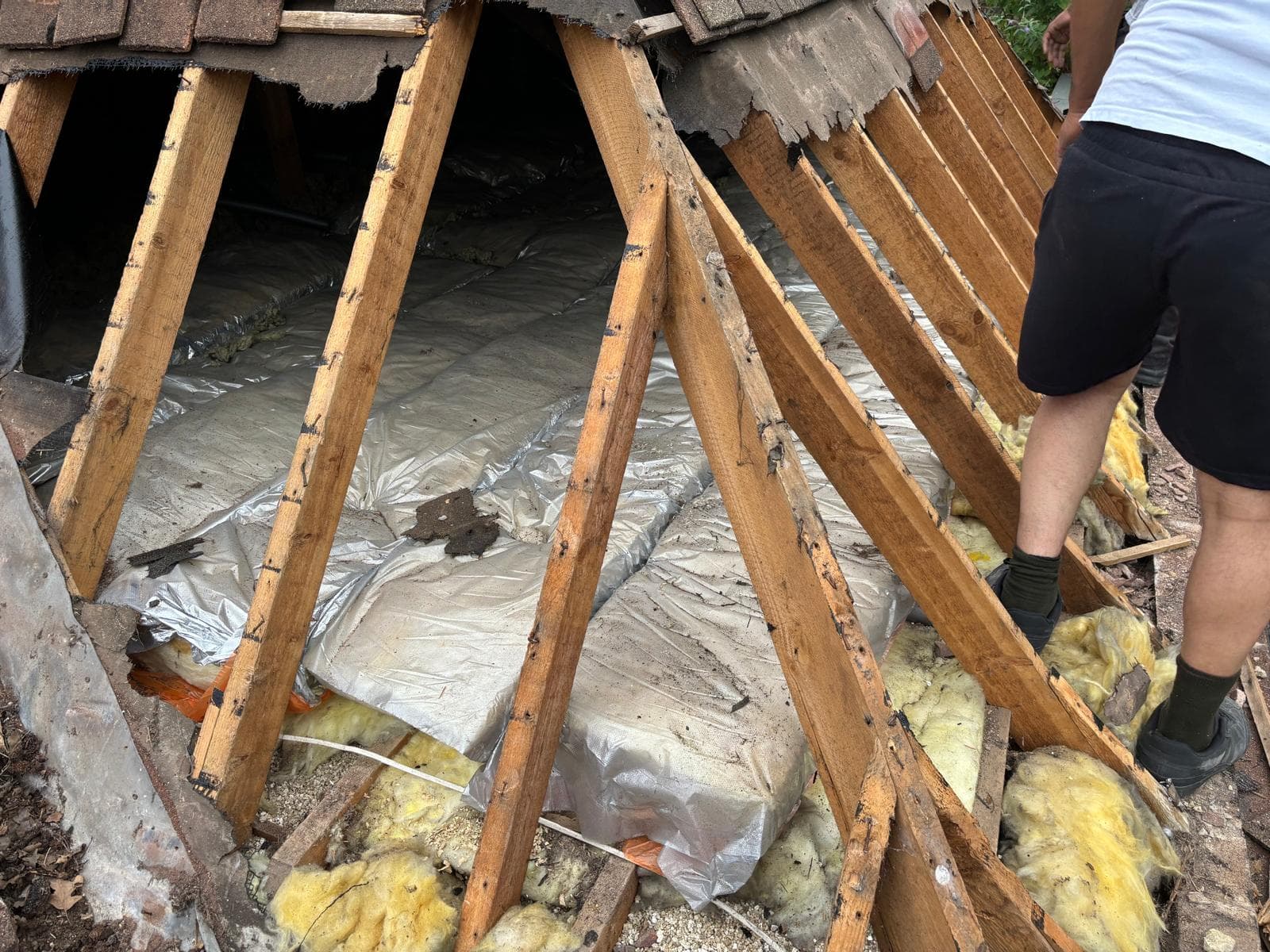
Once nail sickness has spread across a roof, repairs start to chase the problem rather than solve it. Every windy spell brings down another few slates, every repair adds more tingles, and the underlay and battens beneath, which on these roofs are often as old as the nails, carry on deteriorating unseen. Neither a repair nor a restoration reaches those layers. Only a full strip and re-roof does.
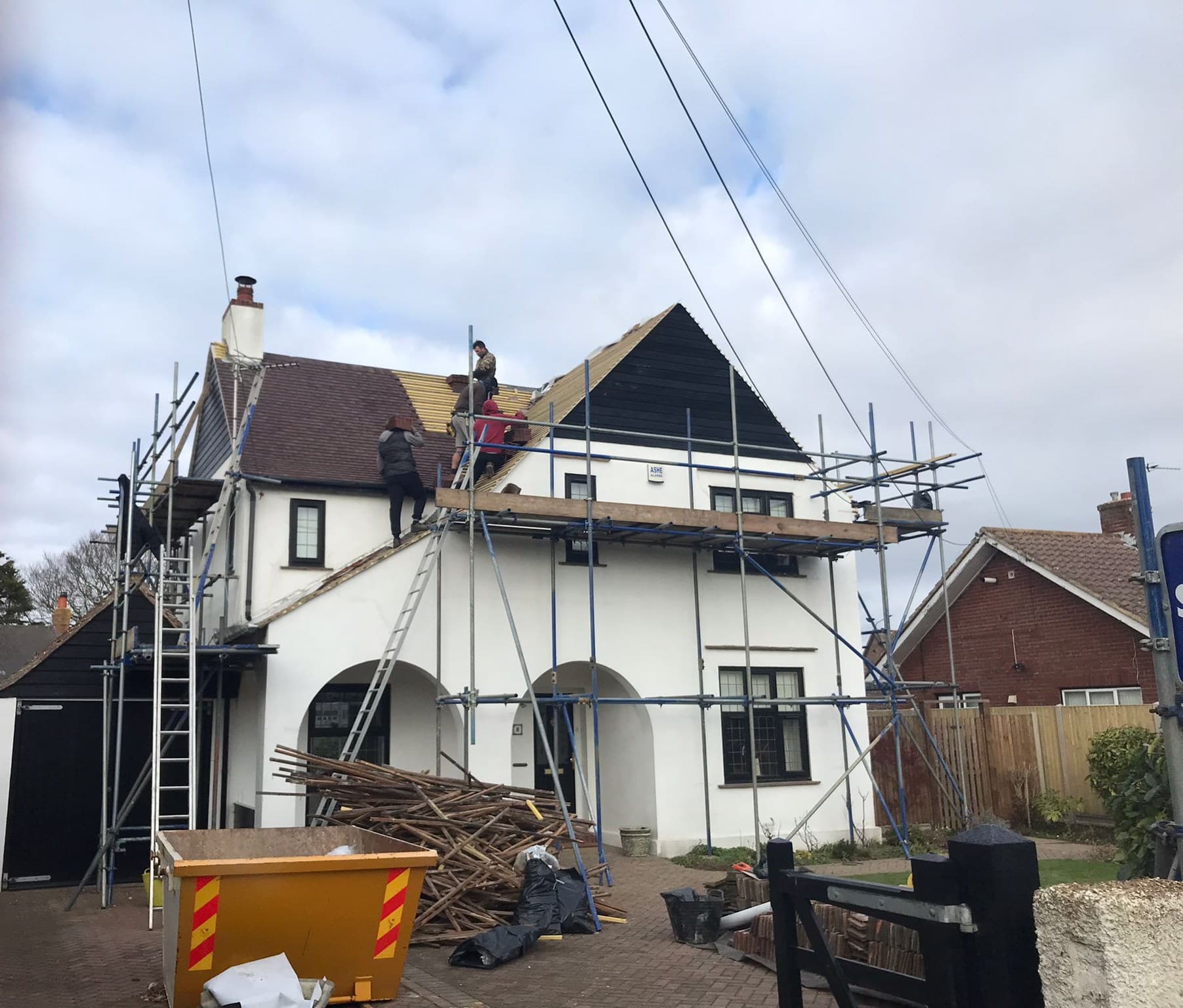
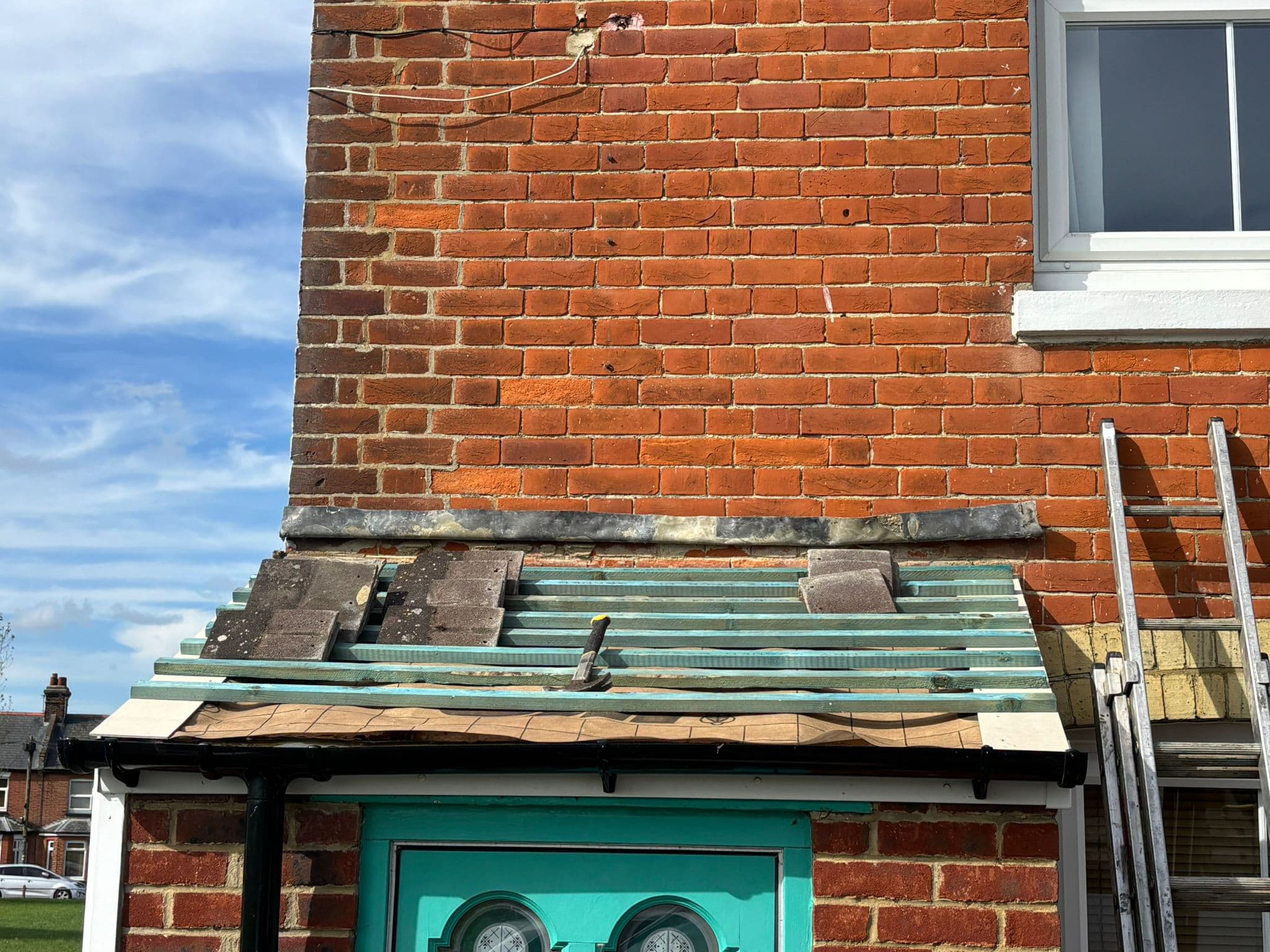
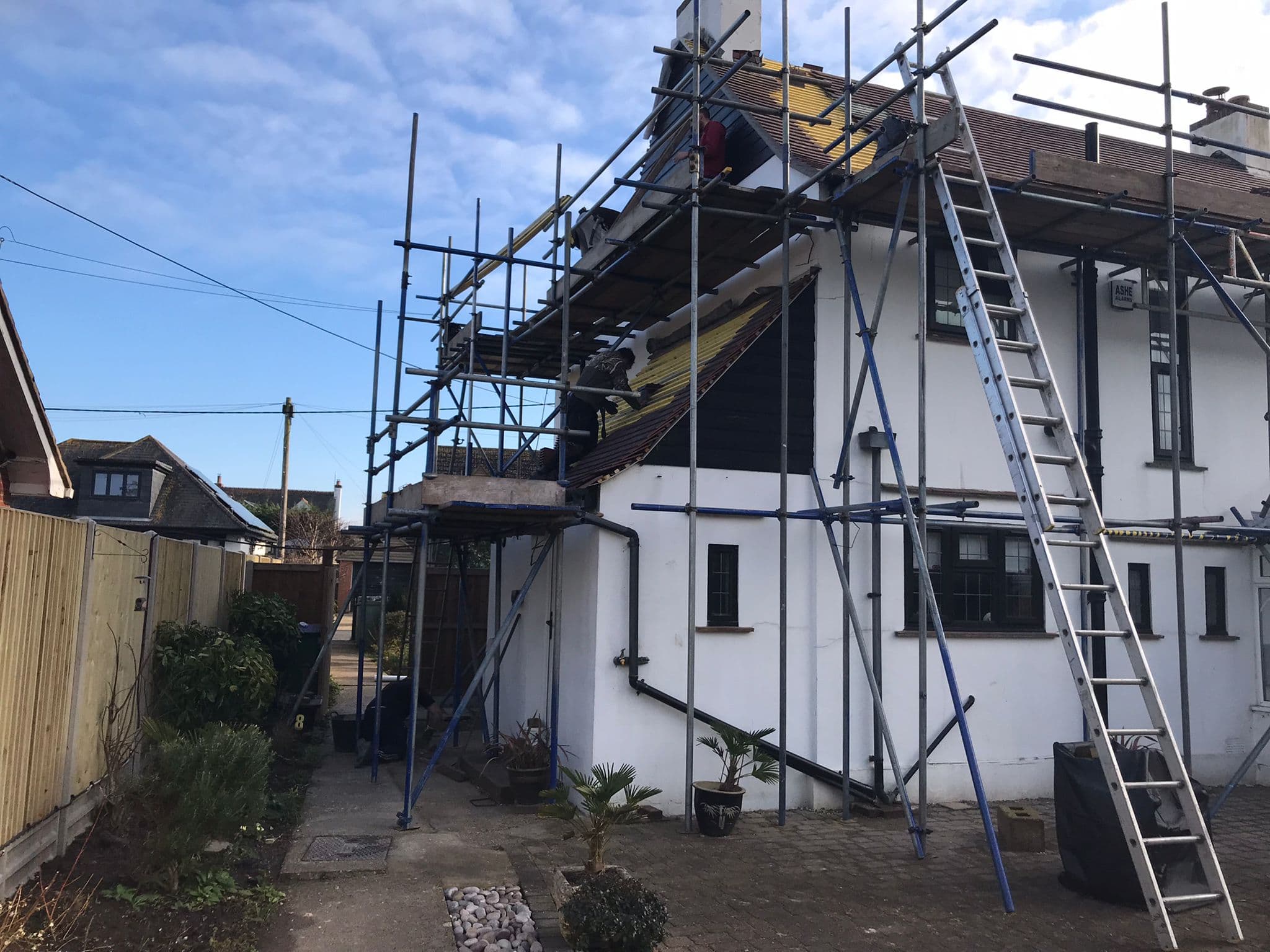
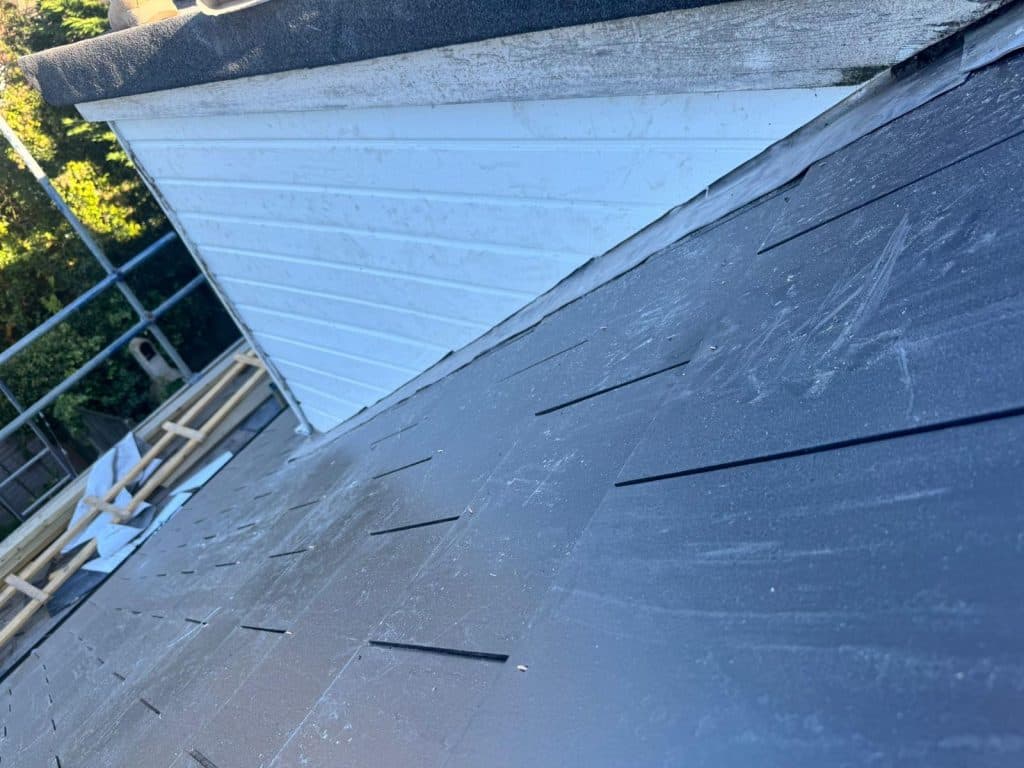
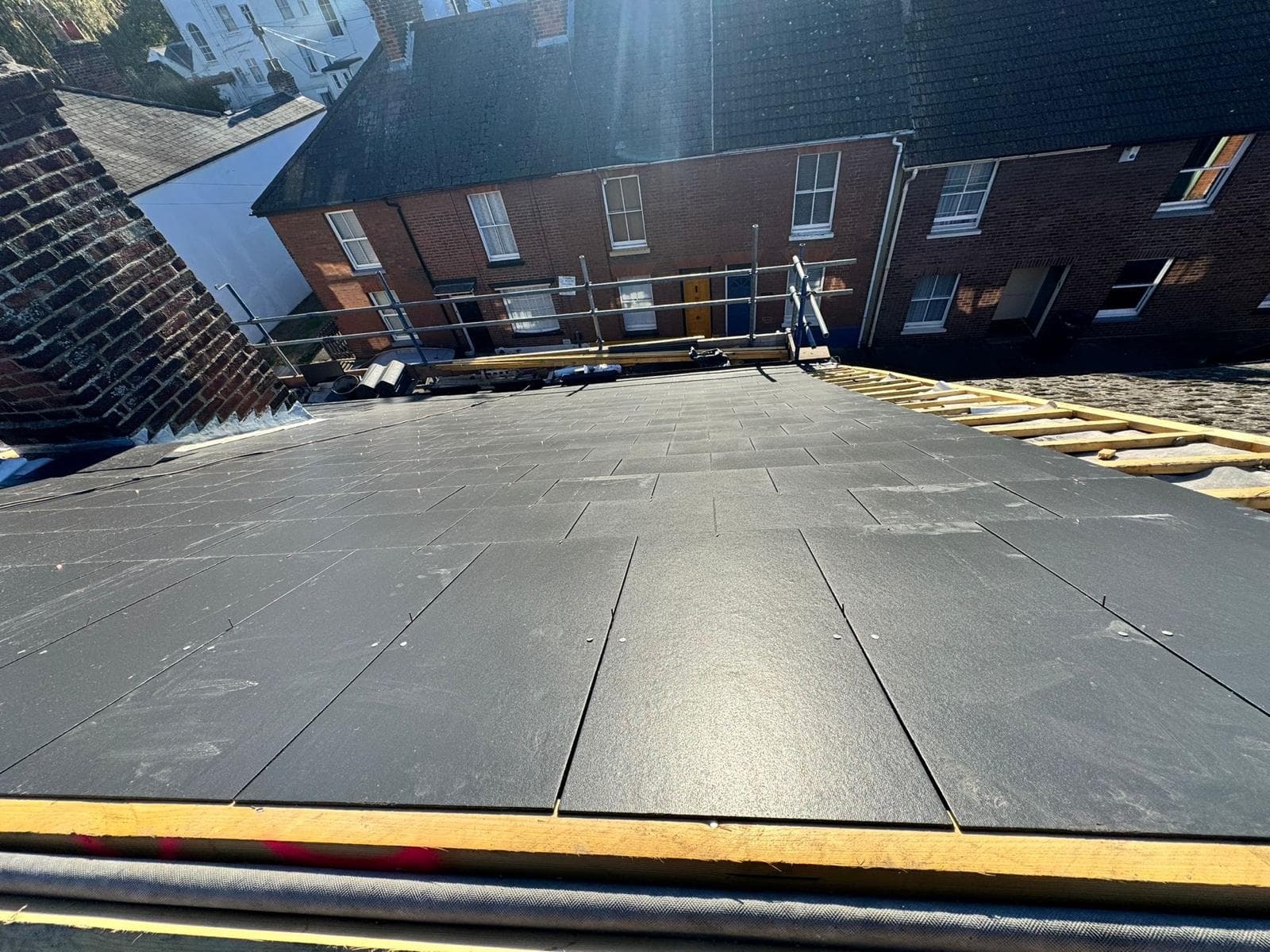
Stripping the roof deals with the fixings, the battens and the underlay in one go, and it keeps the original slate that gives an old house its character. The slates come off, the good ones are sorted and set aside, new battens and underlay go on, and the slates are refixed with copper or stainless steel nails that will not rust, which is what the Institute of Historic Building Conservation's advice on slate roofs recommends in place of rusted iron. Re-laying the sound slates this way is usually a better answer than replacing them with new slate, because the slate was rarely what failed, it saves buying new slate, and the roof still matches the house. The same guidance asks for as many existing sound slates as possible to be re-used. Any shortfall is made up with matching reclaimed or new slate, usually on the less visible slopes.
We have carried out more than 400 roof replacements over the past ten years. We say so plainly when a roof has reached the point of needing a re-slate, and just as plainly when it has not. It is the same judgement as whether to repair or replace a roof of any kind, and the same one that decides most slate roof repairs in Kent.
On the most exposed houses each slope is worth judging on its own. Britain's prevailing wind is south-westerly, so on this coast the south-west facing slopes take the worst of the weather, and one slope can need re-slating while another can be repaired for a few more years. That is why we quote exposed roofs slope by slope rather than as one figure, so you only pay for the work each part of the roof actually needs. Where the whole roof does need doing, it becomes a full re-roof, done once and done properly.
Please Leave the Ladder Where It Is
Slate roofs are slippery, fragile and steep, and slipped slates are easily dislodged by anyone climbing up to look. You can learn a great deal from the ground with a pair of binoculars and from the loft with a torch. Count the slipped slates and tingles on each slope you can see, note whether they are grouped or scattered, and look for daylight or damp in the roof space.
If your slate roof is shedding slates, contact us. Hythe and Folkestone Roofers will survey every slope, tell you whether you are looking at a few repairs or nail sickness across the roof, and give you an honest view of which will cost you less over the years ahead.
Tell us what the roof is doing
Tell us the address and what you are seeing, and we will come and look. Hythe, Folkestone and across east Kent.
126-128 High Street, Hythe, Kent, CT21 5LE
Emergency work is covered 24 hours a day, right across Kent.