So, What Are the First Signs of Roof Damage?
Knowing the early signs of roof damage can save homeowners from costly repairs and serious structural issues. Roof damage rarely appears suddenly. Instead, it develops gradually, often starting with small changes that are easy to overlook. Because the roof protects the entire building, spotting these early warning signs is essential for maintaining a safe and dry home.
We explain the first signs of roof damage, where to look, and when professional help should be arranged.
Why Early Roof Damage Is Often Missed
Roofs sit out of direct view, which makes early damage difficult to notice. Many homeowners only realise there is a problem once water appears inside the property. By that point, damage may already have spread to insulation, timbers, and ceilings.
Regular awareness of early signs allows problems to be addressed before they become disruptive or expensive.
Missing or Broken Roof Tiles
One of the clearest signs of roof damage is missing or broken tiles. Tiles can crack due to age, impact, or frost. Strong winds may also lift or dislodge them.
Even a single damaged tile can allow rain to enter the roof structure. Water often travels beneath surrounding tiles, which means the leak may appear far from the original damage. Prompt repairs help prevent further spread.
Slipped or Uneven Tiles
Tiles should sit evenly across the roof. If tiles appear uneven or out of line, it often indicates that fixings have loosened or battens beneath have shifted.
Slipped tiles create gaps where water can enter. They also increase the risk of further movement during high winds.
Water Stains on Ceilings or Walls
Internal water stains are one of the most common signs of roof damage. Yellow or brown patches on ceilings usually appear after water has travelled through insulation and plaster.
At this stage, the roof has already allowed moisture inside. Acting quickly helps limit further damage.
Damp Smells in the Loft
A musty smell in the loft often signals trapped moisture. Damp air may result from small leaks, poor ventilation, or damaged roofing materials.
Checking the loft regularly allows early detection of roof issues before visible leaks occur.
Moss or Algae Growth
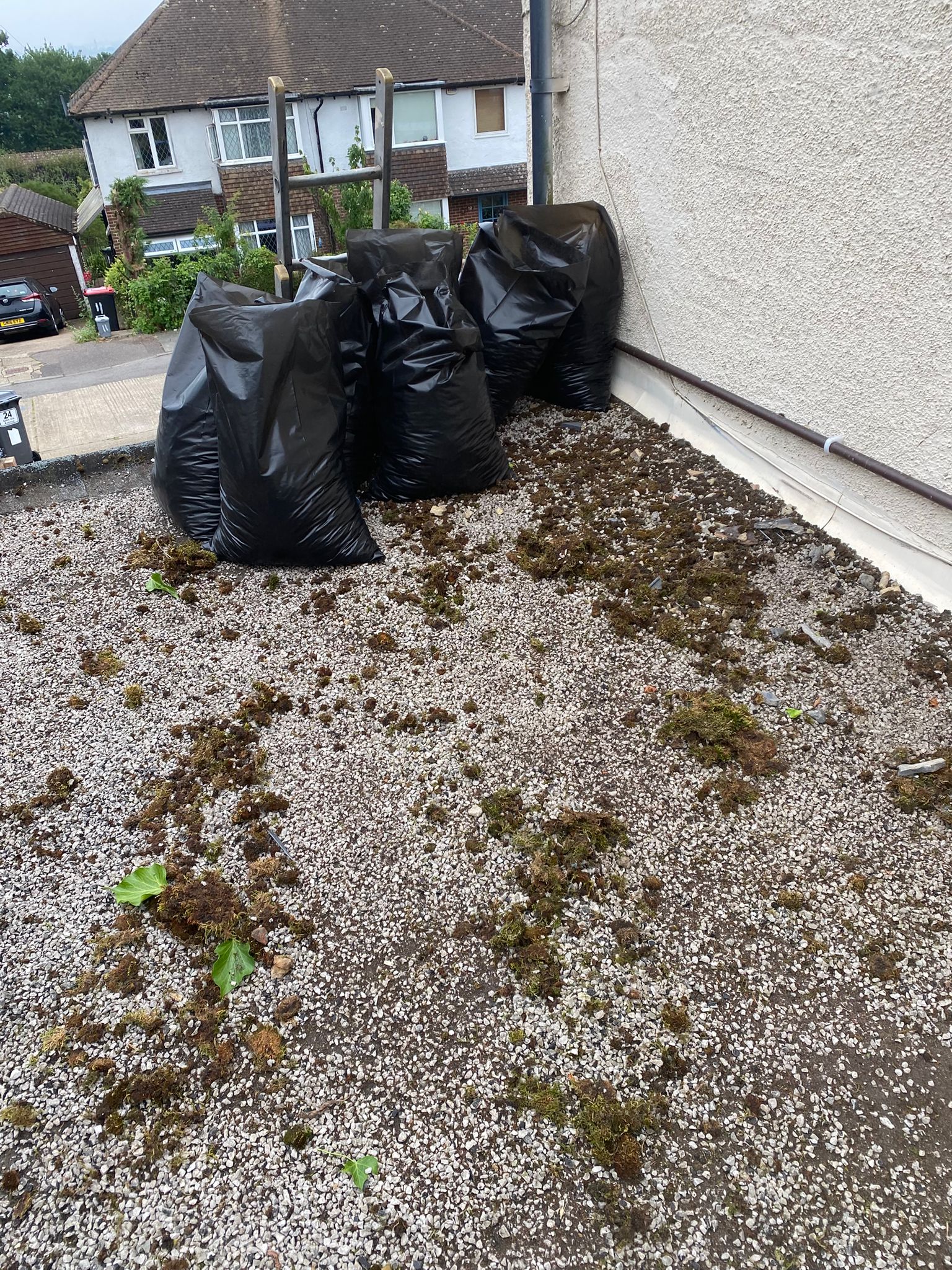
Moss growth may seem harmless, but it is an important early warning sign. It holds moisture against roof tiles, which accelerates wear and encourages cracking.
Excessive moss can also lift tiles slightly, creating gaps for water to enter. This is particularly common on north facing roof slopes.
Blocked or Overflowing Gutters
Gutters form part of the roofing system. When they block with leaves or debris, water overflows and can soak into the roof edge.
Overflowing gutters often cause damage to fascias and soffits and may allow water to track back under tiles. This often leads to leaks that appear unrelated to guttering at first.
Cracked or Damaged Flashing
Flashing seals vulnerable areas where the roof meets chimneys, walls, or valleys. Over time, flashing can crack, lift, or corrode.
Damaged flashing is a common cause of leaks, especially around chimneys. Because flashing sits in exposed positions, it often shows early signs of wear.
Sagging Rooflines
A sagging roofline indicates a more serious issue. It may suggest weakened timbers, prolonged water exposure, or structural movement.
Although sagging develops gradually, it should never be ignored. Early investigation helps prevent further structural damage.
Increased Noise During Wind or Rain
If you notice new noises during windy or rainy weather, this may point to loose tiles or roof components. Rattling sounds often indicate movement that should be checked.
These noises often appear before visible damage occurs, making them an important early sign.
Condensation Mistaken for Roof Damage
Not all moisture problems are caused by roof damage. Condensation in loft spaces can drip onto ceilings and mimic leaks.
However, condensation itself may still signal issues with ventilation or insulation. A professional inspection can identify whether moisture is entering from outside or forming internally.
When Roof Damage Appears After Storms
Storms often reveal existing weaknesses. Tiles may loosen, ridge sections may shift, and flashing may lift.
Even if damage is not immediately visible, arranging an inspection after severe weather helps identify hidden issues early.
Safety and Roof Inspections
Inspecting a roof involves working at height, which carries risks. Professional roofers follow guidance from the Health and Safety Executive to ensure inspections are carried out safely.
When ladders or scaffolding are required, work is completed in line with official working at height guidance. Homeowners should never attempt roof inspections themselves.
Planning and Regulations
Minor roof repairs do not usually require planning permission. However, if early signs of damage lead to more extensive work, guidance is available through the Planning Portal roofing permission guidance.
Any repair or replacement work must also comply with current building regulations. In some cases, inspections may be required through local authority building control.
Domestic and Commercial Roof Damage
Roof damage affects both homes and businesses. Domestic roofing services focus on protecting living spaces, while commercial roofing services address larger buildings with different roof designs.
In all cases, early detection reduces disruption and cost.
When Roof Damage Becomes an Emergency
Some signs of roof damage require immediate action. These include active leaks, missing tiles after storms, or falling debris.
Access to a twenty four hour emergency callout allows the property to be secured quickly and safely.
How Regular Inspections Help
Regular inspections are the best way to catch early signs of roof damage. Annual checks, combined with inspections after storms, help maintain roof performance and avoid sudden failures.
Professional inspections also provide peace of mind and clear advice on next steps.
Why Choose Hythe and Folkestone Roofers
At Hythe and Folkestone Roofers, we identify early signs of roof damage across Kent and provide clear guidance on repairs or maintenance. Our team carries out thorough inspections and addresses issues before they escalate.
We focus on prevention, safety, and long term roof performance. If you are concerned about possible roof damage, you can contact us today.